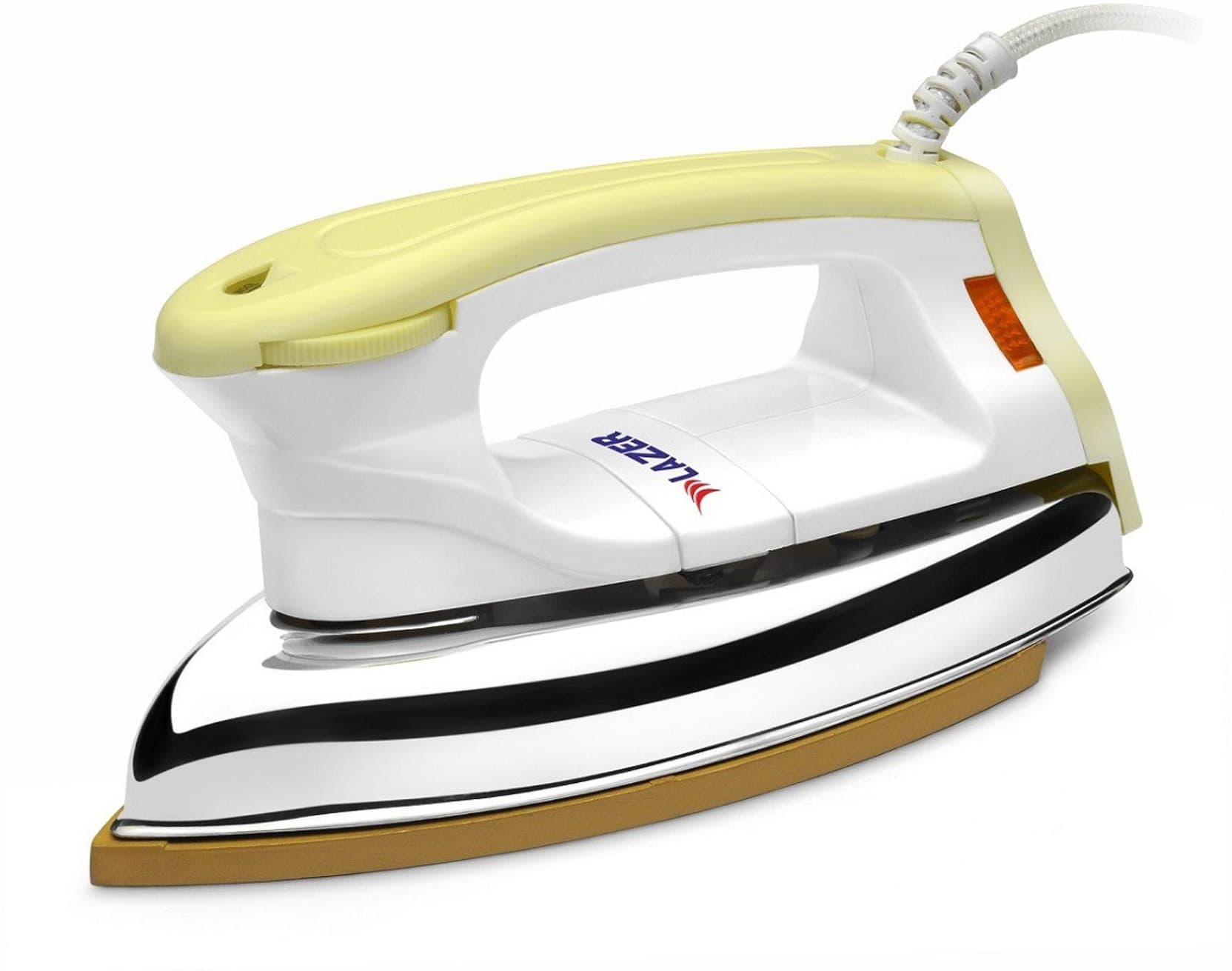
The engineering behind the Teflon-coated soleplate focuses on reducing the coefficient of friction to facilitate a seamless glide over Indian textiles like linen and polyester. Unlike standard metallic plates, this non-stick surface prevents the adhesion of starch or synthetic fibers, which is critical when pressing embroidered kurtas or garments with plastic buttons. The 1100 W heating element is strategically coiled beneath the plate to ensure uniform heat distribution, eliminating cold spots that often lead to uneven results. This thermal consistency allows for fast heat-up cycles, reaching the desired temperature within seconds. Such thermal efficiency ensures that heat penetrates deep into fabric fibers, making the smoothing process faster and more effective.
The manual dial thermostat is calibrated to synchronize with the thermal properties of the three primary fabric modes: cotton, silk, and wool. Each setting corresponds to a specific temperature range, with the cotton mode peaking to handle the high-density weaves of sarees, while the silk setting maintains a lower, safer threshold. This mechanical precision is vital for Indian wardrobes that often contain mixed-fabric blends requiring frequent adjustments. By utilizing a high-quality bimetallic strip, the thermostat maintains a stable temperature, preventing the fluctuations that typically cause fabric yellowing. This ensures that the user can transition from heavy denim to lightweight rayon without compromising the safety or finish of the clothing.
The safety architecture is specifically designed to handle the 220–240V electrical environment of Indian households, where voltage spikes can occur. The ISI certification confirms that the dry iron meets rigorous national standards for build quality and electrical insulation. An integrated thermal fuse acts as a secondary failsafe, physically breaking the circuit if the internal temperature exceeds safe limits, while the auto shut-off function prevents potential fire hazards. Furthermore, the shockproof body utilizes high-grade insulating polymers to isolate the user from the internal electrical components. These redundant safety layers work in tandem to mitigate risks associated with unattended ironing or sudden power surges, ensuring a high level of operational security.
Ergonomic design is centered on a 0.4 kg lightweight chassis, which significantly reduces wrist fatigue during extended sessions involving multiple sets of school uniforms or heavy linens. The handle is contoured to provide a secure grip, allowing for precise directional control when navigating around collars, pleats, and cuffs. A 1.5-meter power cord provides ample reach, reducing the need for extension boards in standard Indian utility rooms or bedrooms. This combination of a low-friction soleplate and lightweight construction optimizes the physical effort required for domestic chores. Ultimately, the 5.Plus represents a well-engineered balance of thermal power and user-centric design, making it a highly efficient choice for the diverse needs of Indian households.