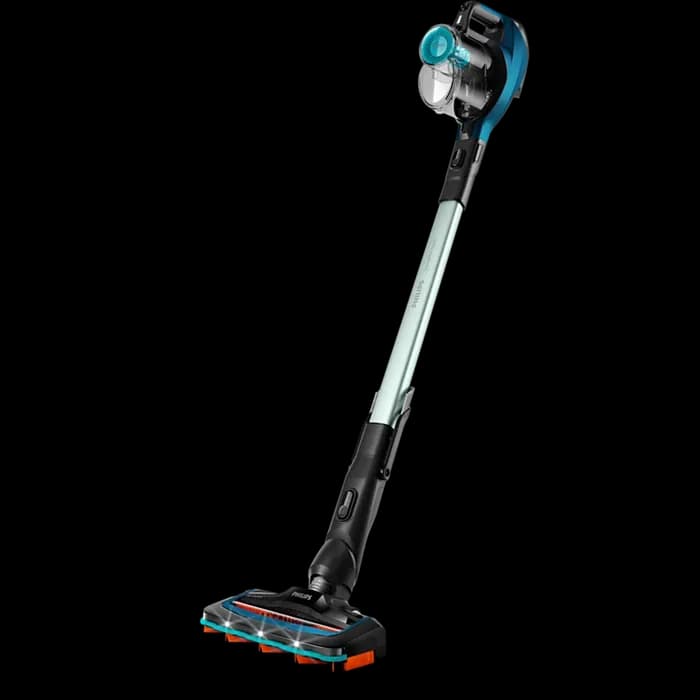
The suction pressure engineering of this cordless handheld vacuum cleaner relies on a 120W DC motor optimized for high-velocity displacement. Achieving 8000 Pa from a compact motor requires a tight motor-to-airway ratio, minimizing internal turbulence to maximize static pressure. This configuration is particularly effective for lifting dense Indian dust loads from hard surfaces and car carpets. However, the design prioritizes high suction over extreme airflow volume, meaning it excels at drawing debris from crevices but may require multiple passes for wide-area floor cleaning. This engineering trade-off ensures the device remains lightweight while providing the necessary force for stubborn dirt.
Filtration architecture is centered on a single-stage HEPA system designed to capture particulates as small as 0.3 microns. In typical Indian environments, where PM2.5 and construction dust are prevalent, this filter serves as the primary barrier preventing motor contamination. The washable construction is a critical engineering feature, allowing users to maintain peak suction without purchasing frequent replacements. By rinsing the filter, the mesh openings are cleared of fine silt that usually clogs standard foam filters. This design ensures that the vacuum maintains its rated performance throughout its operational lifespan, even under heavy daily usage cycles.
The battery and power system utilize a high-density cell configuration that supports a 30-minute runtime under a constant 120W draw. Charging is managed via a CC-CV (Constant Current-Constant Voltage) protocol, allowing for a full 2-hour recharge cycle while protecting the lithium cells from overheating in warm Indian climates. This balance between discharge rate and capacity ensures the motor does not throttle suction as the battery depletes. Users should note that while the runtime is generous for a handheld, the motor's power consumption is strictly regulated to prevent thermal shutdown, making it reliable for continuous cleaning sessions across multiple rooms or car interiors.
For the wet/dry separation mechanism, the unit employs a specialized internal baffle design within the 1L container. This design isolates liquid intake from the motor assembly, preventing moisture from reaching the electrical components. When vacuuming liquid spills from kitchen tiles or condensation from AC units, the intake path forces fluid into the lower reservoir. This 0.45L effective liquid capacity is sufficient for common household mishaps. Post-wet-use maintenance is essential; cleaning the baffle and container prevents mold growth, which is a common issue in humid coastal regions. This moisture protection ensures long-term motor durability and electrical safety.
The inclusion of a crevice tool and brush nozzle provides technical versatility for complex geometries. The crevice tool is engineered to narrow the intake, increasing the local air speed to dislodge grime from sliding window channels and keyboard keys. Meanwhile, the brush nozzle uses mechanical agitation to lift hair and fibers from fabric weaves before the suction takes over. These attachments are essential for addressing Indian-specific use cases like cleaning dusty ceiling fan blades or intricate AC vent slats. The mechanical fit of these tools ensures zero air leakage at the connection points, preserving the integrity of the 8000 Pa suction throughout the cleaning process.
The chassis and ergonomics are built around a lightweight 0.45kg ABS construction, providing high impact resistance for car use. The handle geometry is balanced directly over the center of gravity, which reduces user fatigue during overhead tasks. This ergonomic distribution is vital for navigating the tight corners of 1BHK apartments or reaching under sofa cushions. The compact parking position and bagless 1L bin design reflect a focus on urban space efficiency and low-maintenance operation. These structural choices, combined with the technical motor specifications, ensure that the EV 414 serves as a robust and accessible solution for diverse cleaning requirements in the Indian domestic market.