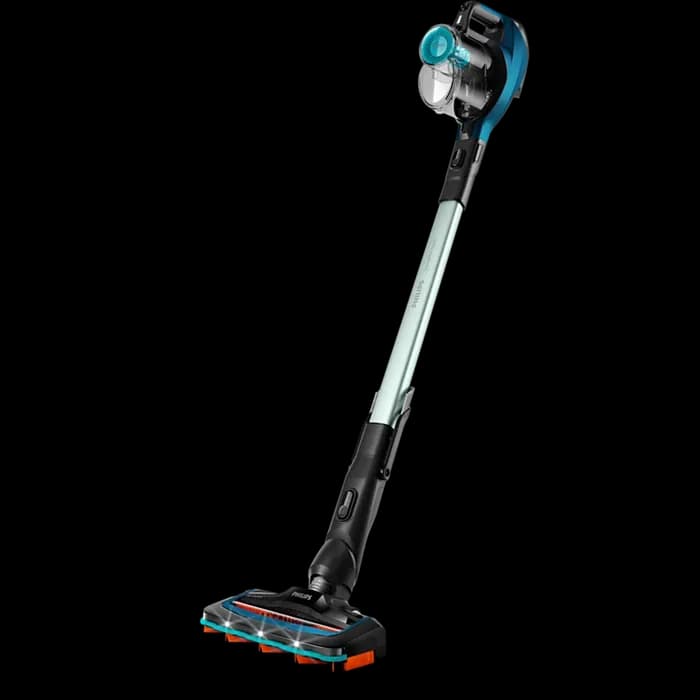
The suction pressure of this cordless handheld vacuum cleaner is generated by a 600 W universal motor designed for high RPM efficiency. Achieving 18000 Pa requires a precise motor-to-airway ratio, where the internal fan geometry is optimized to create a strong vacuum seal against surfaces. While static pressure is high, the airflow trade-off is managed through a streamlined internal path to minimize turbulence. This makes the unit exceptionally effective for lifting heavy particulates like sand or road dust from hard tiles, though it may require multiple passes on high-pile carpets. The engineering focus here is on maximizing the pressure differential to ensure deep extraction from fabric crevices.
The filtration architecture utilizes a Single Stage-stage HEPA system that is crucial for the Indian environment where PM2.5 levels are often high. This washable filter is engineered to capture 99.97% of particles as small as 0.3 microns, including pollen and fine silt. By using a washable construction, the long-term cost of ownership is reduced, as users do not need frequent replacements. The filter housing is sealed to prevent bypass leakage, ensuring that the exhaust air is cleaner than the intake. For Indian users dealing with daily dust ingress, this filtration level is vital for maintaining respiratory health and reducing household allergens.
Powering the 600 W motor requires a high-discharge battery system configured to provide a steady 25-minute runtime. The unit utilizes a CC-CV charging protocol to protect the lithium cells from overheating during the replenishment cycle. There is a calculated trade-off between motor draw and battery life; 18000 Pa of suction consumes significant energy, necessitating the 25-minute limit to prevent thermal throttling. Users should allow the unit to cool before charging to maintain cell longevity. This power management system ensures that the suction remains consistent from the first minute to the last, providing reliable performance for spot-cleaning tasks.
This unit is engineered specifically as a dry-recovery system, which allows for a more efficient 600 ml bagless bin design compared to bulkier wet-dry alternatives. Without the need for complex internal baffles to separate liquids from air, the internal geometry is optimized for high-velocity dry debris flow. This protects the motor from moisture-related electrical risks while ensuring the suction remains unhindered by restrictive separation hardware. The 600 ml capacity is specifically sized to handle typical debris loads from car interiors or sofa cleaning without requiring mid-task emptying. This dedicated dry-suction engineering ensures that the unit remains lightweight and durable.
Unlike multi-function tools that sacrifice suction power for a blower port, this model focuses entirely on intake velocity to maximize cleaning efficiency. The technical mechanism centers on a high-speed impeller that generates a concentrated vacuum stream, which is more effective for removing stubborn grime from AC vents and keyboards than merely blowing it further into the crevices. By omitting a blower function, the design maintains a shorter, more direct exhaust path, which reduces backpressure and helps keep the motor cool during operation. This design choice is particularly beneficial for Indian users cleaning delicate electronics or intricate furniture carvings where total dust removal is preferred.
The chassis is constructed from high-grade ABS plastic, keeping the total weight at a manageable 1.2 kg. This lightweight build is achieved through a cantilevered handle design that balances the motor weight over the wrist, reducing user fatigue during extended use. The ergonomic grip is textured to prevent slipping, which is essential when reaching into awkward angles like the back of a car seat or high AC vents. The internal components are modular, allowing for easy access to the washable filter and dust bin. Ultimately, the 19004362 represents a refined balance of durability and portability, making it an ideal companion for the rapid cleaning demands of modern Indian homes.