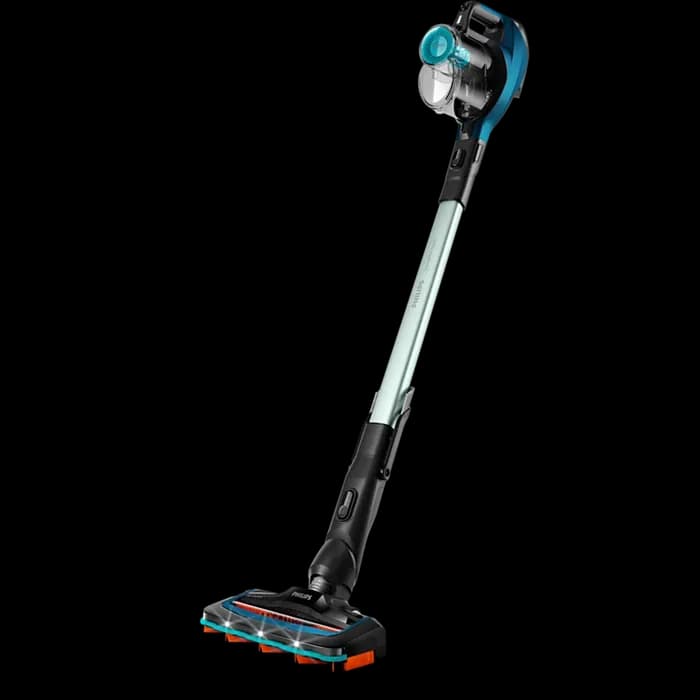
Suction pressure engineering in this unit focuses on a high motor-to-airway ratio to extract 12000 Pa of static pressure from a 5 W DC motor. This is achieved by utilizing an optimized impeller housing that minimizes air turbulence and leakage. By concentrating the airflow through a narrow aperture, the device achieves the necessary velocity to dislodge fine road dust and heavier particulate matter from household surfaces. While the wattage is low, the efficiency of the turbine assembly ensures that suction remains consistent throughout the battery discharge cycle, making it ideal for localized debris removal.
The filtration architecture employs a 3-stage HEPA system designed to mitigate the high dust loads typical of Indian urban environments. The primary stage captures larger debris like hair and grit, while the secondary mesh protects the motor from fine silt. The final HEPA stage is pleated to increase the surface area for capturing microscopic particles down to 0.3 microns. Because the entire assembly is washable, users can maintain high airflow without the degradation often seen in disposable filter systems, ensuring the motor remains cool and efficient during extended use.
Power management is handled by a lithium-ion battery system that supports a 40 min runtime, a significant duration for a 0.38 kg device. The system utilizes CC-CV charging protocols over a 3-hour window to ensure cell stability and longevity. In the context of Indian electricity fluctuations, the internal charging circuit is designed to handle varying input voltages safely. The 40-minute window allows for several spot-cleaning sessions on a single charge, providing a high utility-to-weight ratio for users who need a tool that is ready for immediate deployment.
The wet and dry functionality is supported by an internal baffle design that physically separates liquids from the motor compartment. When cleaning spills on tile or wood flooring, the 2 L bagged capacity provides ample volume to hold mixed debris without leaking. This engineering choice is critical for preventing internal corrosion, which is a common failure point in handheld vacuums. Post-wet-use maintenance is simplified by the easy-access bin, ensuring that the unit remains sanitary and odor-free even after cleaning organic liquid spills like milk or juice.
The blower function leverages the exhaust path of the motor, redirecting high-velocity air through a specialized nozzle. This technical mechanism converts the potential energy of the suction motor into kinetic energy for air displacement. It is specifically useful for dislodging compressed grime from AC vent slats and electronic keyboards where traditional brush bristles cannot penetrate. This dual-path airflow design increases the versatility of the unit without requiring additional heavy components, maintaining the lightweight profile while expanding the range of applicable use cases for the consumer.
The chassis is constructed from high-impact ABS plastic, providing a balance between durability and the ultra-light 0.38 kg weight. The ergonomic handle is positioned to align with the center of gravity, reducing wrist strain during vertical tasks like cleaning ceiling fans or high draperies. The internal components are shock-mounted to prevent vibration-induced fatigue during the 12000 Pa operation. Concluding this analysis, the green airblower compact120w represents a focused engineering effort to deliver high-performance spot cleaning and air displacement in a form factor that prioritizes mobility and user comfort.