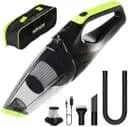
The engineering behind the 110 W DC motor is optimized for a high motor-to-airway ratio, allowing the turbine to reach rotational speeds that generate a vacuum pressure of 6000 Pa. Unlike larger units, this motor focuses on static pressure to lift heavy debris like spilled lentils or fine road silt from textured surfaces. The internal fan blades are precision-molded to minimize turbulence, which maximizes the effective airflow through the 0.5 L chamber. This balance ensures that while the suction is aggressive enough for heavy particles, it maintains a consistent flow rate that prevents the motor from overheating during its full 25-minute cycle.
The Single Stage-stage HEPA filtration architecture is designed to manage the unique particulate profile of Indian urban environments, which includes both organic dander and inorganic construction dust. The filter media is constructed from densely pleated synthetic fibers that capture particles as small as 0.3 microns. By making the filter washable, the engineering team has extended the lifecycle of the internal components, as a clean filter reduces backpressure on the 110 W motor. This architecture ensures that the exhaust air is significantly cleaner than the intake, preventing the redistribution of fine dust during the cleaning process in confined spaces.
Powering the unit is a lithium-ion battery array configured to deliver a steady 12 V output to the motor. The charging circuit utilizes a CC-CV (Constant Current-Constant Voltage) protocol, enabling a full 0% to 100% recharge within just 2 hours. This rapid turnaround is essential for multi-session cleaning tasks in larger 3BHK homes where the 25-minute runtime might be depleted quickly. The battery management system includes thermal cut-offs and overcharge protection, ensuring that the cells remain stable even when stored in the higher ambient temperatures common across most of the Indian subcontinent during summer months.
The wet and dry capability is supported by a sophisticated internal baffle design that separates liquid intake from the motor housing. When vacuuming damp spills or kitchen messes, the airflow is diverted through a moisture-trap chamber that prevents water droplets from reaching the electrical components. The 0.5 L bagless bin is sealed with high-grade silicone gaskets to maintain vacuum integrity while handling fluids. This engineering choice requires users to perform basic post-use maintenance, such as rinsing and drying the bin, to ensure that no residual moisture affects the HEPA filter's permeability or causes odors over time.
The attachment interface is engineered for a friction-fit seal that minimizes suction loss at the nozzle tip. The multipurpose brush and crevice tool are optimized for different surface tensions; the brush agitates fibers on sofas to release hair, while the crevice tool increases air velocity for deep-seated grime. Even without a dedicated blower function, the high-velocity intake at the nozzle serves to pull dust out of AC vents and keyboard switches effectively. Each attachment is molded from high-impact polymer to withstand daily wear, ensuring that the interface remains airtight throughout the 12-month manufacturer warranty period and beyond.
The chassis is constructed from high-tensile ABS plastic, selected for its strength-to-weight ratio which keeps the entire device at a nimble 0.5 kg. The ergonomic handle is positioned at the center of gravity, reducing the torque felt on the user's wrist during overhead cleaning of curtain rods or cupboard tops. The parking position and compact footprint allow it to be stored in small kitchen cabinets or car glove boxes easily. This focus on industrial design and material science ensures the VC201 remains a durable and portable tool capable of handling the rigors of heavy-duty spot cleaning in busy Indian households.