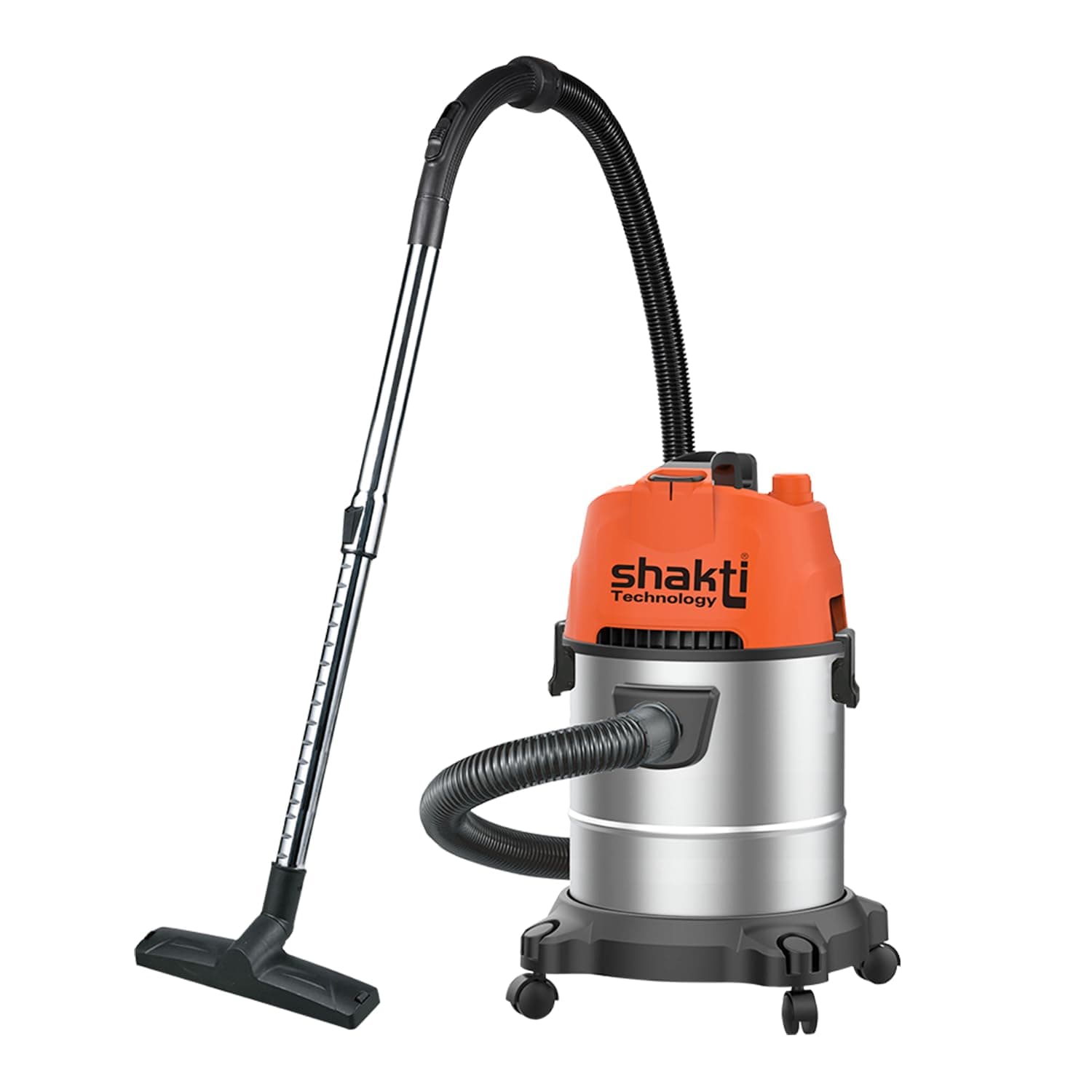
The suction engineering of this device utilizes a 1400 W universal motor to generate a consistent 5000 Pa of negative pressure. While the wattage is high, the motor-to-airway ratio is tuned for high-volume airflow rather than extreme static lift, which is a specific engineering trade-off to accommodate the wet and dry capabilities. This makes the unit ideal for moving larger debris and liquid spills across tile and carpet surfaces. The airflow path is designed to maintain velocity through the telescopic metal tube, ensuring that fine dust particles remain suspended until they reach the primary filtration chamber.
Filtration is managed through a 2-stage architecture consisting of a primary cloth bag and a secondary sponge filter. This specific sequence is engineered to capture larger debris in the cloth stage while the sponge layer traps finer particulates and prevents them from entering the motor assembly. The washable nature of both stages is a critical engineering feature for the Indian market, where high humidity and dust loads can quickly clog non-washable filters. By allowing manual cleaning of the filter media, the system maintains its 5000 Pa performance over long-term usage cycles.
Regarding the power system, the integration of a 1400 W motor requires significant energy delivery, which is typically managed through a high-voltage cell configuration in cordless applications. Although specific runtime data is unavailable, the engineering focus remains on maximizing torque for heavy-duty tasks such as mattress sanitation and car detailing. The universal motor architecture provides the necessary durability for the fluctuating loads encountered when switching between dry vacuuming and liquid suction. Practical maintenance involves ensuring the motor vents remain unobstructed during extended cleaning sessions to prevent thermal throttling and ensure peak efficiency.
The wet and dry separation mechanism is built into the 25 L bagless chassis, utilizing a physical baffle design to protect the motor from moisture ingress. During wet operation, the air path is redirected to prevent liquid droplets from bypassing the filtration stages. This high-capacity tank is essential for post-renovation cleaning or clearing flooded balconies during the monsoon season. The 25 L volume allows for substantial liquid intake before the buoyancy of the debris affects the static pressure, ensuring that the motor maintains a consistent draw throughout the entire operation.
Beyond simple suction, the blower function leverages the exhaust path of the 1400 W motor to create a high-velocity air stream. This is technically achieved by reversing the airflow or utilizing a secondary port, allowing the user to dislodge dust from AC vents or WFH keyboards where mechanical brushes cannot reach. This dual-purpose engineering adds a layer of versatility not found in pure-suction models. In Indian homes, the blower is particularly useful for clearing dust from window tracks and balcony railings before switching back to suction mode for final collection.
Constructed from high-grade ABS, the 7.02 kg chassis is designed for durability and impact resistance. The ergonomics include a balanced handle design to offset the weight of the large tank and the heavy-duty motor. The parking position and the layout of the multi-purpose brushes are engineered for quick deployment across various surface types, from tiles to upholstery. The use of a telescopic metal tube adds structural rigidity, preventing the flexing common in plastic-heavy alternatives. This solid build quality ensures the vc 91 functions as a reliable heavy-duty tool for long-term domestic and semi-professional use.