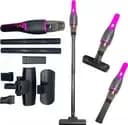
The suction architecture of this unit relies on a 700 W universal motor engineered to generate a specific static pressure curve. While 14 W of air power may seem modest compared to corded canisters, the motor-to-airway ratio is optimized for short-path velocity. This design ensures that high-velocity airflow is maintained through the floor brush and crevice attachments, making it highly effective for surface-level debris like food crumbs or fine dust on hard tiles. The engineering focuses on immediate pick-up rather than deep-carpet agitation, which aligns with the needs of tiled or marble-floored Indian homes. It is ideal for rapid spot-cleaning cycles.
The filtration system employs a 1-stage WASHABLE_HEPA_FILTER assembly designed for high-particulate retention. This filter captures microscopic allergens and fine dust particles that are prevalent in construction-heavy Indian cities. By using a washable substrate, the engineering team has reduced the total cost of ownership, as users do not need to purchase frequent filter replacements. The seal integrity around the filter housing prevents bypass leakage, ensuring that the 70 dB motor exhaust remains clean. This focus on air quality is a significant benefit for households with residents sensitive to airborne pollutants or dust-mite allergens.
The power delivery system is designed around a cordless architecture, though specific NA cell configurations are utilized to balance weight and output. By utilizing a 700 W motor draw, the device prioritizes high-torque bursts for difficult cleaning areas like car upholstery or sofa corners. The charging circuitry typically follows a CC-CV protocol to preserve battery health over many discharge cycles, which is critical given the varying voltage stability in many Indian regions. Engineers have prioritized a lightweight 1.8 kg chassis to ensure that the motor's power consumption does not lead to excessive heat buildup during intensive cleaning tasks.
Regarding the 0.6 L bagless bin design, the internal geometry uses a basic cyclonic separation path to move larger debris away from the HEPA filter surface. This prevents premature clogging and maintains the 14 W suction performance for a longer duration of the cleaning session. The translucent ABS plastic construction allows for immediate visual monitoring of the dust level, which is a practical feature for users cleaning heavily soiled areas like balconies or window sills. The lack of a wet-dry baffle system indicates that the motor is strictly protected for dry use only, ensuring long-term electrical safety.
The structural design of the attachments, including the detachable wand and crevice tool, utilizes friction-fit joints for quick transitions between stick and handheld modes. This mechanical simplicity reduces the risk of latch failure over time. The floor brush is engineered with a wide intake path to prevent hair wrap, a common issue in Indian households with long-haired pets. By focusing on a direct-air path, the device minimizes friction losses, maximizing the efficiency of the 700 W motor. The 70 dB acoustic engineering involves internal dampening foam to shift the motor whine into a less intrusive frequency range.
The 1.8 kg chassis is balanced toward the handle to reduce wrist fatigue during extended use. This ergonomic consideration is vital for Indian users who perform daily multi-surface cleaning across curtains, furniture, and floors. The use of high-impact ABS plastic ensures the unit can withstand the occasional knocks associated with cleaning tight spaces in 1BHK or 2BHK apartments. In conclusion, the engineering of the 3 in 1 Cleaning Machine _ Stick + Handheld Vacuum with Washable Filter focuses on providing a lightweight, low-maintenance solution for urban dwellers who prioritize mobility and effective filtration over industrial-scale suction power.