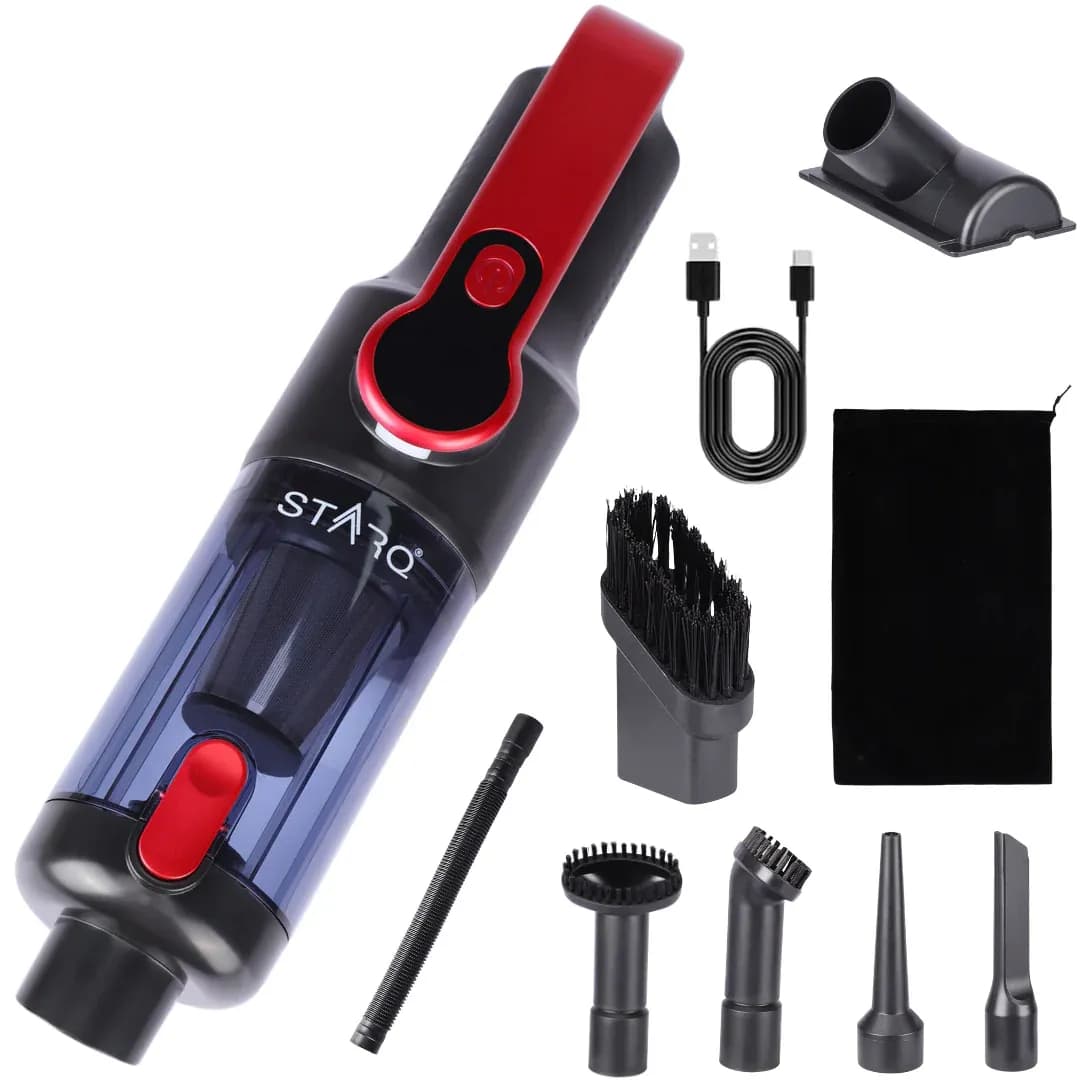
The suction engineering of this device relies on a 150 W brushless DC (BLDC) motor that spins at high RPMs to create a 15 kPa pressure differential. Unlike brushed motors, this BLDC unit minimizes friction, allowing for a more efficient motor-to-airway ratio that maximizes static pressure. This is critical for Indian households where fine dust particles often settle deep into fabric weaves. The engineering focus here is on maintaining high static pressure over high airflow, which ensures that debris is lifted from upholstery and mattresses rather than just being moved across the surface, providing a deeper clean for users.
Filtration architecture is managed through a 2-stage HEPA system designed to handle the high particulate matter common in Indian cities. The first stage involves a primary filter that captures larger debris and hair, while the secondary HEPA stage traps particles as small as 0.3 microns, including PM2.5. This washable construction is a vital engineering choice, as it prevents the pore-clogging typically seen in disposable filters used in dusty environments. By allowing users to wash the filter, the manufacturer ensures that the 15 kPa suction remains unobstructed by buildup, maintaining the unit's longevity over hundreds of use cycles.
The power system utilizes a high-density 12 V cell configuration that supports a 25-minute runtime while maintaining a constant discharge rate. The integrated battery management system (BMS) employs CC-CV charging protocols, enabling a full recharge in just 60 minutes, which is significantly faster than the 3-4 hours required by standard lithium-ion handhelds. This rapid charging is engineered for the Indian user who may need multiple quick cleaning bursts throughout the day. The trade-off between the 150 W draw and the 25-minute runtime is optimized to ensure that cleaning performance does not drop as the battery charge depletes.
Acoustic engineering in this unit is centered around a 65 dB noise output, achieved through internal sound-dampening baffles and motor vibration isolation. For an Indian apartment where noise can echo easily, shifting the motor frequency to a higher, less intrusive pitch is a significant user-benefit. The motor housing is constructed from high-grade ABS plastic, which provides thermal resistance and structural integrity without adding unnecessary weight. This acoustic management allows for early morning or late-night cleaning without disturbing other residents, a common requirement in densely populated residential complexes where domestic peace is highly valued by all occupants.
The airway design includes a streamlined path that minimizes turbulence as air moves from the nozzle through the 0.4 L bin. By reducing the number of sharp turns in the internal ducting, the engineers have minimized suction loss through the attachments like the suction hose. This aerodynamic efficiency is what allows a 150 W motor to perform like a much larger corded unit. The bagless bin mechanism utilizes a secure latching system that prevents air leaks, ensuring that the 15 kPa vacuum seal is maintained at the cleaning head, which is essential for picking up heavy grit or small stones.
From an ergonomic perspective, the chassis is balanced to keep the center of gravity near the handle, reducing wrist fatigue during overhead cleaning of ceiling fans or AC vents. The 0.4 kg weight is distributed to allow the dusting brush to glide across surfaces with minimal downward pressure from the user. The inclusion of a dedicated charging dock ensures the unit is always stored upright, saving space in 1BHK or 2BHK configurations common in Indian metros. Ultimately, the Tornado Wireless represents a refined approach to handheld cleaning engineering, prioritizing high-velocity suction and rapid recovery times for a fast-paced domestic lifestyle.