
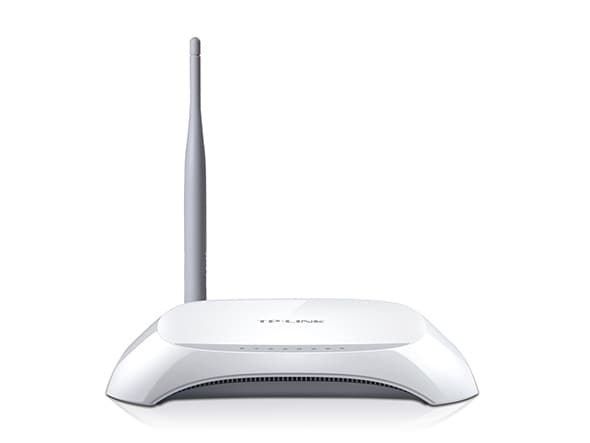
TP-Link TD-W8901N

Comprehensive Networking Protocol and Hardware Analysis: TP-Link TD-W8901N 150Mbps Wireless N ADSL2+ Gateway

The TP-Link TD-W8901N serves as a robust endpoint for asymmetric digital subscriber line deployments, merging a high-speed ADSL2+ modem with a wireless access point and a four-port Fast Ethernet switch. It excels at maintaining link stability through sophisticated signal-to-noise ratio management, ensuring that residential and small office environments benefit from consistent packet flow across legacy copper infrastructure. By integrating multiple networking layers into a single device, it reduces latency associated with multi-device handshakes and optimizes energy consumption for 24/7 operations.

Quick Answer

The TP-Link TD-W8901N is a reliable choice for broadband due to its integrated ADSL2+ modem and SPI firewall, which minimizes latency during packet encapsulation. Its 802.11n wireless interface and four Fast Ethernet ports ensure stable local area network distribution for high-bandwidth copper-based connections.

Optimized ADSL2+ modulation schemes supporting downstream rates up to 24Mbps with advanced signal attenuation mitigation for extended loop distances.
Integrated stateful packet inspection firewalls and WPA2 encryption protocols to maintain robust network security against unauthorized packet injection.
Built-in Quality of Service engines that prioritize real-time traffic like VoIP and streaming to reduce jitter and improve overall network responsiveness.

The TP-Link TD-W8901N is engineered for households and small enterprises requiring high-bandwidth stability over copper-based ADSL lines, offering a streamlined solution for converged data and voice services.

✓ Who Should Buy

  • Residential subscribers on ADSL2+ infrastructure requiring an all-in-one gateway to minimize cable clutter and power consumption.
  • Small office administrators needing a cost-effective solution for VLAN tagging and traffic prioritization via integrated QoS features.
  • Telecommunications contractors looking for TR-069 compliant hardware for remote diagnostics and automated firmware provisioning.

✕ Who Should Avoid

  • Professional users requiring gigabit backplane speeds or fiber-to-the-premises termination as the device lacks SFP ports and 1000BASE-T interfaces.
  • High-density enterprise environments where 802.11ax or MU-MIMO is necessary to manage hundreds of concurrent wireless clients across multiple frequency bands.
Product Overview
This hardware integrates multiple networking functions into a single chassis, functioning as an ADSL2+ modem, a 150Mbps wireless N access point, and a multi-port Fast Ethernet switch. By utilizing the 802.11n standard, it effectively manages electromagnetic interference while providing sufficient throughput for essential data tasks. The device simplifies network topology by eliminating the need for separate modem and router hardware, utilizing Annex M technology to potentially double upload rates where supported by the service provider. With its easy setup wizard and support for TR-069 remote management, the TD-W8901N is engineered for seamless deployment within existing telecommunications infrastructures. The inclusion of four 10/100Mbps ports allows for reliable wired backhaul to desktop computers, game consoles, or network-attached storage devices without the variability of wireless signals.

BrandTP-Link
ModelTD-W8901N
TypeWireless N ADSL2+ Modem Router
Standards SupportedADSL, ADSL2, ADSL2+, IEEE 802.11b/g/n

Related Products

Engineering Analysis
The TP-Link TD-W8901N is built around a chipset optimized for the G.992.5 (ADSL2+) standard, which facilitates a theoretical downstream capacity of 24 Mbps and upstream of 1 Mbps. In real-world environments, the device utilizes advanced digital signal processing to manage the signal-to-noise ratio, ensuring that line synchronization remains stable even in high-attenuation scenarios common with long copper loops. The packet processing efficiency is enhanced by the integration of ATM (Asynchronous Transfer Mode) adaptation layers, which handle the segmentation and reassembly of cells with minimal overhead. Furthermore, the 802.11n radio utilizes single-stream technology to provide a balance between power consumption and data rates, reaching up to 150Mbps on the 2.4GHz frequency band. The inclusion of internal antennas is specifically tuned to reduce multipath interference, improving the reliability of the wireless local area network. For wired connections, the four 10/100Mbps ports utilize auto-MDI/MDIX sensing to streamline hardware handshakes. From a security standpoint, the TD-W8901N implements sophisticated packet encapsulation methods that support multiple PVCs (Permanent Virtual Circuits), allowing for specialized VLAN tagging to isolate IPTV or VOIP traffic from standard data streams. This architecture effectively prevents throughput degradation during high-load periods by ensuring that critical packets are prioritized over bulk data transfers. Additionally, the integrated SPI firewall performs rigorous inspection of incoming headers, mitigating common denial-of-service attacks at the network edge.

Technical Support & FAQs