
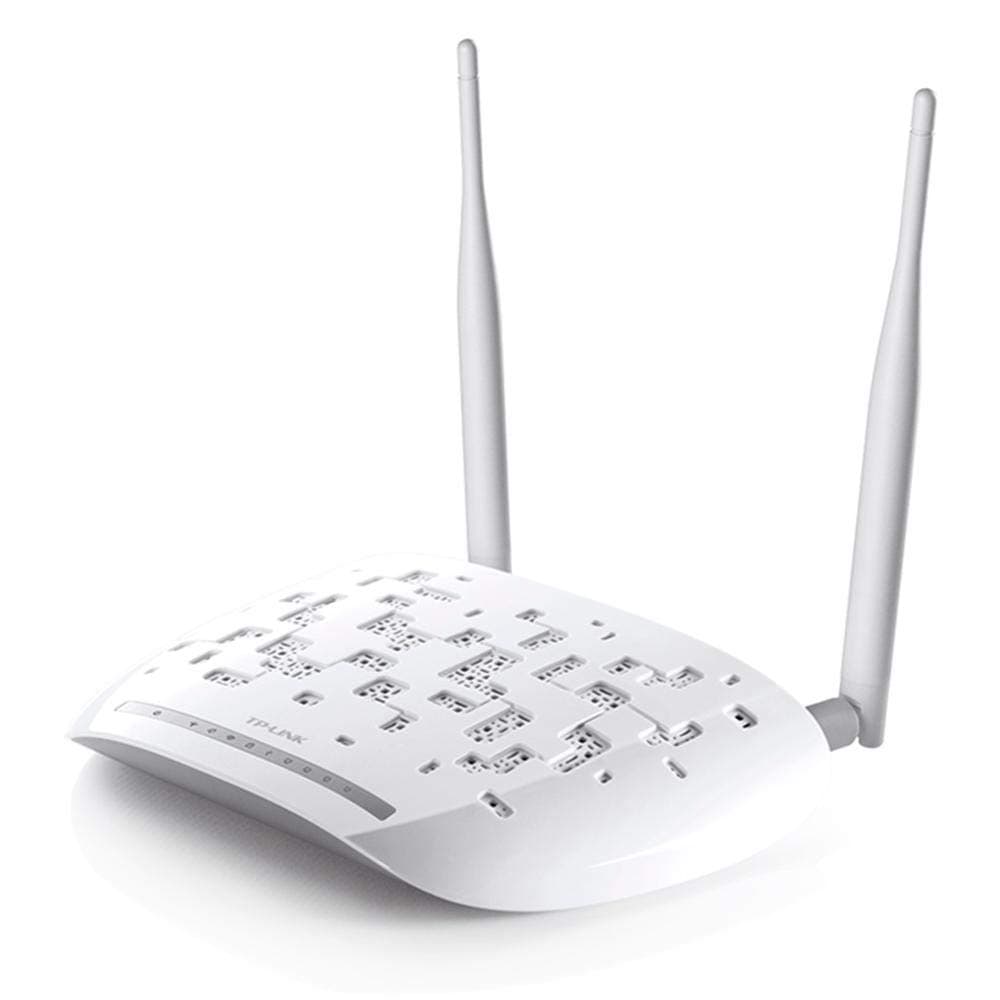
TP-Link TD-W9970

Infrastructure Architecture Review: TP-Link TD-W9970 High-Performance VDSL2 Integrated Access Device

The TP-Link TD-W9970 represents a versatile solution for high-speed digital subscriber line deployments, merging a robust VDSL2 modem with a 300 Mbps wireless N router. By utilizing the latest VDSL2 standards, this hardware facilitates asymmetric throughput rates up to 100 Mbps, ensuring that residential and small-office environments maintain consistent packet delivery and minimized jitter across the local area network. Its architecture is specifically tuned to mitigate electromagnetic interference, providing a stable foundation for high-bandwidth applications within a compact form factor.

Quick Answer

The TP-Link TD-W9970 ensures reliability through its integrated VDSL2/ADSL2+ modem and EWAN port flexibility, allowing for seamless transitions between DSL and cable/fiber ONT connections. Its hardware-level NAT and advanced QoS prioritize time-sensitive traffic to maintain peak performance during heavy bandwidth utilization.

VDSL2 technology supports downstream rates of 100 Mbps while maintaining backward compatibility with legacy ADSL standards to ensure maximum deployment flexibility.
Integrated SPI firewall and WPA2 encryption protocols mitigate unauthorized access and protect internal node traffic from packet-sniffing exploits.
Versatile USB 2.0 port facilitates local storage sharing or print server integration while supporting 3G/4G dongle failover for uninterrupted internet connectivity.

The TP-Link TD-W9970 is engineered for households and small enterprises requiring a cost-effective, high-bandwidth gateway that bridges VDSL2 technology with reliable wireless N distribution and advanced security tunneling capabilities.

✓ Who Should Buy

  • Remote professionals requiring a stable VDSL2 termination with integrated failover via 3G/4G USB dongles for continuous uptime.
  • Small office environments needing a dedicated gateway with customizable QoS and VLAN tagging for segregated guest network access.
  • Budget-conscious households looking to replace ISP-provided hardware with a device capable of high-speed packet processing and local storage sharing.

✕ Who Should Avoid

  • Power users operating within a high-density gigabit fiber ecosystem who require 802.11ax WiFi 6 speeds and 5GHz frequency bands.
  • Media-heavy environments that exceed the 100 Mbps threshold and require 10/100/1000 Mbps copper ports for high-speed local intradata transfers.
Product Overview
This multi-functional gateway is designed to bridge the gap between high-speed broadband delivery and internal network distribution. The TP-Link TD-W9970 operates primarily as a high-speed VDSL2 modem router, leveraging 802.11n technology to broadcast over the 2.4 GHz spectrum. Equipped with four Fast Ethernet ports, the device provides stable wired connections for stationary hardware such as desktop workstations and network-attached storage. The inclusion of a versatile USB port adds a layer of redundancy and utility, allowing for FTP server hosting or the attachment of 3G/4G backup modems. Its sophisticated firmware provides detailed controls over bandwidth allocation, ensuring that critical data streams receive the necessary throughput without interference from non-essential background processes. By supporting up to 10 IPsec VPN tunnels, it provides a secure conduit for remote access, making it an ideal choice for users who require encrypted point-to-point communication between home and office environments.

BrandTP-Link
ModelTD-W9970
TypeWireless N VDSL/ADSL Modem Router
Standards SupportedVDSL2, ADSL2+, ADSL2, ADSL, IEEE 802.11b/g/n

Related Products

Engineering Analysis
The TP-Link TD-W9970 is engineered to handle the complexities of VDSL2 Vectoring, a technology crucial for mitigating far-end crosstalk and maximizing the signal-to-noise ratio over copper telephony lines. By implementing Profile 17a, this device achieves 100 Mbps downstream capacity, effectively managing signal attenuation that typically plagues long-distance metallic loops. The internal chipset is optimized for efficient packet encapsulation, reducing the overhead associated with PPPoE and PPPoA protocols. Furthermore, the 802.11n wireless radio utilizes 2x2 MIMO technology to improve spatial multiplexing, which enhances the reliability of the 300 Mbps link rate even in environments prone to electromagnetic interference. The device's logic board is designed for thermal efficiency, preventing CPU throttling during intensive data processing tasks such as hardware NAT translation or encrypted VPN passthrough. This architectural focus on stability ensures that packet loss is minimized during peak utilization periods, maintaining the integrity of VoIP and streaming sessions. Additionally, the TD-W9970 supports Bridge Mode, allowing network engineers to bypass internal routing in favor of more complex third-party security appliances without inducing double-NAT complications. Through advanced ATM and PTM cell processing, the router maintains low-latency characteristics essential for modern interactive applications.

Technical Support & FAQs