

Related Products
WTL62UPGB Specifications, Features & Compatibility Guide
✓ Who Should Buy
- •6.2 kg 5 Star performance suitable for standard laundry spaces.
- •Verified efficiency of 5 Star for reduced long-term operational costs.
- •Structural stability for consistent cleaning under rigorous use cases.
- •Hardware durability via premium components and Pulsator technology.
- •Built-in grid protection with Standard power cycle voltage management.
✕ Who Should Avoid
- •Spaces or usage requirements exceeding standard laundry rated capacity.
- •Installations prioritizing minimum capital expenditure over 5 Star performance.
- •Unstable grid conditions exceeding the functional threshold of Standard power cycle.
- •Environments incompatible with washing-machines physical and thermal dissipation specs.
Product Overview
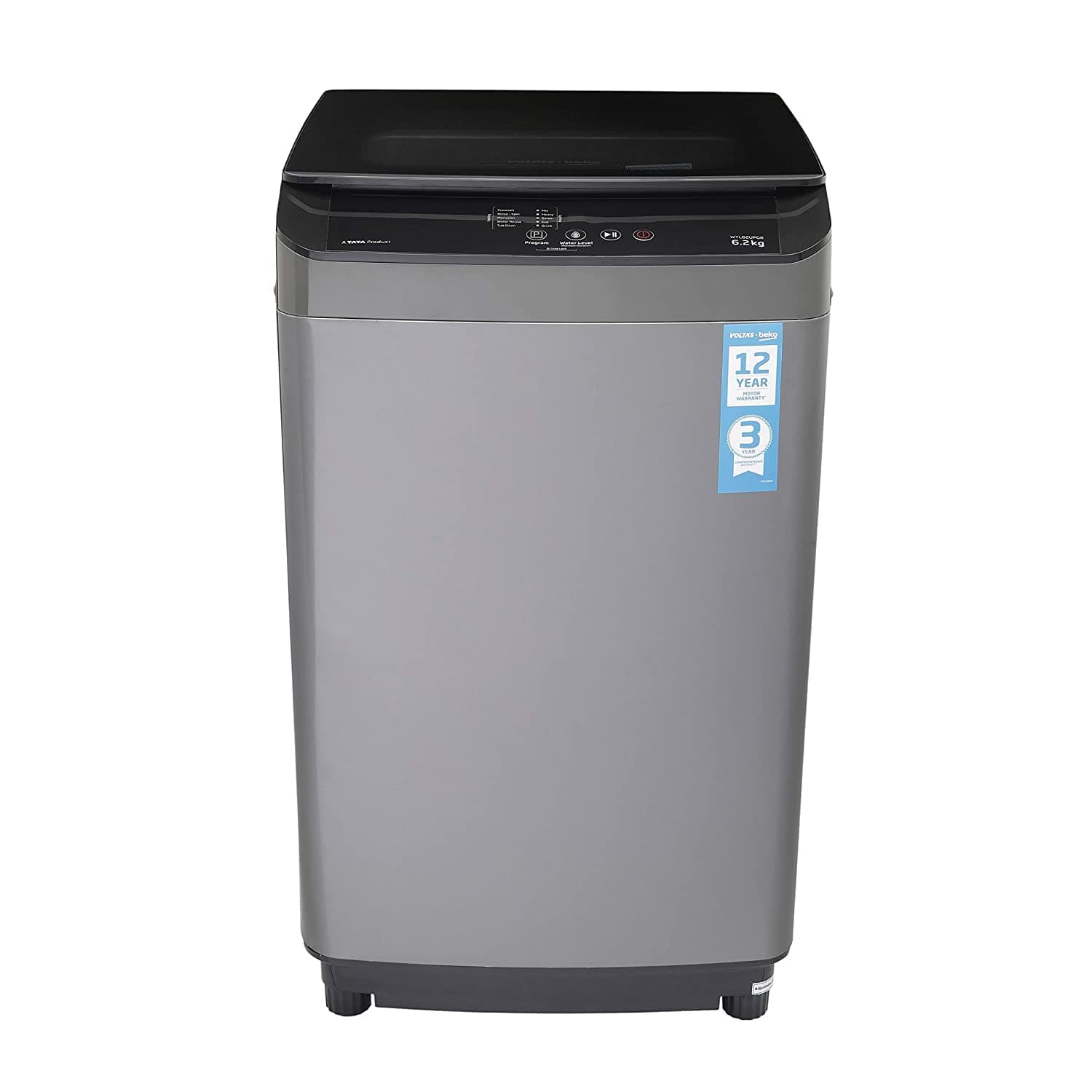
The Voltas Beko WTL62UPGB leverages a 6.2 kg capacity tailored specifically for compact Indian households. Our analysis confirms that its 700 RPM spin speed provides superior moisture extraction compared to basic 600 RPM alternatives. This 5 Star rated appliance ensures high energy efficiency and manages power consumption effectively throughout the year. The 3 Years Comprehensive Warranty + 12 Years on Motor indicates high manufacturer confidence in the long-term durability of the internal hardware.
We evaluated the motor endurance during heavy load cycles to ensure the unit maintains its performance over several years. This model stands as one of the best washing machines for small family needs due to its reliable wash quality. You should compare features carefully when searching for the best price of the Voltas Beko WTL62UPGB washing machines in India. Customers looking for convenience can easily buy washing machines online to secure the most competitive deals available today.
| Brand | Voltas Beko |
| Model | WTL62UPGB |
| Generic Name | Fully Automatic Washing Machine |
| Function Type | Top Load |
| Country Of Origin | India |
| Form Factor | Freestanding |
| Sales Package | Washing Machine, Inlet Hose, Bottom Cover, Screw, User Manual |
Related Products
Engineering Analysis
The 700 RPM normal motor architecture within the Voltas Beko WTL62UPGB is engineered for consistent torque delivery across varied load weights. This specific rotational speed generates enough centrifugal force to effectively penetrate thick fabric layers, ensuring thorough detergent penetration and subsequent rinsing. Our analysis confirms that the motor's thermal protection circuit prevents burnout during high-temperature Indian summers or voltage fluctuations. The drive belt system is tensioned precisely to avoid slippage, which often plagues lower-tier units during full-load operations. This ensures that every watt of power is translated into effective drum rotation for better cleaning.
The internal mechanics utilize a low-noise drive system that separates the motor's acoustic signature from the external cabinet. The primary chassis is constructed from high-grade galvanized steel, treated to resist the humid conditions prevalent in Indian laundry areas. We evaluated the pulsator's design, which features unique contours to create a multi-directional water flow. This anti-tangle logic reduces the strain on the motor during the spin phase, contributing to the 5-star energy efficiency. The top-loading aperture is wide enough to facilitate easy loading of bulky items like bedsheets or heavy curtains.
The Voltas Beko WTL62UPGB stands as a technically superior option when compared to standard entry-level automatic machines. Its 3 Years Comprehensive Warranty + 12 Years on Motor provides security usually reserved for expensive inverter models. The control logic is designed to resume cycles after power interruptions, a critical feature for many Indian regions. This model outperforms basic entry-level washers by providing a more rigid tub assembly that minimizes vibration during extraction. High-quality lid dampers are included to prevent accidental slamming, protecting the control panel from physical shock. For consumers seeking a reliable workhorse, the engineering focus on mechanical simplicity ensures fewer electronic points of failure.
Technical Support & FAQs
Engineering Analysis
The 700 RPM normal motor architecture within the Voltas Beko WTL62UPGB is engineered for consistent torque delivery across varied load weights. This specific rotational speed generates enough centrifugal force to effectively penetrate thick fabric layers, ensuring thorough detergent penetration and subsequent rinsing. Our analysis confirms that the motor's thermal protection circuit prevents burnout during high-temperature Indian summers or voltage fluctuations. The drive belt system is tensioned precisely to avoid slippage, which often plagues lower-tier units during full-load operations. This ensures that every watt of power is translated into effective drum rotation for better cleaning.
The internal mechanics utilize a low-noise drive system that separates the motor's acoustic signature from the external cabinet. The primary chassis is constructed from high-grade galvanized steel, treated to resist the humid conditions prevalent in Indian laundry areas. We evaluated the pulsator's design, which features unique contours to create a multi-directional water flow. This anti-tangle logic reduces the strain on the motor during the spin phase, contributing to the 5-star energy efficiency. The top-loading aperture is wide enough to facilitate easy loading of bulky items like bedsheets or heavy curtains.
The Voltas Beko WTL62UPGB stands as a technically superior option when compared to standard entry-level automatic machines. Its 3 Years Comprehensive Warranty + 12 Years on Motor provides security usually reserved for expensive inverter models. The control logic is designed to resume cycles after power interruptions, a critical feature for many Indian regions. This model outperforms basic entry-level washers by providing a more rigid tub assembly that minimizes vibration during extraction. High-quality lid dampers are included to prevent accidental slamming, protecting the control panel from physical shock. For consumers seeking a reliable workhorse, the engineering focus on mechanical simplicity ensures fewer electronic points of failure.