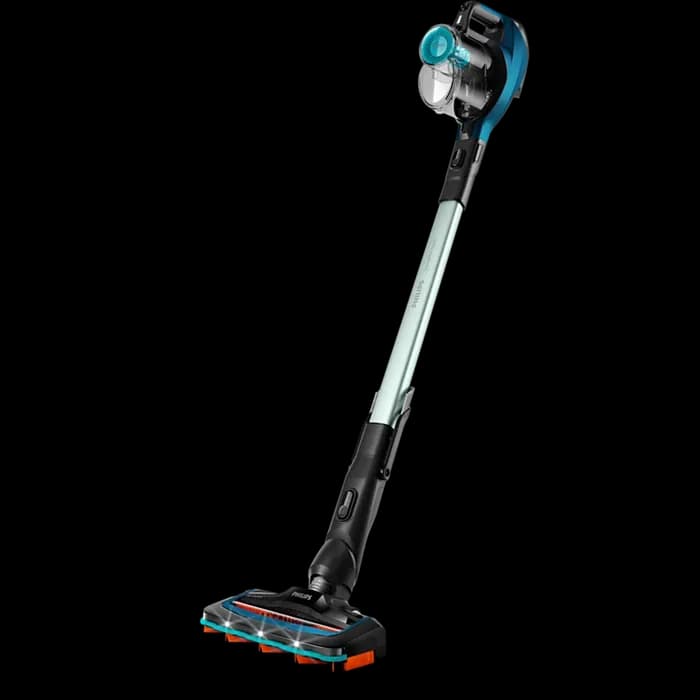
The 6 kPa suction generated by the 600 W high-speed motor is the result of a specific engineering trade-off between static pressure and airflow volume. In many cordless vacuum cleaners, a high-wattage motor is typically utilized to drive high-RPM fans, yet here the motor is tuned to maintain consistent airflow even as the 2.5 L bag fills. This 6 kPa rating is optimized for surface-level debris on hard floors like tile and wood, where high velocity is more critical than deep-carpet agitation. By focusing on airflow efficiency over raw vacuum pressure, the system minimizes heat buildup, ensuring the motor operates within safe thermal limits during the extended 300-minute cleaning cycles common in larger Indian households.
The filtration architecture utilizes a 3-stage HEPA system designed to capture 99.97% of particles down to 0.3 microns. The first stage involves a primary mesh that intercepts larger debris like hair and food crumbs, while the second stage employs a dense foam layer to protect the motor from fine silt. The final HEPA stage ensures that microscopic allergens such as dust mites and pollen are trapped within the unit. Because the filters are washable, they prevent the accumulation of organic cake which often leads to odors in humid Indian climates. This engineering choice extends the operational lifespan of the filtration media, significantly reducing the total cost of ownership for the user.
Power management is handled by a high-capacity lithium-ion battery array configured to deliver a 300-minute runtime. This extraordinary duration is achieved through a CC-CV (Constant Current - Constant Voltage) charging protocol that optimizes cell longevity over a 5-hour charging period. The balance between the 600 W motor's draw and the battery's discharge rate is carefully calibrated to prevent voltage sag, which can degrade suction performance as the battery depletes. For Indian users managing 2BHK or 3BHK apartments, this means the unit can handle multiple full-house cleaning passes or intensive spot cleaning sessions on a single charge. The thermal management system monitors cell temperature to prevent overheating during these long duty cycles.
The wet and dry separation mechanism is engineered with a specialized baffle design to protect the electrical components from moisture ingress. When the device encounters liquid spills on kitchen tiles or cement floors, the internal airflow is diverted through a moisture-trapping chamber. This prevents liquid from reaching the 600 W motor, which would cause catastrophic failure. The 2.5 L bagged system is primarily for dry debris, but the inclusion of a mop pad and wet-dry capability allows for a hybrid cleaning approach. Maintenance is critical after wet use; users must ensure the moisture path is dried to prevent bacterial growth, especially given the dusty conditions prevalent in most Indian urban centers.
The blower function is a technical addition that leverages the motor's exhaust path to create a high-velocity air stream. Unlike standard vacuums that merely vent air, this unit uses a concentrated nozzle to direct exhaust air for dislodging dust from recessed areas. In an Indian context, this is particularly effective for cleaning AC vent grilles and WFH laptop keyboards where suction alone cannot reach deep crevices. The bypass valve that toggles between suction and blowing is designed for mechanical simplicity to ensure long-term reliability. This dual-path airflow engineering maximizes the utility of the high-speed motor, providing a comprehensive cleaning tool for complex electronics and hard-to-reach corners.
Constructed from high-impact ABS plastic, the 3.3 kg chassis provides a balance between structural rigidity and portability. The weight is distributed to provide sufficient downward pressure for the mop pad while remaining manageable for manual transport between floors. The handle design incorporates ergonomic pivot points to reduce wrist strain during handheld operation. A self-emptying dock interface is integrated into the base, allowing for seamless docking and charging. This mechanical design prioritizes durability in the face of varying Indian floor textures, from smooth wood to abrasive cement. Ultimately, the MT 900 Smart LiDAR Robot Vacuum represents a robustly engineered tool for modern domestic maintenance, combining high runtime with versatile cleaning modes.