
Xiaomi Mi Air Purifier 2

Xiaomi Mi Air Purifier 2: 310 m³/hr CADR Engineering Specs and 3-Stage HEPA Performance for 398 Sq.Ft.

The Xiaomi Mi Air Purifier 2 utilizes a high-performance CADR of 310 m³/hr to facilitate rapid air exchange in rooms up to 398 sq.ft. Its 3-stage filtration assembly achieves a 99.3% capture efficiency for particulates as small as 0.3 microns using a high-density HEPA layer. Operating within a decibel range of 31-58 dB, the unit balances acoustic comfort with powerful aerodynamic throughput. The integrated PM2.5 sensor allows for intelligent monitoring of environmental quality while maintaining a compact 360-degree intake footprint.

Quick Answer

The Xiaomi Mi Air Purifier 2 is a high-efficiency solution for rooms up to 398 sq.ft, providing a 310 m³/hr CADR and 99.3% particulate removal via a 3-stage HEPA and Activated Carbon system.

✓310 m³/hr CADR for rapid volumetric air delivery.
✓3-Stage filtration including Pre-filter, HEPA, and Activated Carbon.
✓99.3% filtration efficiency for particles down to 0.3 microns.
✓360-degree aerodynamic intake for maximum suction surface area.
✓Operational noise range of 31 dB to 58 dB for versatile use cases.

A robust 310 CADR purifier designed for medium-sized rooms up to 398 sq.ft requiring high-efficiency PM2.5 removal.

✓ Who Should Buy

  • •Users with rooms up to 398 sq.ft needing rapid air exchange.
  • •Individuals sensitive to 0.3-micron particles requiring 99.3% filtration.
  • •Smart home enthusiasts who prefer app-based PM2.5 monitoring.

✕ Who Should Avoid

  • •Users requiring a real-time AQI display directly on the device chassis.
  • •Owners of large open-plan spaces exceeding 398 sq.ft.
Product Overview
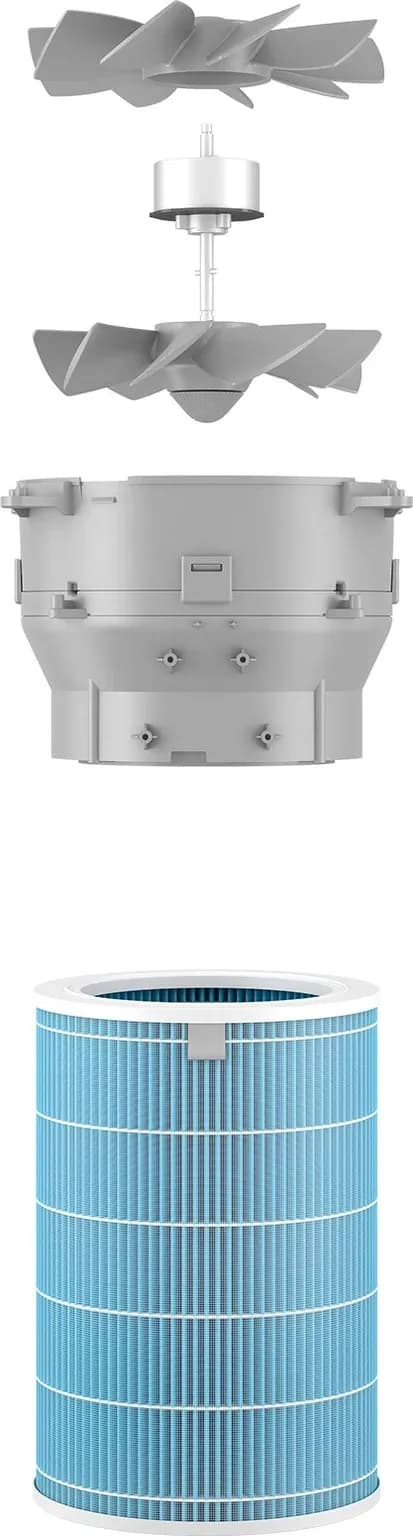
The Xiaomi Mi Air Purifier 2 is engineered around a centrifugal fan system that generates a 310 m³/hr Clean Air Delivery Rate (CADR). This specific output is optimized for spaces measuring up to 398 sq.ft, ensuring that air is cycled frequently to maintain low particulate counts. The core of its engineering lies in the cylindrical 3-stage filter, which combines a primary pre-filter for large debris, a secondary high-density HEPA filter for 99.3% efficiency against 0.3-micron particles, and a final layer of activated carbon for gaseous adsorption. The 360-degree air inlet design maximizes the intake surface area compared to flat-panel alternatives, reducing static pressure and noise levels to as low as 31 dB in sleep mode. Users can manage filtration cycles via the smart app, leveraging the internal PM2.5 sensor for automated speed adjustments, although the manual override remains crucial for peak performance at 58 dB. Its architectural efficiency ensures that 0.3-micron contaminants are trapped within the high-density mesh, making it a robust tool for environmental engineering in residential settings.

Brandxiaomi
Model NameMi Air Purifier 2
Model NumberAC-M2-AA
CategoryAir Purifier
Sub CategoryRoom Air Purifier
Purifier TypeHEPA + Activated Carbon
Installation TypeFloor Standing
Coverage Area Sqft398
Room SizeMedium
UsageHome
Launch Year2018
Model Year2018
Country Of OriginChina
ManufacturerXiaomi Corporation

Related Products

Engineering Analysis
The Xiaomi Mi Air Purifier 2 architecture centers on an aerodynamic pressurized system capable of sustaining a 310 m³/hr CADR within a 398 sq.ft radius. The 360-degree intake geometry reduces air resistance, allowing the 3-stage filter to process air with a 99.3% capture rate for particles sized at 0.3 microns. By implementing a toroidal airflow path, the device minimizes turbulence, keeping acoustic emissions between 31 and 58 dB depending on fan velocity. The HEPA component provides high-density micro-pores that maintain filtration integrity even at high volumetric flow rates, while the activated carbon stage targets VOCs. Technical efficiency is measured by the ratio of the 310 CADR output to the power consumption, where the 2nd generation model improves motor torque efficiency. The 0.3-micron filtration threshold is essential for neutralizing PM2.5 contaminants, which the onboard sensor detects with high precision. Manual speed control logic is vital because the automatic sensor algorithm may delay ramping up to the maximum 58 dB speed during peak pollution events. Consequently, the 310 m³/hr throughput is best utilized through scheduled high-speed cycles in rooms under 398 sq.ft to ensure 99.3% purity levels.

Technical Support & FAQs