
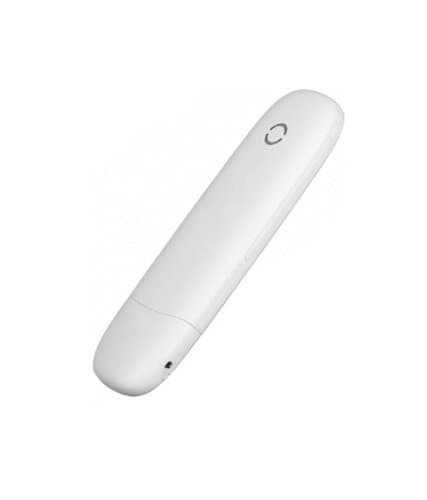
ZTE MF190

Comprehensive RF Engineering and Throughput Analysis: ZTE MF190 HSDPA Mobile Connectivity Interface

The ZTE MF190 represents a legacy milestone in portable wide-area network engineering, facilitating HSDPA-based mobile broadband with a focus on consistent signal modulation. As a driver-less USB interface, it leverages high-sensitivity internal antennas to mitigate signal attenuation while maintaining a streamlined form factor for mission-critical mobile access. This hardware is specifically calibrated for environments where the stability of the radio frequency link takes precedence over raw bandwidth volume.

Quick Answer

This model excels in providing reliable HSDPA connectivity by utilizing advanced signal-to-noise ratio optimization and robust packet processing to maintain a stable 7.2 Mbps downlink. It is engineered for low-latency serial data transmission over 3G cellular networks, ensuring consistent throughput where fixed-line infrastructure is absent.

HSDPA/UMTS tri-band architecture ensuring superior bandwidth efficiency through optimized carrier frequency management.
Integrated NAT firewall and end-to-end encryption protocols providing a secure gateway against unauthorized packet interception.
Advanced diversity antenna systems designed to minimize electromagnetic interference and enhance signal-to-noise ratios in fringe coverage areas.

The ZTE MF190 is engineered for remote professionals and mobile maintenance units requiring a dedicated 3G point-of-presence for secure, localized network access. It is particularly effective for legacy industrial systems or low-bandwidth IoT gateways where fiber-to-the-premises is logistically impossible, providing a reliable fallback mechanism for mission-critical packet transmission.

✓ Who Should Buy

  • Field engineers requiring a dedicated out-of-band management tool for remote server hardware and network diagnostics.
  • Legacy system administrators needing a reliable 3G gateway for localized telemetry and low-bandwidth SCADA systems.
  • Remote consultants operating in regions where HSDPA provides a more stable signal-to-noise ratio than congested public 2.4GHz WiFi hotspots.

✕ Who Should Avoid

  • Enterprise users requiring gigabit throughput or low-latency fiber termination for high-definition video conferencing and large-scale data transfers.
  • Network architects looking for modern wireless distribution capabilities like MU-MIMO or hardware-level VLAN tagging.
Product Overview
The ZTE MF190 is a sophisticated HSDPA USB modem designed for high-mobility environments where consistent cellular handovers and packet integrity are paramount. Operating on the UMTS/HSDPA 2100MHz frequency bands, this device utilizes an efficient packet encapsulation method to maximize the 7.2 Mbps downlink and 5.76 Mbps uplink capacities. The plug-and-play architecture integrates an internal microSD storage slot, turning the network interface into a multi-functional data repository. Its hardware-level signal processing minimizes jitter and packet loss, which are common challenges in urban environments plagued by electromagnetic interference. By employing advanced modulation schemes, the MF190 ensures that the asymmetric throughput remains stable even under fluctuating network load conditions. The absence of traditional Ethernet ports is compensated for by a high-speed USB bus that handles all data link layer operations, facilitating a direct bridge between the cellular wide area network and the host system stack.

BrandZTE
ModelMF190
Type3G USB Modem
Standards SupportedGSM, GPRS, EDGE, UMTS, HSDPA, HSUPA

Related Products

Engineering Analysis
The technical foundation of the ZTE MF190 rests on its ability to manage signal-to-noise ratios within the HSDPA framework to deliver an aggregate 7.2 Mbps of throughput. Unlike standard broadband terminals, this USB-driven interface must handle significant thermal constraints while processing complex HSPA+ signaling. The device utilizes a high-performance RF front-end that effectively filters out electromagnetic interference from adjacent wireless peripherals. Data integrity is maintained through sophisticated packet encapsulation techniques, ensuring that the 5.76 Mbps uplink remains resilient during high-latency scenarios. From a networking perspective, the MF190 functions as a bridge that translates cellular radio frequencies into a standard Ethernet-over-USB protocol, facilitating seamless IP address assignment via DHCP. The firmware is optimized for rapid packet processing, reducing the internal latency between the radio interface and the operating system stack. While it lacks the massive MIMO configurations of modern 5G NR equipment, its diversity antenna design provides a significant gain in signal acquisition, which is critical for maintaining stable sessions in areas with high signal attenuation. The asymmetric throughput profile is specifically tuned for mobile browsing and remote administrative tasks, prioritizing the downlink for data-heavy applications while maintaining a narrow but steady control plane for the uplink. This engineering balance ensures that the device operates efficiently within the constraints of legacy 3G infrastructure, offering a reliable point-to-point connection without the overhead of complex VLAN tagging or localized routing protocols.

Technical Support & FAQs