
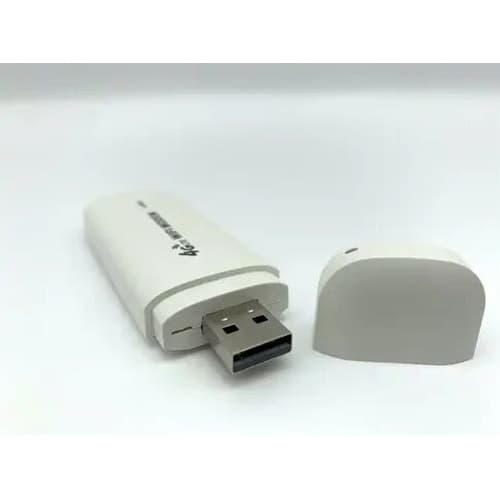
ZTE MF782

LTE Category 3 Signal Integration: ZTE MF782 Mobile Broadband Interface Analysis

The ZTE MF782 represents a specialized evolution in mobile hardware, transitioning cellular signals into high-integrity data streams for immediate deployment across diverse computing environments. By utilizing advanced LTE Category 3 protocols, this interface ensures that packet encapsulation remains consistent even during high-velocity signal handovers or fluctuating network conditions. Its compact form factor conceals a sophisticated chipset capable of managing asymmetric throughput with surgical precision, making it an essential component for mobile professionals and remote infrastructure monitoring where reliability is non-negotiable.

Quick Answer

The ZTE MF782 is a high-performance 4G LTE solution that prioritizes signal-to-noise ratio optimization to maintain a stable 100 Mbps downlink in variable RF environments. Its architecture utilizes efficient driver-level packet processing to minimize latency during high-bandwidth tasks, ensuring a resilient connection without the need for fixed-line infrastructure.

Optimized LTE Category 3 throughput reaching 100 Mbps to ensure bandwidth efficiency across diverse cellular spectrum bands.
Integrated hardware-level security protocols and secure packet encapsulation to mitigate unauthorized intrusions during mobile data sessions.
Sophisticated interference mitigation technology that maintains connection integrity against electromagnetic interference in high-density urban deployment zones.

The ZTE MF782 is engineered for professionals and enterprises requiring high-bandwidth mobile connectivity without the complexity of fixed-line installations. It offers a stable 4G interface that excels in scenarios where traditional broadband is unavailable or as a secondary failover mechanism for critical systems requiring constant uptime.

✓ Who Should Buy

  • Remote engineers needing reliable cellular backhaul for field diagnostics and real-time telemetry over LTE networks.
  • Traveling professionals requiring a dedicated, secure LTE link to bypass the inherent security risks of public hotspots.
  • Network administrators seeking a cost-effective and portable LTE failover solution for small office or home office environments.

✕ Who Should Avoid

  • Users located in ultra-remote regions lacking 4G LTE coverage where satellite or low-frequency radio communication is the only viable option.
  • High-density server environments requiring multi-gigabit throughput via SFP+ or 10GbE copper interfaces for massive data center traffic.
Product Overview
The ZTE MF782 serves as a robust gateway between cellular infrastructure and local compute environments, delivering a streamlined approach to mobile connectivity without the overhead of traditional routing hardware. This 4G LTE USB modem is engineered to handle the rigorous demands of modern data transmission, offering a maximum theoretical downlink of 100 Mbps and an uplink of 50 Mbps. By bypassing the need for traditional fiber-optic cables, the device leverages the ubiquity of LTE networks to provide high-speed access through a universal USB interface. Its internal antenna array is meticulously tuned to maximize gain while minimizing the impact of signal attenuation. The device supports a wide range of frequency bands, ensuring global compatibility and seamless roaming capabilities. Beyond simple connectivity, the MF782 manages complex networking tasks such as IP address assignment and DNS resolution with minimal latency, allowing the host system to focus on application-layer performance and data throughput.

BrandZTE
ModelMF782
Type4G LTE USB Modem
Standards SupportedGSM, UMTS, LTE

Related Products

Engineering Analysis
The engineering foundation of the ZTE MF782 is built upon its ability to maintain a high signal-to-noise ratio even in environments plagued by significant electromagnetic interference. Achieving a 100 Mbps download speed requires precise coordination between the baseband processor and the RF front-end, where packet encapsulation must be executed with microsecond accuracy to avoid buffer bloat. The device employs advanced signal processing algorithms to mitigate the effects of multipath fading, ensuring that the asymmetric throughput remains balanced according to real-time network congestion levels. Furthermore, the MF782 handles packet headers with extreme efficiency, reducing the computational load on the host processor during high-volume data transfers. The internal thermal management system is designed to dissipate heat generated during prolonged high-speed sessions, preventing thermal throttling which can often degrade the quality of service in smaller form-factor devices. In terms of network layer interaction, the modem supports sophisticated NAT traversal and can facilitate secure communication for various enterprise protocols. The firmware is optimized for low-latency handovers between cell towers, a critical feature for maintaining connection persistence in mobile scenarios. By prioritizing the integrity of the data link layer, the MF782 ensures that packet loss is kept to an absolute minimum, thereby enhancing the overall user experience for real-time applications such as video conferencing or remote server management. This focus on physical layer stability makes it a premier choice for mission-critical mobile data links.

Technical Support & FAQs