
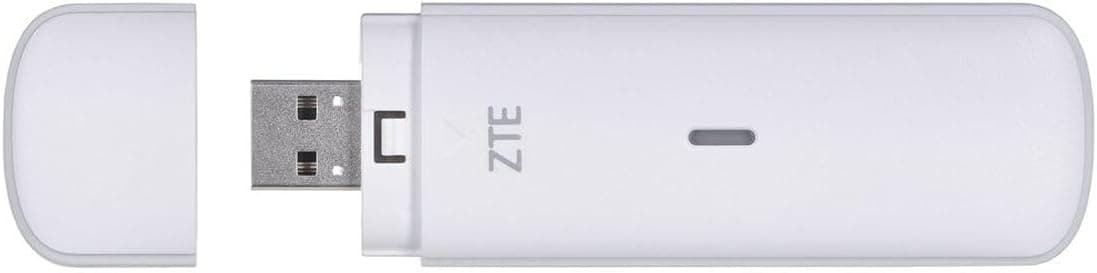
ZTE MF833N

Technical Systems Analysis: ZTE MF833N High-Speed LTE Category 4 USB Interface

The ZTE MF833N represents a pinnacle of miniaturized cellular engineering, designed to facilitate high-speed LTE Category 4 connectivity through a plug-and-play USB interface. By leveraging sophisticated signal processing algorithms and a robust internal antenna array, this device mitigates electromagnetic interference while maintaining consistent data rates across diverse network topographies. It serves as a critical bridge for mobile workstations and industrial IoT applications requiring reliable backhaul through advanced packet encapsulation techniques and high-fidelity radio frequency reception.

Quick Answer

The ZTE MF833N is a reliable LTE Cat4 solution due to its efficient packet encapsulation and ability to maintain a high signal-to-noise ratio in fringe coverage areas. It offers consistent 150 Mbps downlink performance, making it ideal for mobile professional deployments requiring stable asymmetric throughput and native driver support.

LTE Category 4 implementation ensures 150 Mbps downlink and 50 Mbps uplink with optimized signal-to-noise ratio profiles for consistent data delivery.
Advanced firmware architecture supports stateful packet inspection and integrated firewall protocols to secure the edge of the cellular network.
Low-power consumption chipset design reduces thermal throttling and maintains sustained throughput during intensive high-bandwidth data transfers.

The ZTE MF833N is engineered for professionals and mobile enterprises requiring immediate, high-bandwidth cellular access without the complexity of external power sources or bulky hardware. It provides a streamlined path for LTE termination, ensuring that remote telemetry, mobile broadcasting, and temporary field offices maintain a robust link to the core network with minimal latency and high spectral efficiency.

✓ Who Should Buy

  • Field engineers requiring reliable LTE backhaul for remote diagnostic equipment and real-time telemetry processing.
  • Mobile professionals seeking a low-latency secondary WAN link to circumvent congested public Wi-Fi infrastructures in transit.
  • IoT integrators needing a standardized USB interface for cellular connectivity in industrial computing and automated kiosk environments.

✕ Who Should Avoid

  • Network administrators requiring multi-user local area networking via physical Ethernet ports or integrated Wi-Fi access points.
  • Power users in 5G-enabled metropolitan zones who require throughput exceeding the 150 Mbps limit of LTE Category 4 architecture.
Product Overview
This USB modem integrates a sophisticated radio frequency front-end capable of aggregating various LTE bands to maximize spectral efficiency. Unlike traditional consumer-grade dongles, the ZTE MF833N utilizes an industrial-grade chipset that prioritizes packet processing efficiency and minimizes jitter across the air interface. Its driverless installation mechanism employs virtual CD-ROM emulation to facilitate rapid deployment across multiple operating systems, ensuring that VLAN tagging and IPv6 transition mechanisms are handled natively within the networking stack. The hardware design focuses on durability and heat dissipation, allowing the internal oscillators to maintain clock synchronization even under heavy network loads. By utilizing high-density bit mapping, the device extracts maximum performance from available bandwidth, providing a robust wide area network connection without the need for external power sources or complex hardware configurations.

BrandZTE
ModelMF833N
Type4G LTE USB Modem
Standards SupportedGSM, EDGE, GPRS, UMTS, HSPA, HSPA+, LTE FDD, LTE TDD

Related Products

Engineering Analysis
The ZTE MF833N operates on the LTE Category 4 standard, which is engineered to deliver a theoretical maximum downlink of 150 Mbps and an uplink of 50 Mbps through 20 MHz of spectral bandwidth. At the heart of its performance is the advanced modulation scheme, typically utilizing 64-QAM for the downlink and 16-QAM for the uplink. This allows for high-density bit mapping, though it necessitates a superior signal-to-noise ratio to prevent bit error rate degradation. The device employs sophisticated MIMO technology, even within its compact form factor, to exploit multi-path propagation and enhance signal stability in urban environments where electromagnetic interference is prevalent. From a protocol perspective, the MF833N excels in packet encapsulation, minimizing overhead during the transition from cellular radio frames to Ethernet-over-USB protocols. The internal firmware manages Radio Resource Control states efficiently, ensuring rapid transitions from idle to active modes to reduce first-packet latency. Furthermore, the modem thermal management system is designed to prevent frequency scaling or throttling, which is often a bottleneck in high-throughput USB devices. By maintaining consistent clock speeds for the baseband processor, the MF833N ensures that asymmetric throughput remains stable even during prolonged large-file transfers or high-bitrate streaming. The integration of advanced error correction algorithms like Turbo Coding helps the device recover data packets in environments with high signal attenuation, thereby reducing the need for retransmissions at the transport layer and optimizing overall network efficiency for mission-critical deployments.

Technical Support & FAQs