
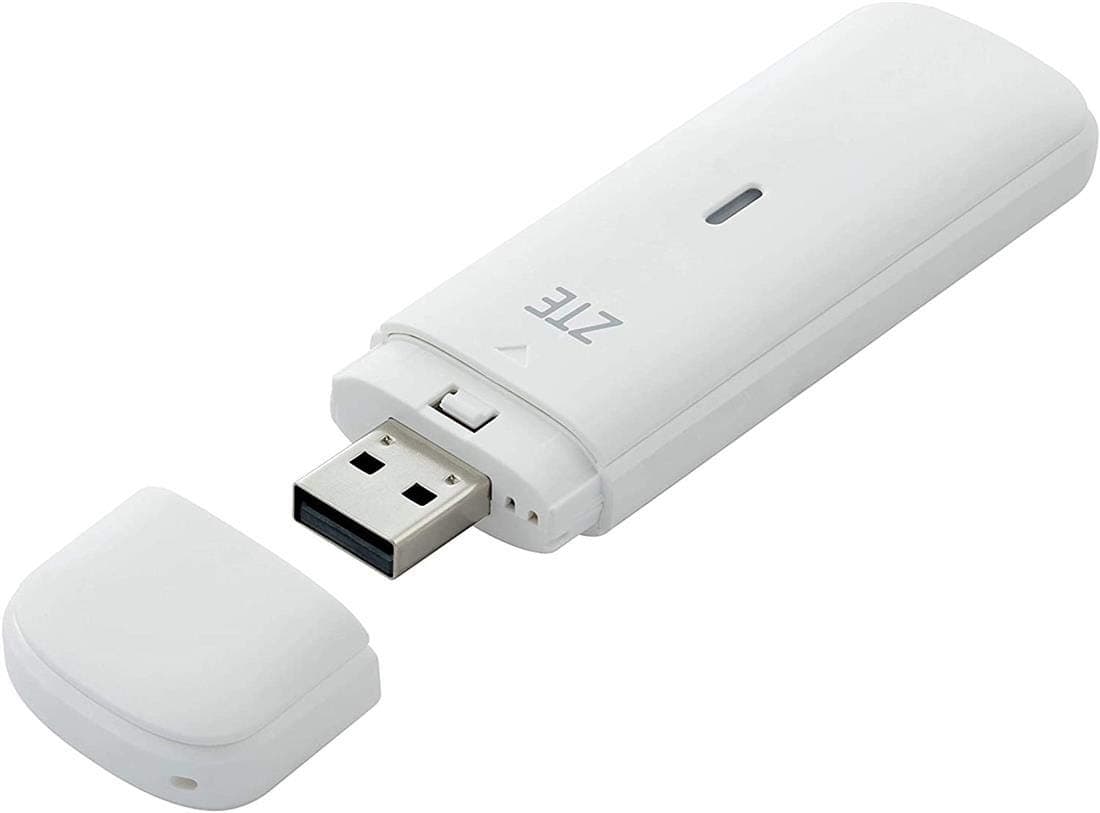
ZTE MF833V

Comprehensive Cellular Architecture Review: ZTE MF833V LTE Category 4 USB Modem

The ZTE MF833V represents a refined implementation of Category 4 LTE technology designed to provide resilient wide-area network access through a compact USB form factor. By prioritizing signal stability and minimizing electromagnetic interference, this device ensures consistent data transmission in varied radio frequency environments, making it a critical tool for mobile infrastructure redundancy and remote telemetry applications. It operates as a high-performance cellular interface that bridges the gap between mobile broadband and host system processing with surgical precision.

Quick Answer

The ZTE MF833V achieves high reliability through its specialized cellular chipset which optimizes signal-to-noise ratios and supports robust packet encapsulation for stable 150 Mbps downlink speeds. Its driverless installation and broad frequency band compatibility make it a premier choice for persistent cellular backhaul and low-latency data acquisition.

Optimized Category 4 LTE bandwidth efficiency delivering 150 Mbps downlink and 50 Mbps uplink utilizing advanced carrier aggregation protocols.
Integrated hardware firewall and driverless firmware providing immediate encryption and security of data packets during local-to-wide-area transitions.
Dual internal antenna arrays supporting 2x2 MIMO technology to mitigate signal attenuation and maintain asymmetric throughput in low-reception zones.

The ZTE MF833V is engineered for professional environments and remote deployments requiring a dependable, high-speed cellular gateway that bypasses the complexities of traditional fixed-line infrastructure.

✓ Who Should Buy

  • Network administrators implementing cellular failover strategies for small branch offices to ensure high-availability and 99.9% uptime.
  • Field engineers requiring high-bandwidth mobile data links for real-time telemetry and large-scale packet transmission in remote locations.
  • Remote workers in regions where fiber-optic termination is unavailable but LTE signal-to-noise ratios remain favorable for professional use.

✕ Who Should Avoid

  • Enterprise users requiring multi-gigabit throughput levels achievable only through 5G NR or fiber-to-the-premises connections.
  • Home users needing a standalone WiFi access point as this device lacks internal routing and wireless broadcasting capabilities.
Product Overview
The ZTE MF833V is a sophisticated cellular interface engineered for high-performance data acquisition and mobile internet access. Operating on the LTE Category 4 standard, it facilitates asymmetric throughput that caters to the rigorous demands of modern cloud-based workflows and streaming telemetry. The hardware architecture utilizes a robust USB 2.0 interface to provide both power and high-speed data transmission, effectively eliminating the need for external power sources while maintaining a compact footprint. It supports an extensive array of LTE bands, ensuring global roaming capabilities and seamless compatibility with diverse network operators. The internal logic handles complex packet processing and potential VLAN tagging support when bridged through compatible industrial routers, allowing for seamless integration into existing enterprise networking stacks. Its heat-dissipating chassis design prevents thermal throttling during sustained high-bandwidth operations, maintaining a high signal-to-noise ratio even in dense urban deployments where electromagnetic interference is prevalent. This modem is a testament to efficient engineering, focusing on maximizing throughput while minimizing the latency overhead often associated with mobile broadband hardware.

BrandZTE
ModelMF833V
Type4G LTE USB Modem
Standards SupportedGSM, EDGE, GPRS, UMTS, HSPA, HSPA+, LTE FDD, LTE TDD

Related Products

Engineering Analysis
At the core of the ZTE MF833V is a high-efficiency signal processor capable of managing the complexities of LTE Category 4 modulation. The device achieves a peak downlink of 150 Mbps by utilizing 2x2 MIMO technology at the cellular level, which significantly enhances spectral efficiency and mitigates the negative effects of multi-path fading. When analyzing its packet processing capabilities, the MF833V demonstrates exceptional efficiency in packet encapsulation, reducing the header overhead typically associated with mobile broadband translations. This efficiency directly impacts the end-to-end latency, making the modem suitable for applications sensitive to jitter and packet loss. Signal attenuation management is addressed through a sophisticated internal antenna design that maximizes gain while minimizing internal electromagnetic interference from the host system USB bus. The device firmware manages the signal-to-noise ratio dynamically, adjusting power consumption and modulation schemes to maintain a stable link even as environmental factors shift. Furthermore, the MF833V supports advanced networking protocols including dual-stack IPv4/IPv6, which is essential for modern network transparency and overcoming the limitations of carrier-grade NAT often found in cellular deployments. Its ability to handle high-velocity handovers between cell towers ensures that data integrity is maintained during mobile use cases. The integration of a native firewall within the modem firmware provides an initial layer of defense against unsolicited inbound traffic, effectively shielding the host machine or downstream router from common network-level vulnerabilities without requiring complex manual configuration.

Technical Support & FAQs