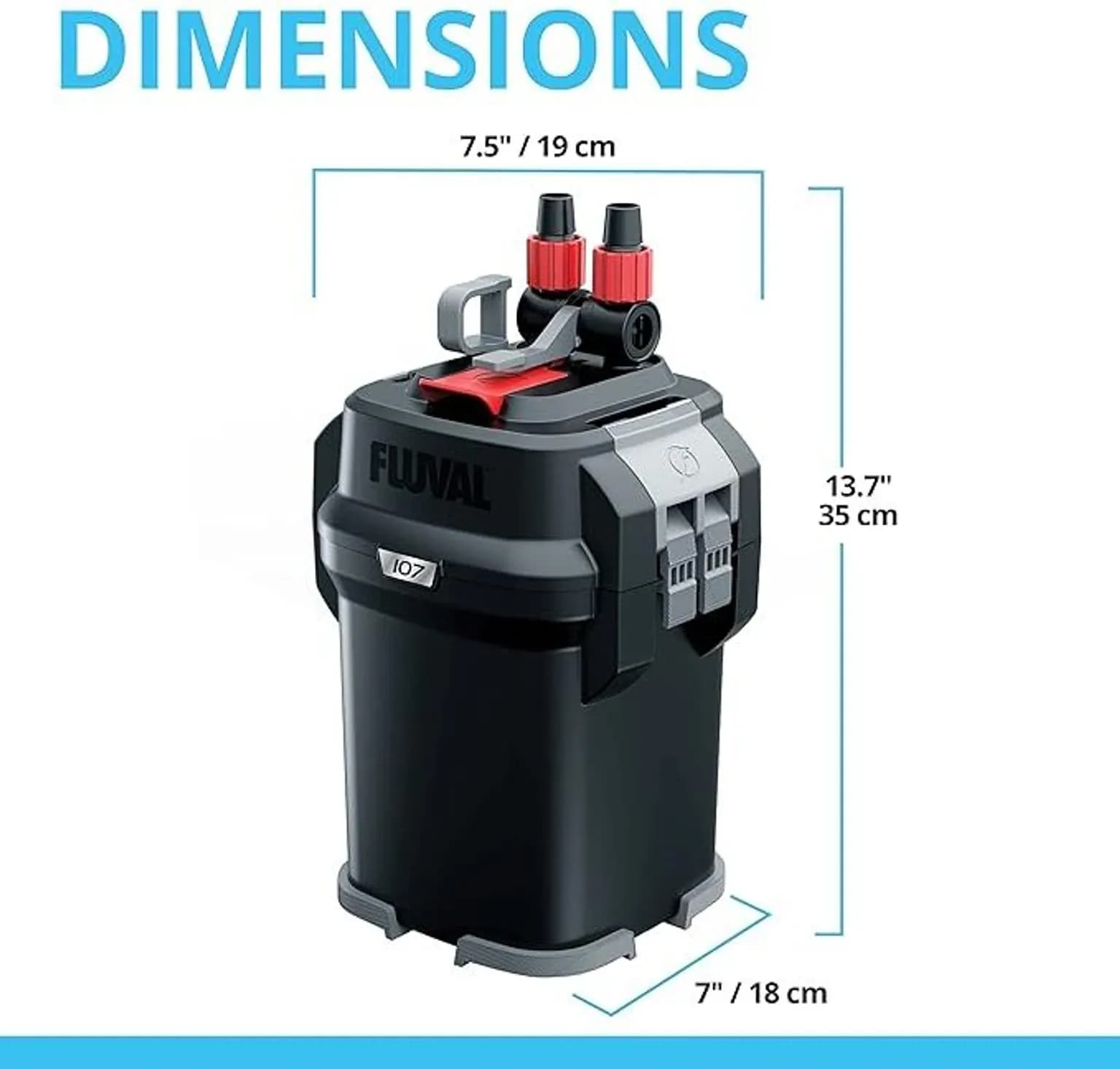
The Fluval 307 (model A446) is a meticulously engineered external canister filter, specifically designed for freshwater and planted aquariums ranging from 220 to 330 liters. It offers robust multi-stage mechanical, biological, and chemical filtration, delivering an impressive 1150 LPH flow rate with an efficient 16W power consumption, ensuring pristine aquatic environments.
Quick Answer
The Fluval 307 is a highly energy-efficient external canister filter providing comprehensive multi-stage filtration and an adjustable flow rate of up to 1150 LPH for freshwater aquariums up to 330 liters, backed by a 3-year manufacturer warranty.
The Fluval 307 is a standout for 220-330L aquariums, blending Italian craftsmanship with a powerful 1150 LPH flow rate. At only 16W, it’s remarkably efficient for a multi-stage canister filter. Buy this if you need a reliable, self-priming workhorse that simplifies maintenance for both fresh and saltwater setups. It’s ideal for hobbyists upgrading from basic internal filters. However, skip it if your tank is under 200L, as the output may be too aggressive, or if you’re stocking massive 400L+ predator tanks.
| Brand | Fluval |
| Model Name | 307 |
| Model Number | A446 |
| Category | Aquarium Filter |
| Filter Type | Canister Filter |
| Filter Location | External |
| Recommended Tank Size Liters | 220-330 |
| Suitable For | Freshwater, Planted Aquarium |
| Launch Year | 2018 |
| Model Year | 2018-2026 |
| Country Of Origin | Italy |
| Manufacturer | Hagen |