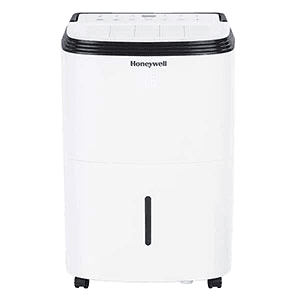
The thermodynamic performance of the TP50WKN relies on a high-torque rotary compressor that executes a vapor-compression refrigeration cycle. As humid air is pulled over the evaporator coils, the temperature drops below the dew point, causing moisture to condense into the 7-pint reservoir at a rated 32 pints/day (~15.1 L/day). In the context of India’s high ambient temperatures, which often hover between 30 and 40 degrees Celsius, compressor efficiency is paramount. Unlike standard reciprocating compressors that may struggle with heat dissipation, the rotary design in this unit maintains a consistent pressure differential, ensuring that moisture extraction remains stable even during the peak of a sweltering Kolkata summer where the latent heat load is significantly higher than in temperate western climates.
The choice of R-410A refrigerant in the TP50WKN is critical for its performance in tropical environments. R-410A operates at higher pressures than older refrigerants like R-22, allowing for more compact heat exchangers while providing superior heat transfer coefficients. This characteristic is particularly beneficial in India, where high outdoor temperatures can impede the condenser’s ability to release heat. By utilizing this hydrofluorocarbon blend, the unit achieves a higher Energy Efficiency Ratio (EER), which is vital for Indian homeowners concerned about rising electricity tariffs. The refrigerant’s stability under high thermal stress ensures that the internal components do not degrade prematurely, even when the machine is tasked with continuous operation during the most humid months in coastal cities like Chennai or Kochi.
Precision in atmospheric control is achieved via an integrated digital humidistat, which allows the TP50WKN to operate within a broad 30% to 90% relative humidity (RH) range. This versatility is essential for the diverse requirements of Indian properties, ranging from specialized server rooms in Bangalore requiring a steady 45% RH to residential bedrooms in Mumbai aiming for a comfortable 55% RH. The control logic incorporates a specific latency period between sensor readings and compressor activation to prevent short-cycling, which preserves the motor’s lifespan. By accurately sensing the moisture content of the incoming 115 CFM airflow, the machine intelligently manages its power consumption, ensuring that the compressor only works when necessary to counteract the heavy moisture infiltration typical of Indian monsoon conditions.
Thermal management is further refined through an automatic defrost mechanism, a feature that becomes indispensable in the cooler, damp climates of Indian hill stations like Shimla, Munnar, or Ooty. When ambient temperatures drop toward the lower operating limit of 41°F, frost can accumulate on the evaporator coils, insulating them and drastically reducing extraction efficiency. The machine detects this ice buildup and momentarily pauses the compressor while keeping the fan running to melt the frost. This capability also benefits users in air-conditioned rooms in coastal cities, where the micro-climate near the unit might drop significantly. Without this engineering safeguard, the unit would experience reduced airflow and potential mechanical failure, making it a reliable year-round solution for all Indian geographies.
The air circuit of this 32-pint unit is optimized for a 115 CFM flow rate, managed by a two-speed fan system that balances noise against moisture extraction speed. At 49 dB, the acoustic output is carefully dampened to suit residential environments. The moisture is collected in a 7-pint tank, though the engineering includes a continuous drain port for gravity-fed drainage. In a typical 80% RH environment in coastal Goa, the tank would require emptying multiple times daily, making the continuous drain option a technical necessity for unattended basements or storage units. This dual-drainage design ensures that the machine can handle high-volume moisture removal without the risk of an auto shut-off interrupting the dehumidification process during periods of peak atmospheric saturation.
From a structural perspective, the 14.87 kg chassis is supported by heavy-duty caster wheels, facilitating mobility across the diverse flooring types found in Indian homes, from marble to vitrified tiles. Maintenance is streamlined through a front-access dust filter, which protects the internal coils from the high particulate matter counts common in urban Indian environments. Regular cleaning of this filter is the primary requirement to maintain the 115 CFM airflow and overall system longevity. By combining a durable build with sophisticated electronic protections like auto-restart after power cuts, the unit establishes itself as a high-performance appliance. It represents a definitive engineering solution for those seeking reliable, long-term moisture management in any 2 BHK or medium-sized apartment, solidified by the industrial-grade performance of the TP50WKN.