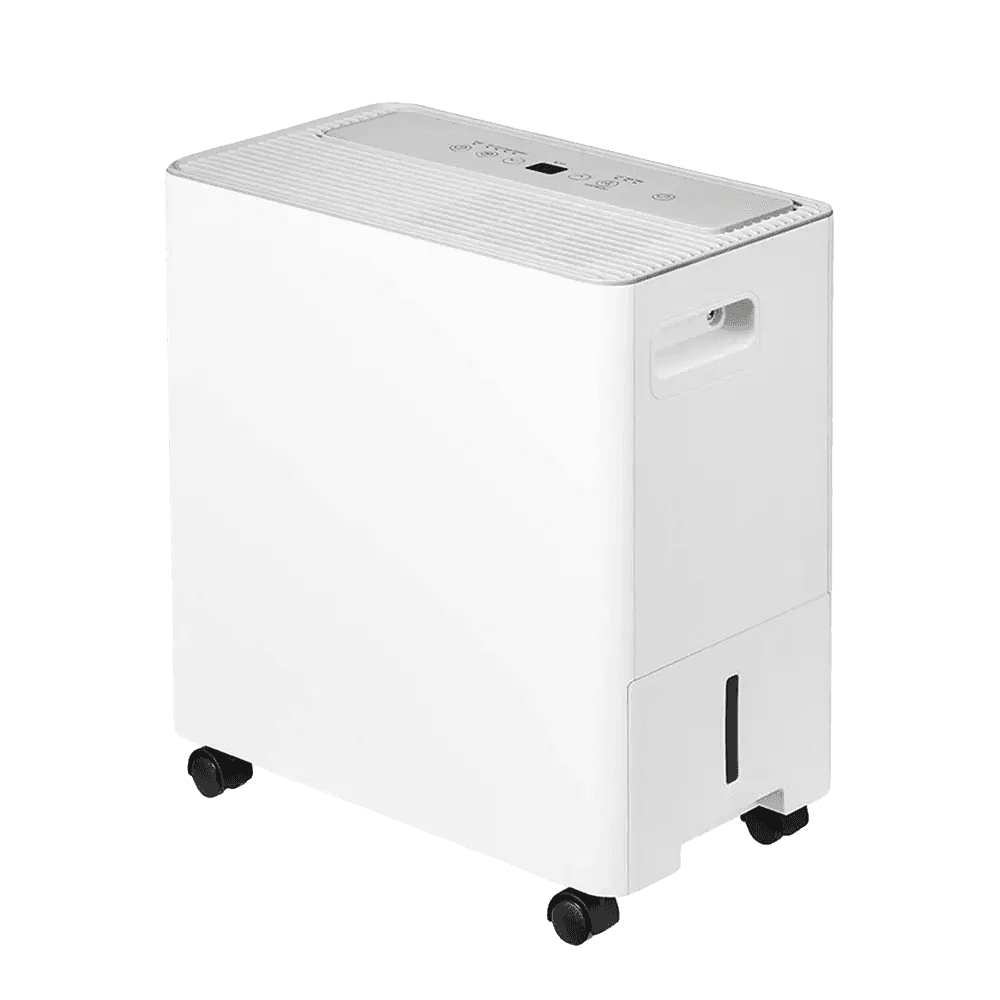
The refrigeration cycle of the MAD22S1AWWT is engineered to maximize moisture removal efficiency in the high-enthalpy air of the Indian tropics. Utilizing a rotary compressor, the system draws in humid air and passes it over evaporator coils cooled by R-410A refrigerant. This process forces the air temperature below its dew point, causing water vapor to condense and collect at a rate of 22 pints/day (~10.4 L/day). In cities like Kolkata or Chennai, where ambient temperatures often exceed 35°C with high humidity, compressor efficiency is critical. The rotary design provides a more consistent torque and lower vibration compared to reciprocating models, ensuring the unit can maintain rigorous duty cycles during the four-month monsoon period without mechanical fatigue or excessive heat generation.
The choice of R-410A refrigerant in the MAD22S1AWWT is a deliberate engineering decision for tropical performance. R-410A operates at higher pressures than older refrigerants, allowing for a smaller compressor displacement while achieving the same cooling capacity. This is particularly advantageous in India’s high ambient temperature environments where heat exchange efficiency can be hampered by narrow temperature differentials. The refrigerant’s high heat transfer coefficient ensures that the evaporator coils remain sufficiently cold to strip moisture effectively even when the incoming air is extremely warm. This thermodynamic stability is essential for maintaining the rated 22 pints/day (~10.4 L/day) extraction, preventing the system from short-cycling as outdoor temperatures climb during the humid post-monsoon months in coastal regions.
Precise humidity regulation is managed through an integrated digital humidistat that monitors the environment with a 35% to 85% RH operating range. The logic board is programmed with a specific latency period between sensor readings and compressor activation to prevent rapid cycling, which can damage electrical components. For an Indian homeowner, this means the unit can be set to a precise 50% RH for a bedroom or a slightly higher 60% RH for a living area to balance comfort and energy use. The sensitivity of these sensors is tuned to respond to the rapid humidity spikes common in Chennai's coastal weather. By maintaining these strict parameters, the device ensures that the indoor air remains outside the danger zone where mold and dust mites thrive.
Thermal management within the unit includes an essential auto-defrost mechanism, a feature often overlooked but vital for varied Indian climates. In hill stations like Ooty or during winter nights in coastal cities when room temperatures might drop toward 41°F, frost can accumulate on the evaporator coils. This MAD22S1AWWT sensor-driven defrost cycle temporarily halts the compressor while running the fan to melt ice buildup, ensuring continuous operation without manual intervention. Without this feature, the airflow would be restricted, drastically reducing extraction efficiency and potentially leading to compressor failure. This engineering safeguards the unit’s longevity across diverse geographical zones, from the humid backwaters of Kochi to the cooler, damp mornings of a North Indian monsoon, providing reliable year-round performance.
The air circuit and drainage system are optimized for the high-volume throughput required in 1,500 sq. ft. (~139 m²) spaces. A 2-speed fan draws air through a high-density mesh filter, which traps large particulates and protects the internal coils from dust-induced efficiency loss. The moisture is channeled into a side-access bucket with splash guard, designed with a specific geometry to minimize turbulence and prevent leaks during transit. At a maximum extraction of 22 pints/day (~10.4 L/day), the bucket requires periodic monitoring, though the auto shut-off float switch prevents overflows. For permanent installations in high-moisture zones like Goa, the continuous drain port allows for gravity-fed bypass, enabling the unit to run indefinitely without human monitoring, which is ideal for second homes or vacation rentals.
Structural integrity is maintained by a 13.99 kg chassis mounted on durable caster wheels, allowing for easy repositioning between rooms as humidity loads shift. The external housing is constructed from impact-resistant polymers that resist the yellowing and brittleness often caused by UV exposure in tropical climates. Maintenance is streamlined through the washable mesh filter, which should be serviced regularly to maintain the laminar airflow across the heat exchangers. Electrical safety is managed via the auto restart function, which resumes operation at the previous settings following the frequent power interruptions experienced in many Indian states. This combination of mechanical robustness and intelligent recovery logic makes the MAD22S1AWWT a technically superior choice for residential humidity control in the most demanding coastal environments across the subcontinent.