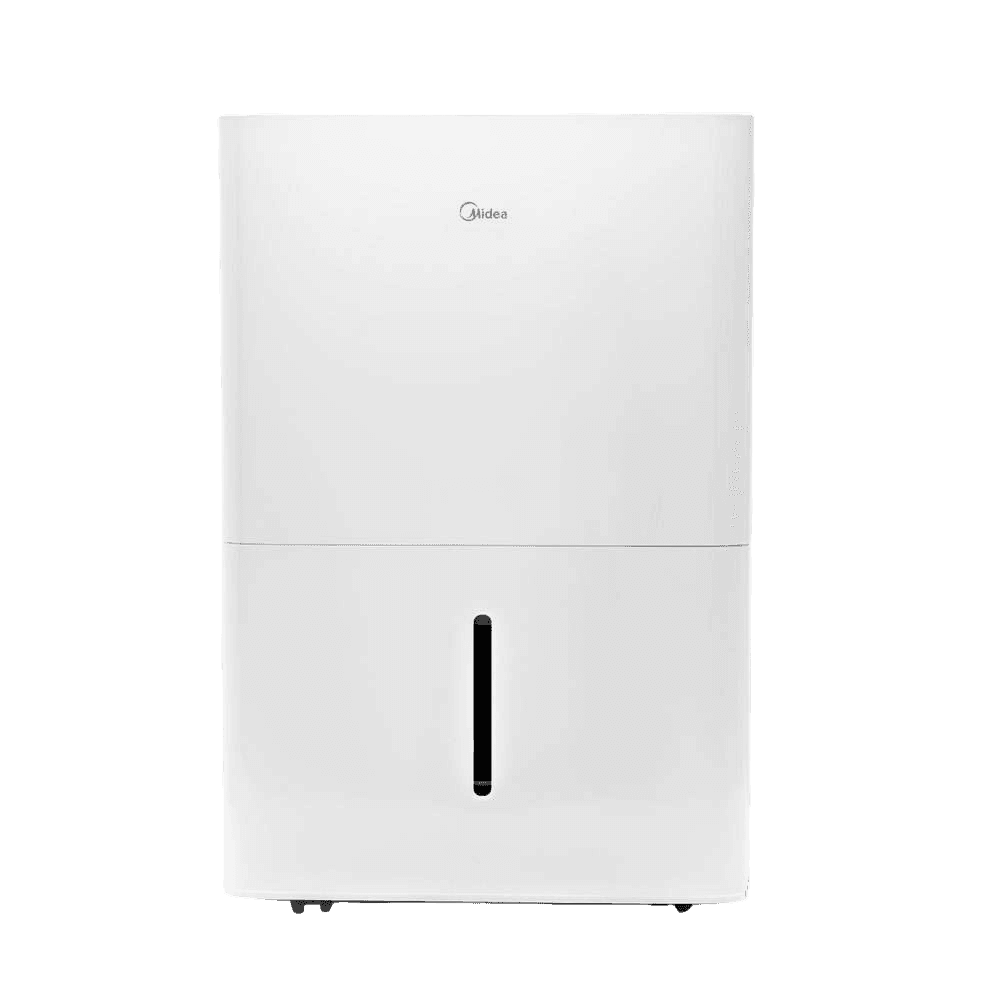
The thermodynamics of the refrigeration cycle in the MAD35C1AWS utilize a high-torque rotary compressor to achieve a moisture extraction rate of 35 pints/day (~16.6 L/day). By drawing warm, saturated air over a series of evaporator coils, the system rapidly lowers the air temperature below the dew point, forcing water vapor to condense into the 1.6 gallons reservoir. In the Indian context, where ambient temperatures often exceed 30 degrees Celsius with high humidity, compressor efficiency is paramount. The rotary design minimizes mechanical friction and energy loss compared to reciprocating types, ensuring consistent performance during the peak thermal loads of a Kolkata or Chennai summer, where latent heat removal is as critical as sensible cooling.
The performance of the MAD35C1AWS is further optimized by the use of R-410A refrigerant, which possesses superior heat transfer properties and higher operating pressures than legacy gases. This allows for a more compact heat exchanger design while maintaining the 229 CFM air flow necessary to circulate air across 3,000 sq. ft. (~279 m²). R-410A remains stable even when ambient temperatures approach the upper operating limit of 89.6°F, which is frequent in tropical Indian coastal zones. The chemical stability of this hydrofluorocarbon blend ensures that the internal pressure remains within safety margins, preventing compressor stall during the high-load cycles typical of 24-hour monsoon operation in Kochi or Goa.
In the MAD35C1AWS, the sensor logic is governed by a digital humidistat capable of detecting changes in relative humidity between 35% and 85%. This precise sensing is vital for specialized environments in India, such as home server rooms or archives, where a fixed RH% of 45-50% must be maintained. The latency between the sensor reading and the compressor engagement is minimized to prevent humidity spikes. By allowing the user to set specific targets, the unit avoids the energy waste of over-dehumidification. This automated feedback loop is particularly effective in high-infiltration buildings where tropical air frequently enters through gaps in windows and doors during heavy rainfall periods.
Thermal management is handled by an integrated auto-defrost mechanism, a critical feature for nocturnal operation in air-conditioned rooms or colder climates like Shimla and Ooty. When the evaporator coil temperature drops below 41°F, frost can accumulate, insulating the coils and reducing extraction efficiency. The system detects this build-up and automatically cycles the compressor off while keeping the fan running to melt the ice. This prevents the mechanical stress associated with ice-locking and ensures that the unit can continue to provide 229 CFM air flow without interruption. This engineering safeguard is essential for maintaining longevity in regions with significant diurnal temperature fluctuations across the subcontinent.
The fluid dynamics of the 1.6 gallons water collection system are designed for both manual and continuous operation. With an extraction rate of 35 pints/day (~16.6 L/day), a fully saturated room at 80% RH will fill the tank in approximately 11 to 15 hours. For unattended applications in Indian basements or vacation homes, the gravity-fed continuous drain port bypasses the internal reservoir. The air circuit is driven by a 2-speed fan that maintains high static pressure to overcome the resistance of the mesh filter. This ensures that the moisture-laden air is effectively pulled from the room's furthest corners, maximizing the volumetric efficiency of the dehumidification process.
The mechanical chassis weighs 18.40 kg, balanced over heavy-duty caster wheels to ensure the unit remains stable during movement across varied Indian flooring, from marble to vitrified tiles. The mesh filter is designed for high-velocity air scrubbing, capturing dust and fungal spores before they reach the cooling coils, which reduces the frequency of professional servicing. Long-term maintenance costs are significantly lower than competing units because the primary service requirement is limited to simple periodic cleaning of the filter and tank. This robust structural engineering confirms the MAD35C1AWS as the definitive conclusion for residential moisture control, providing an industrial-grade solution in a consumer-friendly, portable package for the Indian market.