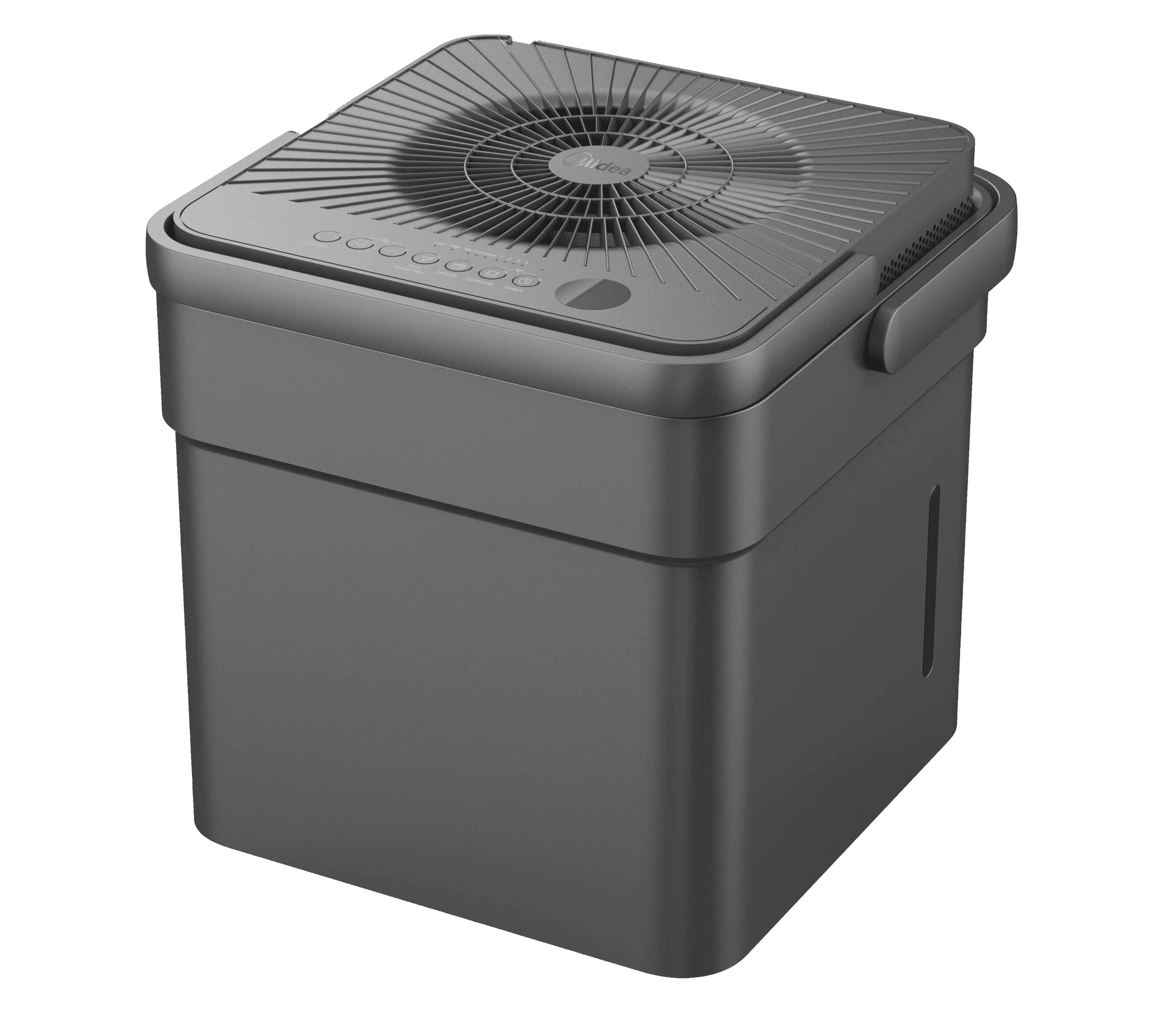
The refrigeration cycle within the MAD35PS1QGR is optimized for the latent heat loads found in tropical climates like Mumbai. Its rotary compressor facilitates a continuous cycle where warm, moisture-laden air is pulled across a series of evaporation coils. As the air cools below its dew point, water vapor condenses into liquid, achieving a steady extraction rate of 35 pints/day (~16.6 L/day). In the high ambient temperatures of 30-40°C common in India, compressor efficiency is paramount; unlike reciprocating models, this rotary design minimizes friction and heat buildup. This ensures the unit maintains performance consistency during 24-hour operation cycles without thermal cut-offs, providing reliable moisture control when atmospheric pressure and humidity are at their peak during the heavy monsoon.
This Midea model utilizes R-410A refrigerant, which is a hydrofluorocarbon blend designed to handle higher operating pressures than older refrigerants. In the context of the Indian climate, R-410A's superior heat transfer properties are essential for cooling the evaporator coils sufficiently to trigger condensation in high-temperature environments. The MAD35PS1QGR benefits from this thermodynamic efficiency, as R-410A allows for a more compact heat exchanger design while maintaining the 141 CFM air flow. This specific refrigerant choice ensures that the latent cooling capacity remains high even when the sensible heat in coastal cities like Chennai places additional stress on the cooling circuit, preventing the system from underperforming during the most humid weeks of the calendar year.
The control logic of the MAD35PS1QGR relies on a precision digital humidistat that monitors the surrounding environment within a 35% to 85% RH range. There is a programmed latency between the sensor's reading and the compressor's activation to prevent short-cycling, which can damage the motor over time. For Indian users, this range is vital; a setting of 45-50% is required for home theaters to prevent electronic oxidation, while 55-60% is ideal for general living comfort in Goa. The unit’s ability to detect subtle shifts in moisture levels ensures it only draws the 320 watts of power when necessary, optimizing energy consumption while maintaining a stable indoor microclimate regardless of the external tropical conditions or sudden rain-induced spikes.
Thermal management is further enhanced by an auto-defrost mechanism, which is critical for operational safety in cooler regions or air-conditioned spaces. When the unit operates in temperatures approaching the lower limit of 41°F, frost can accumulate on the evaporator coils, insulating them and reducing efficiency. The system automatically detects this ice buildup and pauses the compressor while keeping the fan running to melt the frost. This feature is particularly relevant for hill stations like Munnar or during the winter months in Kolkata when indoor temperatures drop but humidity remains high. By preventing coil freezing, the unit ensures longevity and consistent 141 CFM air flow, protecting the internal components from mechanical strain and ensuring that the dehumidification process remains uninterrupted.
The fluid management system includes a 12.5 pints reservoir designed with an auto shut-off float switch to prevent overflows. In a typical 80% RH environment in Kochi, the tank may reach capacity within 8 to 10 hours of operation, necessitating manual drainage. However, for unattended use, the unit features a continuous drainage port that can be plumbed into a floor drain, bypassing the internal tank. This air circuit is driven by a 3-speed fan capable of 141 CFM, which ensures the air in a 1500 sq. ft. (~139 m²) space is cycled through the mesh filter and over the coils frequently to maintain the setpoint. This high air change rate is essential for larger 3-BHK apartments where stagnant, humid air pockets often form.
Constructed with a durable 18.64 kg chassis, the unit is built to withstand the rigors of high-usage cycles. The mobility provided by integrated Caster wheels is a necessary engineering consideration for Indian homes, where floor layouts often include marble or tile surfaces. Maintenance is centered on the mesh filter, which protects the internal coils from the dust common in urban Indian environments. Keeping this filter clean is the primary factor in maintaining the low 49 dB noise level and the unit's overall energy efficiency. By ensuring the air path remains unobstructed, the rotary compressor doesn't have to work harder than designed, making the MAD35PS1QGR a sustainable long-term investment for residents seeking to protect their property from the pervasive effects of tropical moisture.