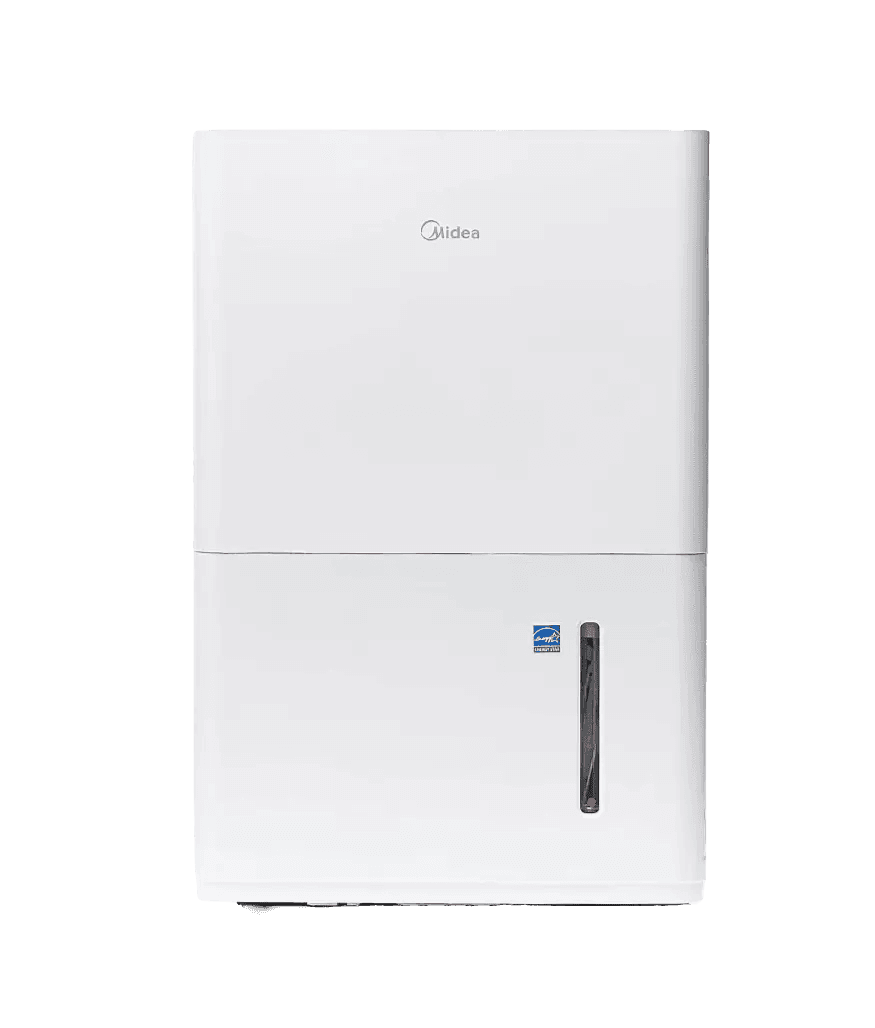
The thermodynamic efficiency of the MAD35S1WWT relies on a precision-engineered refrigeration cycle driven by a high-torque rotary compressor. In the context of the Indian subcontinent, where ambient temperatures frequently exceed 30°C with 90% relative humidity, the heat exchange process must be exceptionally rapid. As the 141 CFM fan draws saturated air over the evaporator coils, the temperature drops below the dew point, forcing moisture to condense at a rate of 35 pints/day (~16.6 L/day). Unlike reciprocating compressors found in budget models, this rotary system maintains consistent pressure ratios even when handling the high latent heat loads found in coastal Kolkata, ensuring that moisture extraction remains linear rather than dropping off as the compressor housing warms during continuous operation.
Utilizing R-410A as the primary refrigerant provides the Midea unit with a significant advantage in heat transfer coefficient compared to older R-22 or low-grade hydrocarbon alternatives. R-410A operates at higher pressures, which allows for smaller coil sizes while maintaining superior cooling capacity, a critical factor for a portable unit servicing up to 3,500 sq. ft. (~325 m²). In high-humidity zones like Mumbai, the ability of R-410A to absorb thermal energy efficiently from the incoming air stream is what allows the unit to maintain its rated 16.6 L/day extraction. This refrigerant is also chemically stable at the elevated ambient temperatures of an Indian summer, preventing chemical breakdown and ensuring long-term reliability of the hermetically sealed refrigeration circuit.
Precise moisture control in the MAD35S1WWT is managed by a digital humidistat capable of sensing relative humidity within a 35% to 85% range. For Indian users, this broad spectrum is vital; it allows for aggressive dehumidification in damp basements or the maintenance of a stable 50% RH in rooms housing sensitive electronics or musical instruments. The internal sensor communicates with the control board to cycle the compressor, preventing over-drying which can lead to wood cracking in antique furniture. In a typical 3-BHK Chennai apartment, setting the target to 55% provides an ideal balance between comfort and mold inhibition. The low-latency response of the humidistat ensures that the unit reacts quickly to sudden humidity spikes caused by rain.
The inclusion of an auto-defrost mechanism in the MAD35S1WWT is a critical engineering feature for operation in India’s diverse climates. When operating in cooler high-altitude regions like Shimla or Munnar, or in air-conditioned rooms where the ambient temperature drops, frost can accumulate on the evaporator coils. This ice layer acts as an insulator, drastically reducing moisture extraction efficiency. The system detects this thermal resistance and temporarily halts the compressor while keeping the fan running to melt the ice using room-temperature air. This sophisticated management cycle ensures that the unit can operate down to 41°F without mechanical failure. For residents in the Nilgiris or Himalayas, this feature allows for year-round moisture control, preventing the cold-damp rot often associated with altitude.
Managing the condensate in this unit involves a 12.5 pints internal reservoir equipped with an auto shut-off float switch to prevent overflow. In peak Mumbai monsoon conditions, the high extraction rate means the tank may require emptying twice daily; however, the inclusion of a continuous drainage port allows for gravity-fed disposal into a floor drain. The air circuit is driven by a 3-speed fan capable of 141 CFM air flow, which is balanced to maximize the contact time between humid air and the cold coils. Lower fan speeds can be utilized in bedrooms to reduce noise to 49 dB, while the high speed is ideal for rapidly purging moisture from large open-plan living areas. This flexibility allows users to tailor the extraction velocity.
The structural design of the MAD35S1WWT emphasizes durability and ease of maintenance, featuring an 18.64 kg chassis supported by heavy-duty caster wheels for multi-room mobility. Maintenance is centered around the accessible mesh filter, which protects the internal coils from dust and pet dander common in Indian households. Regular cleaning of this filter is the only significant operational requirement to maintain the 141 CFM airflow and prevent the rotary compressor from overworking. The digital interface includes a filter indicator to remind users of this task, ensuring the unit operates at peak efficiency for years. By focusing on mechanical accessibility and robust component selection, this model represents a long-term engineering solution for humidity management in the most demanding Indian coastal environments. This concludes the evaluation of the MAD35S1WWT.