
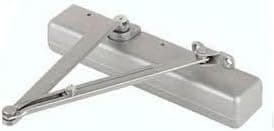
LCN 1461 HW/PA Hydraulic Door Closer with Hold-Open, Parallel Arm Shoe

LCN 1461 HW/PA Surface-Mounted Hydraulic Door Closer with Hold-Open Functionality

The LCN 1461 HW/PA is a robust, non-handed hydraulic door closer designed for heavy-duty commercial and institutional applications. Featuring an adjustable spring power size 1-6, integral hold-open, and precision hydraulic controls, it ensures reliable and controlled door operation on both interior and exterior timber and metal doors.

Quick Answer

The LCN 1461 HW/PA provides superior, adjustable hydraulic control with integrated hold-open for high-traffic commercial and institutional doorways.

ANSI/BHMA Grade 1 Certified for Heavy-Duty Commercial Use
Adjustable Spring Power Size 1-6 for Versatile Application
Integrated Hold-Open and Back-Check for Enhanced Functionality
Durable Cast Iron Body with Powder Coat Finish
Non-Handed Design Simplifies Specification and Installation

The LCN 1461 HW/PA is an expertly engineered, heavy-duty hydraulic door closer offering precise control, durability, and a critical hold-open feature for high-traffic commercial and institutional settings. Its ANSI/BHMA Grade 1 certification and adjustable power make it a reliable choice where robust, accessible door management is paramount, provided fire rating is not a requirement.

✓ Who Should Buy

  • Facility managers requiring robust, adjustable door control for high-traffic commercial entries.
  • Architects and specifiers prioritizing ANSI/BHMA Grade 1 durability and ADA compliance.
  • Installers seeking a non-handed, surface-mounted closer with integrated hold-open and back-check.
  • Environments where doors need to be held open periodically for passage or ventilation.

✕ Who Should Avoid

  • Applications explicitly requiring a UL-listed fire-rated door closer.
  • Installations where a delayed action closing feature is essential for accessibility or material handling.
  • Budget-constrained residential or light commercial projects not requiring heavy-duty performance.
  • Situations where any form of hold-open is prohibited by code (e.g., fire doors).
Product Overview
The LCN 1461 HW/PA represents a pinnacle in commercial door control, engineered for the rigorous demands of institutional and high-traffic environments. This surface-mounted hydraulic door closer, part of the distinguished 1460/1461 series, features a durable cast iron body protected by a robust powder coat finish, ensuring longevity and resistance to environmental factors. Its adjustable spring mechanism allows for power sizing from 1 to 6, enabling precise calibration for varying door weights and traffic requirements, aligning with ANSI/BHMA A156.4 standards. The unit incorporates adjustable closing and latching speeds, allowing facility managers to fine-tune door closure for optimal safety and convenience. A critical feature is its integrated hold-open functionality, facilitated by a parallel arm shoe, which allows doors to remain open at up to 180 degrees when desired. Additionally, the integral back-check provides crucial protection against uncontrolled door opening, safeguarding both the door and adjacent structures. The LCN 1461 HW/PA is non-handed, streamlining inventory and installation processes for timber and metal doors across both interior and exterior applications. While not fire-rated or equipped with delayed action, its ADA compliance and UL certification underscore its suitability for accessibility and safety in general commercial settings.

Brandlcn
Model NameN/A
CategoryDoor Closer
Closer TypeHydraulic with Hold‑Open
Series1460/1461
Model Year2018-2026
Country Of OriginN/A
Intended UseCommercial / Institutional Doors
Suitable ForInterior and Exterior Doors

Related Products

Engineering Analysis
The LCN 1461 HW/PA’s core engineering resides in its robust hydraulic system, meticulously designed for sustained high-cycle performance. The cast iron body encapsulates a precision hydraulic fluid reservoir and piston assembly, actuated by an adjustable spring mechanism. This spring, field-adjustable to power sizes 1 through 6, directly influences the closing force, allowing the closer to effectively manage doors across a broad spectrum of weights and widths, albeit without specified maximums in the provided data. Hydraulic fluid flow is precisely metered through independent, adjustable valves for both closing speed (the main sweep) and latching speed (the final few degrees of closure). This dual-valve system is paramount for achieving precise door control, preventing slamming while ensuring positive latch engagement. The integral back-check feature engages hydraulically as the door approaches its maximum opening angle (up to 180 degrees), providing a cushioning effect. This hydraulic resistance prevents violent door opening, protecting hinges, door frames, and adjacent walls from damage in high-traffic or windy conditions. The embedded hold-open function, managed via the parallel arm shoe, offers controlled retention of the door at a desired open position, enhancing operational flexibility in commercial environments. Compliance with ANSI/BHMA A156.4 Grade 1 is a testament to the LCN 1461 HW/PA’s durability and performance. This certification signifies that the closer has undergone rigorous independent testing, enduring a minimum of 2 million operational cycles under specific force and environmental conditions, far exceeding standard Grade 2 or 3 requirements. This Grade 1 rating, coupled with UL listing and ADA compliance, validates its suitability for heavy-duty, accessible applications. It is crucial to note that while robust, the LCN 1461 HW/PA is *not* fire-rated. This absence means it is unsuitable for applications requiring fire door assemblies where positive self-closing without hold-open is mandatory for life safety. Furthermore, the absence of a delayed action feature implies a consistent closing cycle, without a prolonged opening period for high-traffic egress. The non-handed design simplifies installation logistics, allowing for universal application on left or right-hand swing doors without specific ordering requirements, thereby reducing complexity and potential errors in specification.

Technical Support & FAQs