

Related Products
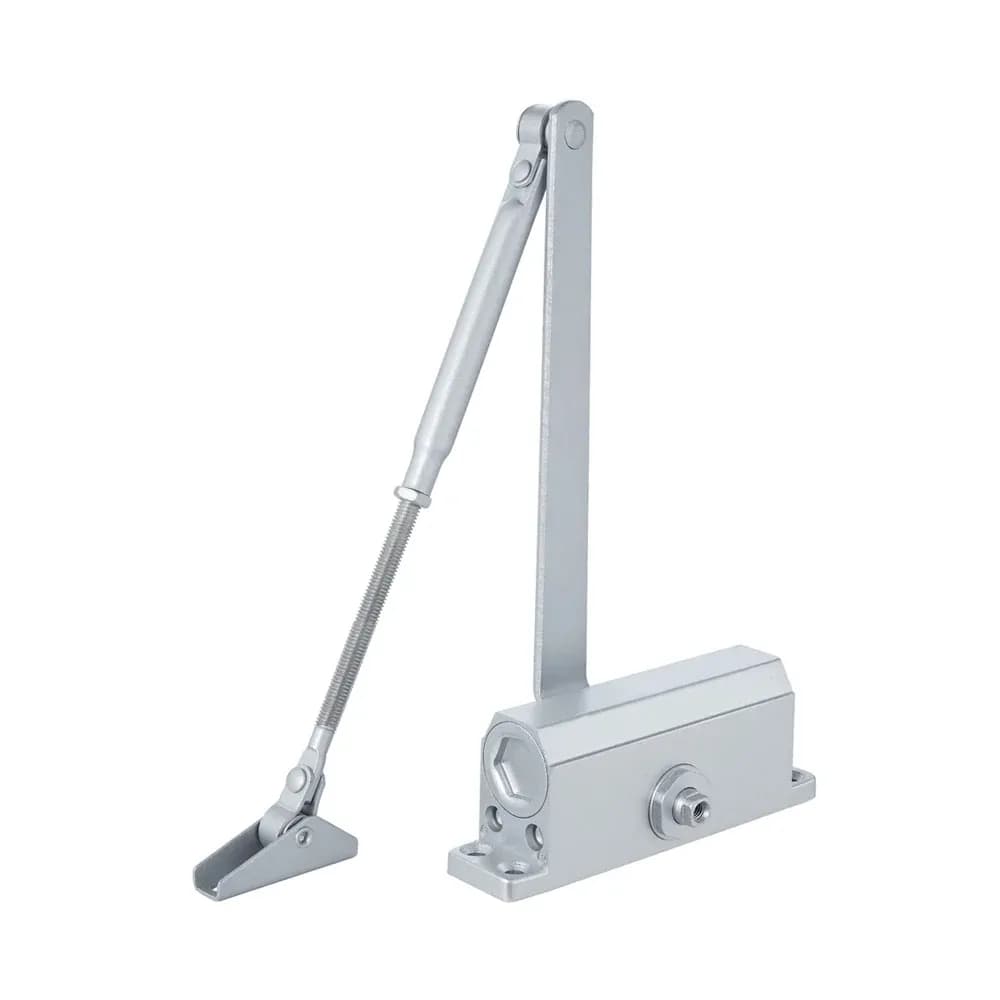
Yale DCR 502 Surface-Mounted Hydraulic Rack & Pinion Door Closer
The Yale DCR 502 is a robust surface-mounted hydraulic rack & pinion door closer engineered for precise, controlled closure of wood and metal doors. Adhering to EN 1154 standards, it offers independently adjustable closing and latching speeds for doors weighing up to 45kg (EN Size 2). This non-handed unit delivers reliable performance, verified by a 500,000-cycle test rating.
Quick Answer
The Yale DCR 502 is an EN 1154 compliant hydraulic rack & pinion door closer, precision-engineered for consistent, adjustable closing control of standard doors up to 45kg.
The Yale DCR 502 represents a technically sound, EN 1154 certified hydraulic rack & pinion door closer for general-purpose applications. Its adjustable closing and latching speeds, coupled with a robust aluminium build and 500,000 cycle durability, make it a reliable choice where precise, basic door control is required and advanced features like fire rating, back-check, or hold-open are not necessary.
✓ Who Should Buy
- •Building managers and contractors requiring EN 1154 compliant door control for standard interior/exterior doors.
- •Installers seeking a non-handed, surface-mounted closer for wood or metal doors up to 45kg.
- •Facility maintenance teams needing a durable and adjustable closer for moderate traffic areas without fire safety requirements.
✕ Who Should Avoid
- •Applications demanding fire-rated door closer solutions.
- •Installations requiring advanced door control features such as back-check, hold-open, or delayed action.
- •Heavy-duty doors exceeding 45kg or wider than 850mm, which would necessitate a higher EN power size.
| Brand | yale |
| Model Name | N/A |
| Category | Door Closer |
| Closer Type | Rack & Pinion |
| Series | DCR Series |
| Model Year | 2018-2026 |
| Country Of Origin | N/A |
| Intended Use | Surface Mounted Door Closer |
| Suitable For | Wood/Metal Doors |