

Related Products
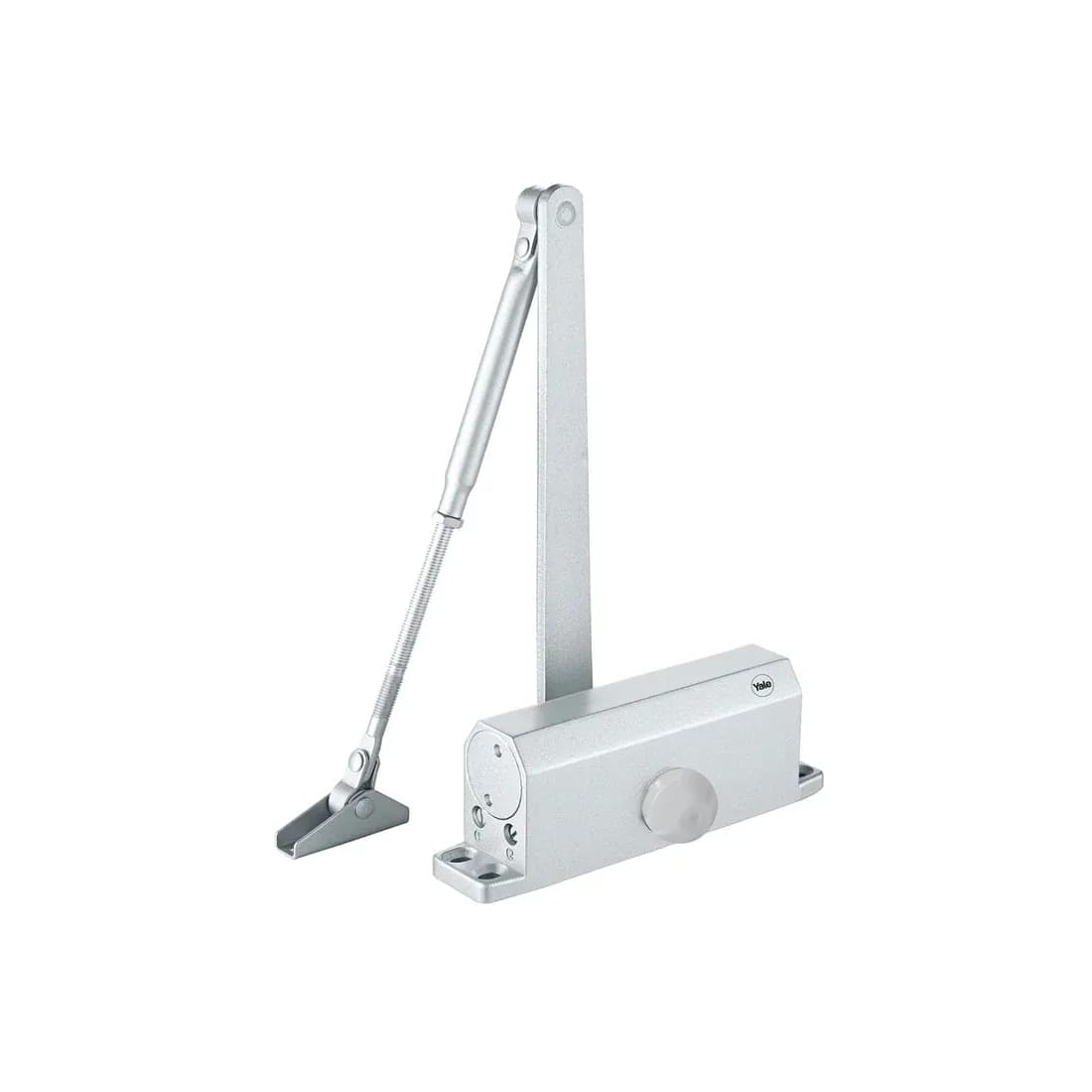
Yale DCR 504 Rack & Pinion Hydraulic Door Closer: Precision Engineered for EN 1154 Compliance
The Yale DCR 504 is a robust EN 1154 certified hydraulic rack & pinion door closer, designed for surface mounting on wood or metal doors up to 80kg. It delivers precise, adjustable closing and latching speed control, ensuring consistent performance over 500,000 cycles.
Quick Answer
The Yale DCR 504 excels in delivering reliable, EN 1154 compliant door control for medium-weight doors through its durable hydraulic rack & pinion mechanism.
The Yale DCR 504 is a highly reliable and compliant hydraulic door closer, optimally suited for standard commercial and residential applications requiring consistent, controlled door closure without advanced features like back-check or hold-open. Its EN 1154 certification and 500,000 cycle rating underscore its robust engineering and long-term performance.
✓ Who Should Buy
- •Facilities managers needing EN 1154 compliant door control for medium-weight, non-fire-rated doorways.
- •Building owners seeking durable, low-maintenance door closers for high-traffic internal environments where advanced features are not required.
- •Contractors requiring a straightforward, non-handed hydraulic closer with adjustable speed control for efficient installation on wood or metal doors.
✕ Who Should Avoid
- •Installations requiring fire-rated door hardware due to local building codes or safety regulations.
- •Applications where door damage prevention (back-check), temporary hold-open functionality, or delayed closing action is functionally critical.
- •Doors exceeding 80kg in weight or 1100mm in width, which require a higher power-sized closer.
| Brand | yale |
| Model Name | N/A |
| Category | Door Closer |
| Closer Type | Rack & Pinion |
| Series | DCR Series |
| Model Year | 2018-2026 |
| Country Of Origin | N/A |
| Intended Use | Surface Mounted Door Closer |
| Suitable For | Wood/Metal Doors |