
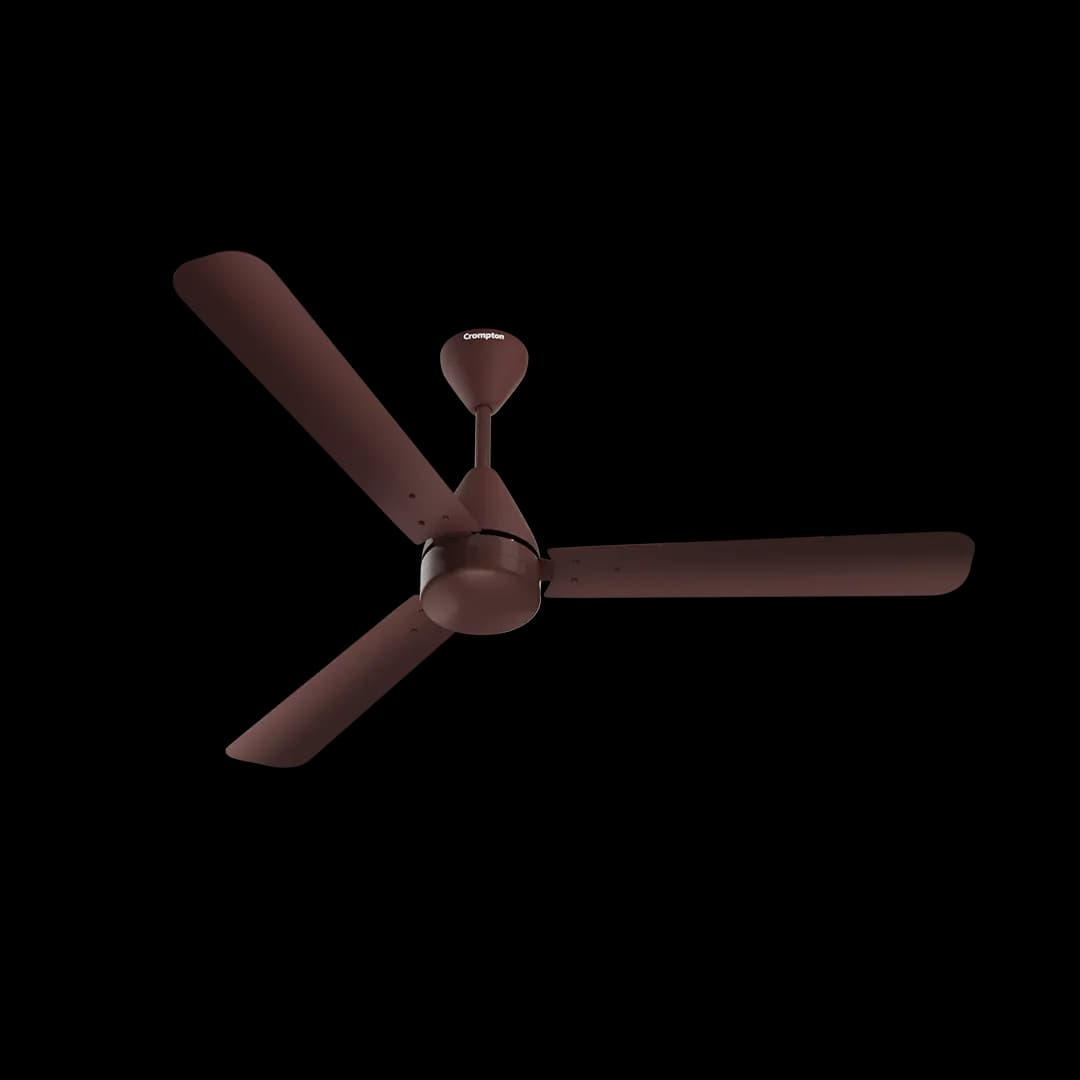
ENERGION HYPERJET SMART

Energion Hyperjet Specifications, Features & Compatibility Guide

The Energion Hyperjet is a Crompton ceiling fan,bldc fan,smart wifi fan designed for effective air circulation in Indian homes facing long summer seasons and variable humidity conditions.

Quick Answer

Yes, the Energion Hyperjet is an excellent investment if you prioritize long-term electricity bill reductions and desire smart home integration. This 35W BLDC fan cuts consumption by 35-50% compared to conventional models, providing efficient air circulation for typical Indian residential spaces. Its BEE rating and 2-year lifecycle ensure reliable, cost-effective performance through scorching summers.

Ideal for budget-conscious Indian homeowners seeking smart, high-efficiency cooling for residential use, this fan delivers verified energy savings and robust performance. Avoid if your primary concern is minimal upfront capital expenditure, or if your space exceeds standard residential cooling requirements.

✓ Who Should Buy

  • • performance suitable for residential spaces.
  • •Verified efficiency of standard rating for reduced long-term operational costs.
  • •Structural stability for consistent cleaning under rigorous use cases.
  • •Hardware durability via premium components and advanced technology.
  • •Built-in grid protection with Standard power cycle voltage management.

✕ Who Should Avoid

  • •Spaces or usage requirements exceeding residential rated capacity.
  • •Installations prioritizing minimum capital expenditure over high-efficiency performance.
  • •Unstable grid conditions exceeding the functional threshold of Standard power cycle.
  • •Environments incompatible with fan physical and thermal dissipation specs.
Product Overview
The Energion Hyperjet is a Crompton ceiling fan,bldc fan,smart wifi fan designed for effective air circulation in Indian homes facing long summer seasons and variable humidity conditions. Powered by a BLDC (Brushless DC) motor, the Energion Hyperjet consumes significantly less electricity than conventional induction motor fans — typically 35–50% less at equivalent airflow output, directly reducing monthly electricity bills. Air delivery of 220 ensures strong, consistent airflow across the room, reaching corners and maintaining circulation even in larger bedroom and living room spaces. The 3-blade, 1200 design balances airflow efficiency with quiet operation — wider blades move more air per revolution, reducing the RPM needed and keeping noise levels lower. The included remote control allows speed and oscillation adjustment from across the room — essential for bedroom use where getting up to adjust the fan disrupts sleep. A built-in timer function allows the fan to switch off automatically after a set duration, ideal for bedtime use without leaving it running all night. Crompton provides a 2 Years product warranty and 2 Years motor warranty on the Energion Hyperjet.

Related Products

Engineering Analysis
BLDC motor technology fundamentally changes the energy profile of ceiling and pedestal fans. Unlike induction motors that maintain near-constant power draw regardless of speed setting, BLDC motors scale power consumption linearly with speed — at the lowest setting, the Energion Hyperjet may consume as little as 7W, compared to 30-35W for an equivalent induction fan. Over an Indian summer of 6 months, this difference compounds into significant electricity savings per household. Noise output of 50 dB is an engineering outcome of blade design, motor balance, and housing vibration damping. In the Energion Hyperjet, the 3-blade configuration is optimized to minimize aerodynamic noise (the whooshing sound) while the motor mounting reduces mechanical vibration transfer to the body. For bedrooms where fans run through the night, this level of acoustic performance is critical for sleep quality. At 350 RPM maximum speed, the Energion Hyperjet generates the centrifugal force needed to create effective air movement across the room. The relationship between RPM, blade pitch, and diameter determines actual air delivery — a fan with lower RPM but better blade geometry can outperform a faster-spinning fan with inefficient blades.

Technical Support & FAQs