

Related Products
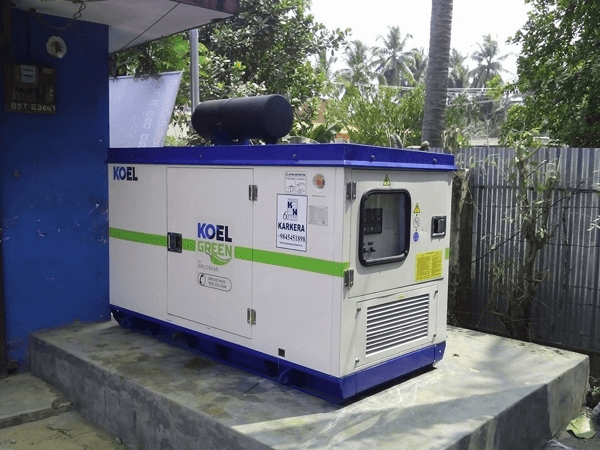
Kirloskar 45 kVA Silent Diesel Generator KG1-45WS
The Kirloskar KG1-45WS is a premium 45 kVA silent diesel generator engineered specifically to handle the unpredictable Indian power grid, where load shedding by DISCOMs like MSEDCL, BESCOM, and TNEB can disrupt business operations for hours. This high-performance DG set offers a rated power of 45 kVA and a maximum capacity of 49.5 kVA, making it ideal for medium-scale industrial units, large commercial showrooms, and hospitals. Operating on a robust 4-cylinder HA494 TCI G1 water-cooled engine at 1500 RPM, it ensures consistent 415V three-phase output with a power factor of 0.8. In the Indian market, where 45 kVA is roughly equivalent to 36 kW, this unit provides the necessary headroom to start heavy inductive loads like 3-phase motors and centralized HVAC systems. Safety is paramount, and the KG1-45WS includes earth leakage protection, over-temperature sensors, and an emergency stop button, adhering to strict CPCB-IV+ emission norms. These norms are essential for compliance in urban centers like Delhi-NCR, Mumbai, and Bangalore. The silent canopy design limits noise to just 75 dB at 1 meter, satisfying RWA requirements for residential neighborhoods. With a 100-liter fuel tank and a fuel consumption rate of 10.8 liters per hour at full load, it offers 9 hours of continuous backup, bridging the gap during peak summer demand when grid failures are most common. Choosing a Kirloskar generator means investing in a 60-year legacy of Indian engineering excellence, backed by an extensive service network that ensures your business stays powered even when the local grid fails. This model is a superior alternative to battery inverters for heavy loads, providing a reliable and long-term power security solution for critical infrastructure.
Quick Answer
Yes, for any Indian business losing over ₹5,000 per hour in production during a power cut, the KG1-45WS offers a clear ROI within 18-24 months through reduced downtime and equipment protection.
In India, silent canopy generators are mandatory in urban settings due to CPCB noise pollution norms; open-frame models are strictly limited to remote construction sites or specialized industrial sheds.
✓ Who Should Buy
- •This generator is typically purchased by MSME owners, nursing home administrators, petrol pump operators, and developers of mid-sized residential apartments who require reliable 3-phase backup.
✕ Who Should Avoid
- •Spaces or usage requirements exceeding residential rated capacity.
- •Installations prioritizing minimum capital expenditure over high-efficiency performance.
- •Unstable grid conditions exceeding the functional threshold of Standard power cycle.
- •Environments incompatible with generators physical and thermal dissipation specs.