
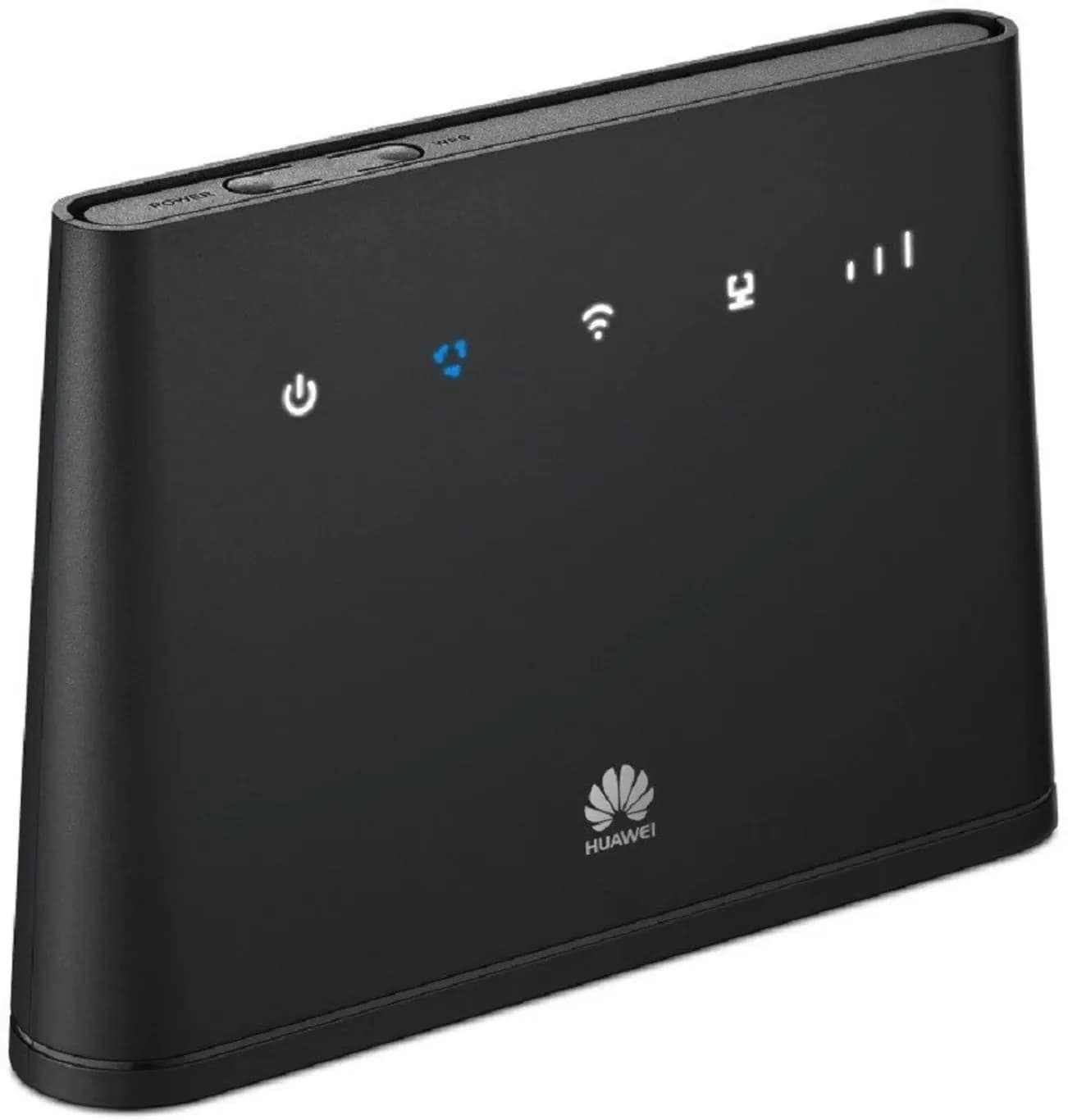
Huawei B310 CPE

Protocol Analysis and Architecture Review: Huawei B310 CPE High-Performance LTE Desktop Gateway

The Huawei B310 CPE represents a sophisticated evolution in fixed-wireless access technology, bridging the gap between mobile broadband and local area network stability. Engineered to mitigate signal attenuation through its high-gain internal antenna array, this router leverages LTE Category 4 protocols to deliver consistent asymmetric throughput for residential and small enterprise environments. Its architectural design prioritizes packet encapsulation efficiency and sustained jitter reduction, making it a critical asset for locations lacking traditional wired infrastructure.

Quick Answer

The Huawei B310 CPE provides reliable high-speed connectivity by utilizing LTE Cat4 technology to achieve a 150 Mbps downlink over 4G networks. It ensures network stability through advanced signal processing and a dedicated RJ45 Ethernet port for lag-free data transmission in fixed-wireless deployments.

Optimized spectral efficiency via LTE Category 4 modulation allowing for a theoretical 150 Mbps downlink with robust signal-to-noise ratio management.
Integrated SPI firewall and WPA2-PSK encryption layers to prevent unauthorized packet injection and ensure enterprise-grade security protocols.
Versatile physical interface featuring a dedicated RJ45 LAN port for seamless integration into existing local area network switches and hardware.

The Huawei B310 CPE is engineered for households and small-scale commercial operations requiring high-bandwidth fixed-wireless access where traditional fiber optic termination is unavailable. It excels in providing a stable gateway for high-definition media consumption and remote professional workflows by leveraging efficient LTE Cat4 throughput and advanced security frameworks.

✓ Who Should Buy

  • Remote professionals requiring a primary or secondary 4G LTE failover gateway with dedicated Ethernet connectivity for workstation stability.
  • Small office environments needing a secure, WPA2-compliant wireless access point that supports up to 32 concurrent client sessions without performance degradation.
  • Users in rural or underserved regions where LTE signal-to-noise ratios are superior to legacy copper-based ADSL connections.

✕ Who Should Avoid

  • Ultra-high-bandwidth users requiring multi-gigabit throughput levels only available through modern Wi-Fi 6 or Fiber-to-the-Premises installations.
  • Large-scale enterprise data centers that necessitate complex Layer 3 routing protocols and extensive SFP plus fiber integration.
Product Overview
Designed for high-availability networking, the Huawei B310 CPE operates as a high-performance cellular-to-Ethernet gateway. It utilizes the 802.11n Wi-Fi 4 standard to distribute bandwidth across multiple wireless clients while maintaining low electromagnetic interference. The device handles complex packet routing tasks through an optimized internal processor, ensuring that high-definition streams and large file transfers do not induce thermal throttling or bufferbloat. By supporting a wide range of LTE frequency bands, the hardware maintains a persistent connection even in areas with varying cellular tower proximity. The implementation of external antenna ports allows users to further refine signal reception, effectively managing path loss and multi-path fading in challenging RF environments.

BrandHuawei
ModelB310 CPE
Type4G Hotspot Router
Standards Supported802.11b, 802.11g, 802.11n

Related Products

Engineering Analysis
The engineering core of the Huawei B310 CPE centers on its LTE Category 4 baseband processor, which executes complex digital signal processing to maintain a stable link in the face of fluctuating atmospheric conditions. By employing advanced Orthogonal Frequency Division Multiple Access techniques within the LTE spectrum, the device maximizes bandwidth utilization across the 150 Mbps downlink and 50 Mbps uplink channels. A critical component of its efficiency is the management of signal-to-noise ratios, where the hardware dynamically adjusts its modulation coding schemes to prevent packet loss during periods of high electromagnetic interference. The integration of the 802.11n wireless radio is calibrated to minimize channel overlapping, utilizing spatial multiplexing to enhance client capacity. From a packet processing perspective, the router minimizes latency by optimizing the path between the cellular modem and the local Ethernet bridge, reducing the overhead typically associated with Network Address Translation and packet encapsulation. This ensures that time-sensitive data, such as Voice over IP or real-time telemetry, experiences minimal jitter. Furthermore, the firmware implementation includes robust security frameworks and sophisticated traffic shaping algorithms, allowing administrators to prioritize critical data streams and maintain network integrity even under heavy concurrent load.

Technical Support & FAQs