
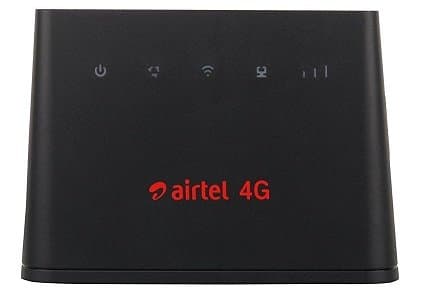
Huawei B310s-927

Engineering Deep Dive: Huawei B310s-927 High-Stability LTE Cat4 Wireless Gateway

The Huawei B310s-927 represents a critical evolution in the Customer Premises Equipment landscape, specifically designed to bridge the gap between cellular wide-area networks and local Ethernet distribution. By utilizing LTE Category 4 standards, this gateway facilitates a highly stable wireless backhaul, ensuring consistent data packet encapsulation and low-latency performance across its localized 802.11n environment. It serves as a resilient point of ingress for users requiring dedicated wireless broadband without the geographical constraints of physical cabling, maintaining high spectral efficiency even in challenging RF environments.

Quick Answer

The Huawei B310s-927 excels through its robust 150 Mbps LTE Cat4 radio link and high-gain internal antenna array, which maximizes the signal-to-noise ratio in fringe coverage areas. Its integrated Gigabit Ethernet interface ensures that cellular throughput is translated into local line-rate performance with minimal packet loss or jitter.

Optimized signal-to-noise ratio via advanced internal antenna diversity and MIMO processing for maximum LTE Category 4 spectrum efficiency.
Integrated stateful packet inspection firewall and WPA2-AES encryption to mitigate electromagnetic interference and unauthorized network penetration.
High-capacity 802.11n wireless local area network support capable of sustaining 32 simultaneous device connections without degrading packet processing efficiency.

The Huawei B310s-927 is engineered for households and micro-enterprises requiring high-bandwidth cellular connectivity in regions where traditional fiber-to-the-home infrastructure is unavailable or unreliable. Its architecture is optimized for sustained data transmission and low-latency interaction, providing a professional-grade alternative to standard consumer-grade mobile hotspots for mission-critical tasks.

✓ Who Should Buy

  • Remote professionals requiring a dedicated 4G backhaul with Gigabit Ethernet connectivity for stable VPN tunneling and telepresence.
  • Small office environments needing a primary or failover internet gateway that supports high-density device concurrency and VLAN segmentation.
  • Users in rural or fringe coverage areas who benefit from the device's superior signal-to-noise ratio and external SMA antenna expansion options.

✕ Who Should Avoid

  • Power users requiring Wi-Fi 6 standards or tri-band frequencies for ultra-high-speed internal local area network file transfers.
  • High-demand enterprise environments requiring multi-gigabit throughput and physical fiber-optic termination points.
Product Overview
The Huawei B310s-927 is a sophisticated 4G LTE wireless gateway engineered to deliver high-performance asymmetric throughput in diverse deployment scenarios. Featuring an LTE Category 4 chipset, it achieves theoretical downlink rates of 150 Mbps and uplink speeds of 50 Mbps, making it an ideal candidate for bandwidth-intensive tasks such as high-definition teleconferencing and real-time data synchronization. The hardware architecture incorporates a single Gigabit LAN/WAN port, providing a versatile interface for either downstream Ethernet distribution or upstream failover connectivity. Operating on the 2.4 GHz frequency band using 802.11n protocols, the device leverages advanced signal processing to minimize the impact of electromagnetic interference. The sleek, vertical form factor is not merely aesthetic but serves a critical thermal management purpose, allowing for passive cooling during peak computational loads when handling dense traffic sessions. Security is integrated at the firmware level, offering robust protection through sophisticated VLAN tagging capabilities and advanced filtering rules that ensure data integrity and network privacy.

BrandHuawei
ModelB310s-927
Type4G Mobile Router (CPE)
Standards Supported802.11b, 802.11g, 802.11n

Related Products

Engineering Analysis
The Huawei B310s-927 utilizes a high-performance LTE Category 4 chipset to negotiate complex signal modulation schemes across various frequency bands. This engineering focus allows for a peak downlink of 150 Mbps and an uplink of 50 Mbps, providing the necessary asymmetric throughput for modern cloud-based applications. A critical aspect of its design is the sophisticated management of the signal-to-noise ratio. By employing advanced antenna diversity and noise-canceling algorithms, the device maintains data integrity even in the presence of significant electromagnetic interference or signal attenuation caused by physical obstructions. The internal processing logic handles packet encapsulation with remarkable efficiency, ensuring that the transition from cellular radio waves to localized Ethernet frames occurs with minimal latency and negligible packet loss. Furthermore, the inclusion of a physical Gigabit LAN port allows for line-rate data transfers to high-priority hardware like network-attached storage or dedicated workstations. For local wireless distribution, the 802.11n implementation is tuned to maximize spectral efficiency within the 2.4 GHz range. The device also supports advanced network management features, including VLAN tagging and sophisticated stateful packet inspection, which are essential for maintaining security and segmenting traffic in a professional environment. Unlike standard mobile hotspots, the B310s-927 is designed for 24/7 operation, utilizing a thermally optimized chassis to prevent thermal throttling of the CPU. This ensures that packet processing efficiency remains constant even during sustained high-load periods, such as large file transfers or continuous video streaming. By prioritizing signal stability and throughput consistency, the B310s-927 stands as a robust solution for critical wireless infrastructure.

Technical Support & FAQs