
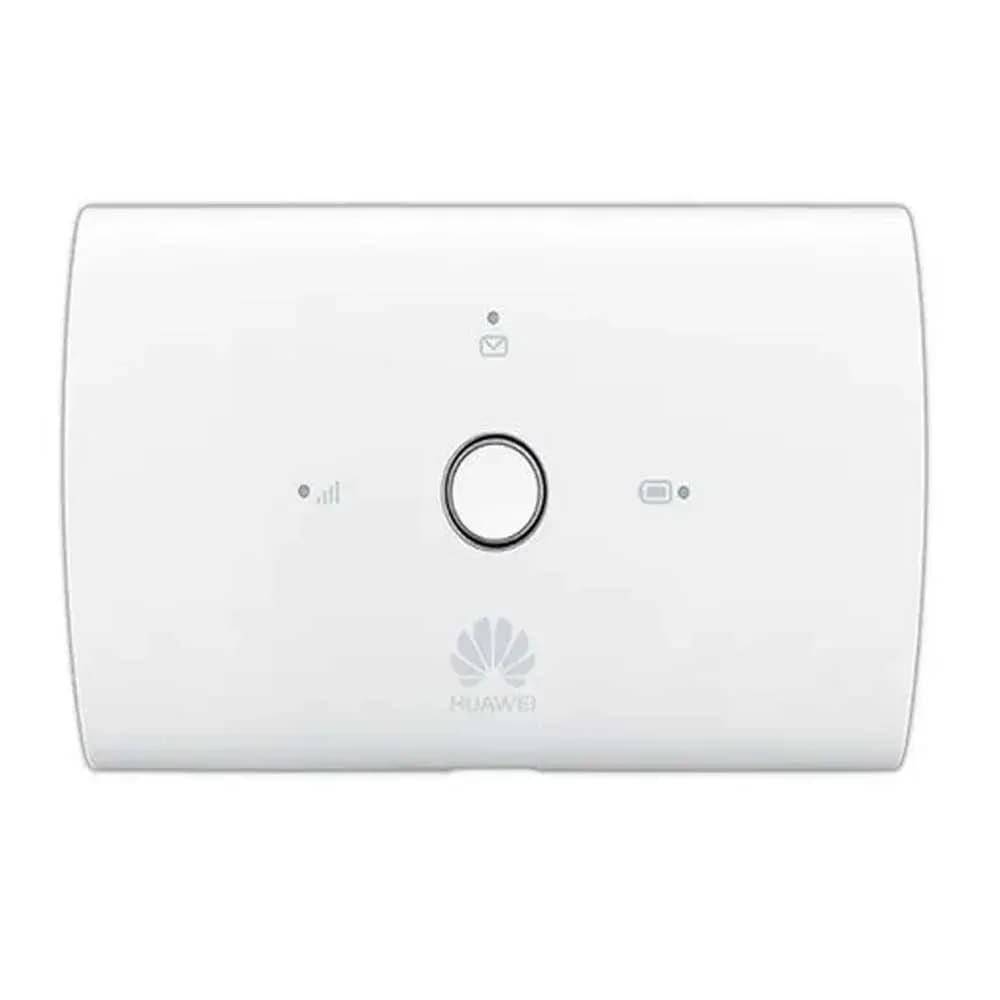
Huawei E5673s

Technical Analysis of the Huawei E5673s LTE Cat4 Wireless Pocket Gateway Infrastructure

The Huawei E5673s represents a pinnacle of compact cellular engineering, designed to bridge the gap between mobility and high-density data transmission. Utilizing an advanced LTE Category 4 chipset, this device facilitates seamless packet encapsulation over cellular backhaul, ensuring that mobile professionals and distributed teams maintain high-integrity connectivity without the constraints of physical wireline infrastructure. Its architectural focus on minimizing packet loss and maximizing spectral efficiency makes it a premier choice for on-demand wide area network access.

Quick Answer

The Huawei E5673s ensures reliable connectivity by leveraging sophisticated signal attenuation management and an optimized internal antenna array for 150 Mbps downlink speeds. Its integration of robust packet processing algorithms minimizes latency jitter, making it a dependable gateway for mission-critical mobile broadband applications.

Implementation of LTE Category 4 technology enables a 150 Mbps asymmetric throughput, optimizing spectral efficiency across diverse frequency bands.
Integrated firewall mechanisms and WPA2-PSK encryption protocols provide a hardened perimeter against unauthorized packet interception and network intrusion.
The 802.11n Wi-Fi 4 radio utilizes spatial multiplexing to support up to 10 simultaneous terminal connections while maintaining stable signal-to-noise ratios.

The Huawei E5673s is engineered for mobile professionals and remote operational units requiring high-integrity LTE backhaul in a portable form factor. It serves as an essential networking bridge for scenarios where fixed-line fiber termination is unavailable or impractical, providing a robust wireless local area network environment capable of supporting multiple high-demand terminals simultaneously.

✓ Who Should Buy

  • Field engineers requiring a resilient mobile gateway for remote telemetry and high-bandwidth diagnostic data transmission.
  • Executive travelers needing a secure, private WLAN bubble to bypass unsecured public hotspots and maintain encrypted tunnel integrity.
  • Small remote teams operating in temporary sites where rapid deployment of an LTE-based local area network is critical for productivity.

✕ Who Should Avoid

  • Power users in stationary environments with access to multi-gigabit fiber-to-the-premises installations who require Wi-Fi 6 or 10GbE wired connectivity.
  • Enterprise data centers needing high-density rack-mounted routers with advanced VLAN tagging and extensive physical port density.
Product Overview
The Huawei E5673s is a sophisticated mobile networking node engineered for high-velocity data environments. At its core, the device utilizes a high-performance baseband processor capable of handling complex modulation schemes such as 64QAM on the downlink. This ensures that even in environments prone to electromagnetic interference, the device maintains superior link stability. The hardware architecture prioritizes thermal dissipation to prevent clock throttling during sustained high-bandwidth operations. Supporting a broad spectrum of global LTE frequencies, the E5673s acts as a versatile bridge for diverse network topologies. Its software stack is optimized for low-overhead packet routing, which significantly reduces the internal processing delay between the cellular air interface and the local WLAN broadcast. Users can expect a refined wireless experience where bandwidth allocation is managed intelligently to prevent congestion during multi-device sessions. By integrating an advanced power management integrated circuit, the E5673s balances high-speed data delivery with operational longevity, ensuring that the network remains active during critical field operations.

BrandHuawei
ModelE5673s
Type4G Mobile Router (MiFi)
Standards Supported802.11b, 802.11g, 802.11n

Related Products

Engineering Analysis
The Huawei E5673s operates on an LTE Cat4 framework, delivering a theoretical peak downlink of 150 Mbps and an uplink of 50 Mbps. This performance is achieved through the use of 20 MHz carrier aggregation where available, though the device primarily excels in its ability to maintain high signal-to-noise ratios in fringe coverage areas. From a packet processing perspective, the internal firmware utilizes advanced scheduling algorithms to prioritize real-time traffic, effectively mitigating the effects of bufferbloat. Signal attenuation management is handled by a dual-internal antenna system that employs diversity reception to counteract multipath fading, a common issue in dense urban topographies. The 802.11n Wi-Fi implementation, while adhering to the 2.4 GHz spectrum, is tuned to minimize co-channel interference through intelligent channel selection. Furthermore, the device demonstrates exceptional efficiency in packet encapsulation, ensuring that the overhead associated with tunneling data over cellular networks is kept to a minimum. This focus on layer 2 and layer 3 optimization ensures that the E5673s delivers a consistent throughput that belies its diminutive physical footprint. By managing electromagnetic interference through precision-engineered internal shielding, the router maintains high-integrity wireless links even when multiple frequency bands are active simultaneously. This level of engineering ensures that latency-sensitive applications benefit from a more stable and predictable data stream compared to standard consumer-grade mobile hotspots.

Technical Support & FAQs