
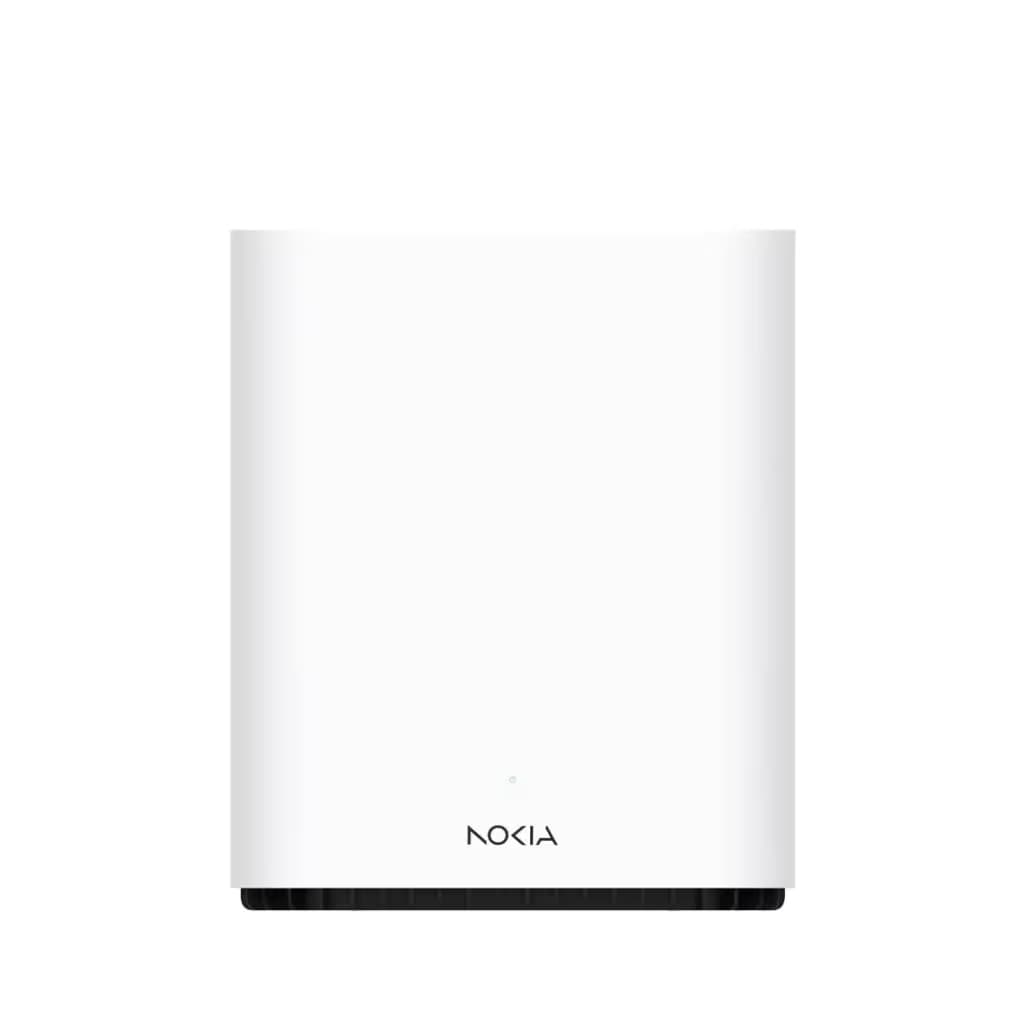
Nokia FastMile 5G Gateway 3

Nokia FastMile 5G Gateway Advanced Architecture: High-Performance 5G NR Fixed Wireless Access Terminal

The Nokia FastMile 5G Gateway represents a pinnacle in fixed wireless access technology, bridging the gap between mobile broadband and ultra-high-speed local area networking. By leveraging sophisticated 5G New Radio sub-6GHz and mmWave technologies, this gateway ensures low-latency data transmission and high-density packet processing for modern digital environments. Its integration of 802.11ax standards allows for simultaneous high-bandwidth streaming and critical data uplink without compromising the integrity of the local signal-to-noise ratio.

Quick Answer

This 5G CPE utilizes a high-gain internal antenna array to maximize signal reception from cellular towers, converting 5G NR signals into Gigabit-class Ethernet and Wi-Fi 6 outputs. Its reliability stems from carrier-grade signal processing and advanced interference mitigation, making it a robust alternative to traditional wired fiber in areas with 5G coverage.

Optimized spectral efficiency through multi-user multiple-input multiple-output (MU-MIMO) and beamforming technology to maintain stable throughput across high-density device environments.
Integrated WPA3 security protocols and sophisticated stateful packet inspection firewalls to protect the network perimeter from external vulnerabilities.
Implementation of Wi-Fi 6 standards with legacy compatibility ensuring efficient bandwidth allocation and reduced congestion across the 2.4GHz and 5GHz frequency bands.

The Nokia FastMile 5G Gateway is engineered for households and enterprises requiring high-bandwidth, low-latency connectivity in regions where traditional fiber-to-the-premises infrastructure is unavailable or insufficient. It serves as a high-performance bridge between the 5G cellular network and the internal local area network, providing professional-grade routing and wireless capabilities.

✓ Who Should Buy

  • Remote professionals and creative studios requiring high-capacity uplink for massive file transfers and cloud-based collaboration via 5G NR.
  • Smart home enthusiasts deploying a high density of IoT devices that require the congestion management and bandwidth efficiency of Wi-Fi 6.
  • Enterprises seeking a primary or secondary redundant failover solution that offers Gigabit-class speeds without the logistical delay of physical line installation.

✕ Who Should Avoid

  • Users located in deep rural areas lacking 5G coverage where the device would fall back to legacy 4G LTE with significant speed degradation.
  • Technical environments strictly requiring GPON or XGS-PON fiber termination as the primary source of ingress data.
Product Overview
The Nokia FastMile 5G Gateway is a sophisticated consumer premises equipment designed to deliver fiber-like speeds over cellular infrastructure. Utilizing an array of four Gigabit Ethernet ports, it facilitates high-speed wired backhaul for local servers, workstations, and network-attached storage devices. The unit is built around a powerful chipset capable of handling complex packet encapsulation and routing tasks with minimal overhead. Unlike traditional modems, this device focuses on maximizing the 5G NR spectrum, employing advanced signal attenuation management to ensure that indoor environments do not degrade the incoming microwave or millimeter-wave signals. It functions as a central nexus for smart homes and small enterprises, offering seamless integration with mesh networking systems to eliminate dead zones and maintain high-throughput connectivity throughout large architectural layouts.

BrandNokia
ModelFastMile 5G Gateway
Type5G CPE Modem Router
Standards Supported3GPP 5G NR, LTE FDD, LTE TDD, IEEE 802.11b/g/n/ac/ax

Related Products

Engineering Analysis
At the core of the Nokia FastMile 5G Gateway lies an advanced radio frequency engineering suite dedicated to optimizing 5G NR throughput. The device manages asymmetric throughput by prioritizing downlink streams while maintaining a resilient uplink for synchronous applications like video conferencing and cloud-based data synchronization. By utilizing advanced digital signal processing, the gateway mitigates the effects of electromagnetic interference often found in urban environments, ensuring a cleaner signal-to-noise ratio for both the 5G backhaul and the internal Wi-Fi 6 broadcast. The hardware architecture is optimized for high-speed packet processing, utilizing hardware-accelerated routing to reduce CPU cycles spent on VLAN tagging and NAT translation. This efficiency translates to lower jitter and reduced end-to-end latency, which is critical for real-time data transmission. Furthermore, the 4x4 MIMO antenna configuration facilitates better penetration through structural barriers, utilizing spatial multiplexing to increase the total capacity of the wireless link. The gateway also supports advanced carrier aggregation, allowing it to bond multiple frequency bands to achieve theoretical gigabit-per-second peaks. This technical synergy between the modem's 5G receiver and its Wi-Fi 6 distribution system ensures that the bottleneck is rarely the hardware itself, but rather the available spectrum provided by the carrier.

Technical Support & FAQs