
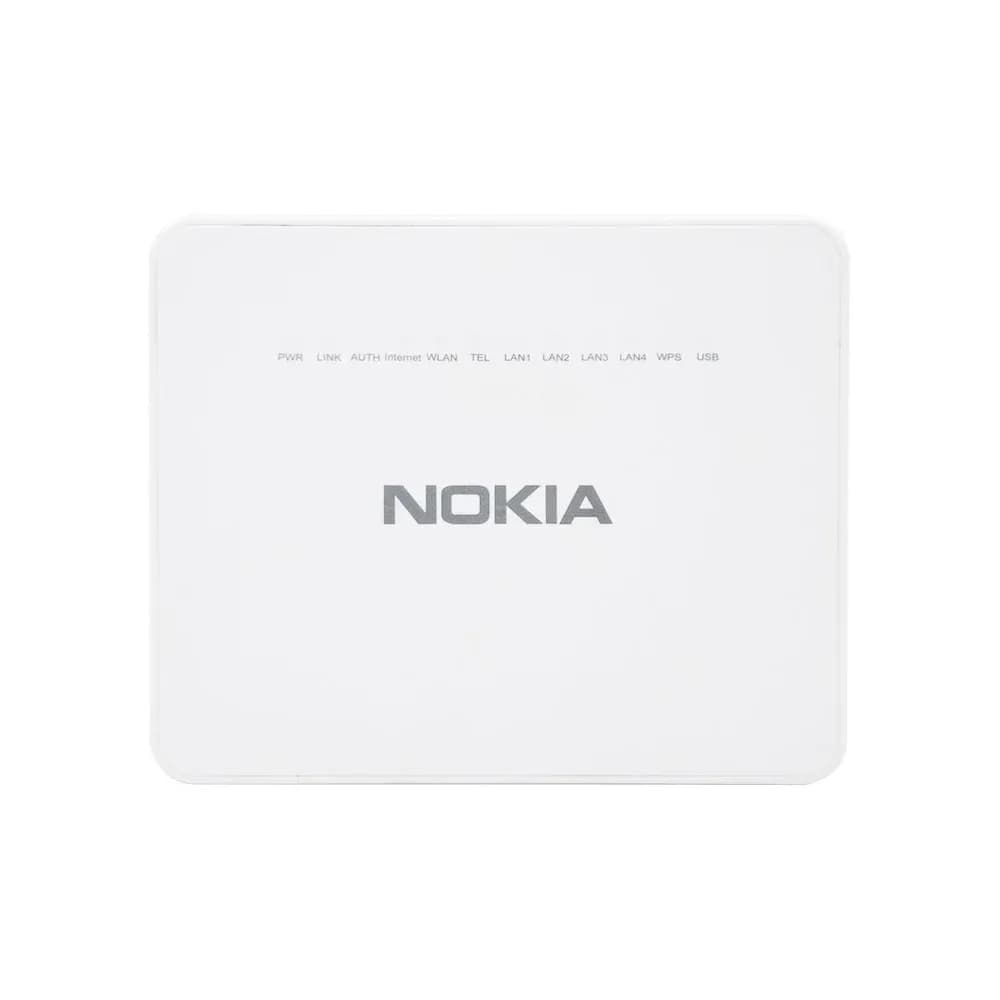
Nokia G-140W-F

Engineering Deep Dive: Nokia G-140W-F Optical Network Terminal and Integrated Residential Gateway

The Nokia G-140W-F stands as a cornerstone of optical distribution networks, bridging the gap between passive optical fiber and high-speed local area connectivity. Engineered with Nokia specialized silicon, this Optical Network Terminal (ONT) optimizes asymmetric throughput by managing high-density wavelength division multiplexing (WDM) to deliver consistent gigabit-plus bandwidth to the subscriber edge. Its architecture is purpose-built to maintain signal integrity across varying fiber lengths, ensuring that the transition from optical pulses to digital packets is handled with surgical precision.

Quick Answer

The Nokia G-140W-F is a high-performance GPON terminal that ensures low-latency fiber termination through advanced packet processing and efficient signal attenuation management. It is primarily reliable due to its industrial-grade optical transceiver and its ability to maintain stable downstream rates of 2.5 Gbps across complex fiber topologies.

Optimized GPON encapsulation mode (GEM) ensures maximum bandwidth efficiency and minimal jitter during heavy downstream traffic loads.
Integrated firewall protocols and WPA encryption provide a robust security perimeter against unauthorized intrusion and electromagnetic interference.
Enhanced signal processing within the 802.11n spectrum prioritizes data packets for mission-critical applications across the four-port Fast Ethernet interface.

The Nokia G-140W-F is specifically engineered for environments where stable fiber-to-the-home (FTTH) termination is paramount, offering a reliable interface for standard high-speed broadband applications. While it excels in managing the physical layer of optical transmission, its inclusion of four Fast Ethernet ports and 802.11n Wi-Fi makes it an ideal solution for users who prioritize connection stability and fiber-optic signal integrity over multi-gigabit local wireless speeds.

✓ Who Should Buy

  • Subscribers of fiber-to-the-home services requiring a carrier-grade ONT with integrated Wi-Fi for general internet usage.
  • Small office environments that utilize wired Fast Ethernet connections for VoIP and standard data processing.
  • Users in high-density fiber deployments who need a device with superior signal-to-noise ratio management to ensure consistent uptime.

✕ Who Should Avoid

  • Power users requiring gigabit-speed local area network transfers, as the hardware is limited by its 10/100 Mbps Fast Ethernet port speeds.
  • Environments demanding the latest Wi-Fi 6 or 6E standards to support high-throughput wireless mesh systems or ultra-high-definition streaming.
Product Overview
This optical network terminal serves as a sophisticated demarc for residential and enterprise fiber deployments. By utilizing the 802.11n wireless standard alongside four dedicated Fast Ethernet ports, the device facilitates a versatile local network environment. The hardware is designed to handle complex VLAN tagging and Quality of Service (QoS) configurations, ensuring that voice, data, and video streams are prioritized correctly. Its fiber-direct architecture eliminates the bottlenecks associated with traditional copper-based infrastructure, providing a clean signal path from the optical line terminal (OLT) directly to the end-user's device. The internal chipset is specifically tuned to mitigate the effects of electromagnetic interference, maintaining a high signal-to-noise ratio even in electronically noisy environments.

BrandNokia
ModelG-140W-F
TypeGPON ONT Wi-Fi Modem
Standards SupportedGPON ITU-T G.984, IEEE 802.11b/g/n

Related Products

Engineering Analysis
The Nokia G-140W-F operates on the ITU-T G.984 GPON standard, achieving a theoretical downstream bandwidth of 2.488 Gbps and an upstream rate of 1.244 Gbps. A critical aspect of its performance is the signal-to-noise ratio (SNR) optimization within the optical transceiver module, which allows for extended reach in passive optical networks without compromising packet integrity. The device utilizes advanced forward error correction (FEC) to mitigate packet loss during high-attenuation events, ensuring that the 2.5 Gbps downstream capacity remains resilient even in complex split ratios. Internally, the hardware features a high-performance processor capable of managing wire-speed switching across its physical ports while simultaneously executing complex packet encapsulation tasks. By managing the asymmetric nature of fiber-optic communication, the G-140W-F reduces the overhead associated with framing and synchronization. Furthermore, the integration of Layer 2 and Layer 3 functionalities allows for sophisticated traffic shaping and management of multiple service flows. This ensures that latency-sensitive data packets are prioritized during periods of high network congestion, maintaining the high-fidelity connection required for modern digital services through precise bandwidth allocation and congestion avoidance algorithms.

Technical Support & FAQs