
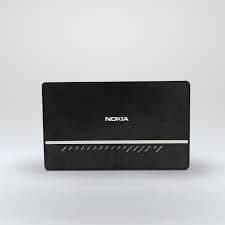
Nokia G-240W-C

Engineering Depth: Nokia G-240W-C High-Efficiency Optical Network Terminal and Wi-Fi Gateway

The Nokia G-240W-C represents a sophisticated convergence of gigabit passive optical network termination and dual-band wireless routing. Engineered to handle the rigorous demands of modern bandwidth-intensive environments, this unit acts as a critical bridge between provider-grade fiber optics and local area network distribution. It utilizes advanced packet processing to ensure that high-velocity data streams are managed with minimal jitter and maximum integrity across its multi-port gigabit ethernet backbone.

Quick Answer

The Nokia G-240W-C achieves reliability through its ITU-T G.984 compliant GPON interface, providing a stable 2.5 Gbps downstream ceiling and robust signal-to-noise ratio management. Its integration of 802.11ac Wi-Fi and hardware-accelerated packet forwarding ensures consistent throughput for multi-device environments without thermal throttling or latency spikes.

Optimized bandwidth efficiency via advanced OMCI management and dynamic bandwidth allocation which prioritizes critical traffic flows.
Integrated firewall architecture supporting stateful packet inspection and WPA2/WPA3 encryption standards for comprehensive network perimeter defense.
Superior local connectivity utilizing MU-MIMO technology and beamforming to mitigate electromagnetic interference and extend spatial multiplexing gains.

The Nokia G-240W-C is engineered for households and high-demand enterprises requiring uncompromising high-bandwidth fiber termination and a unified wireless distribution point. It is particularly suited for environments where the convergence of voice, data, and video over a single optical link is paramount for operational efficiency.

✓ Who Should Buy

  • Professional remote workers requiring a stable GPON interface for high-definition video conferencing and large-scale data packet transfers.
  • Modern smart homes integrating multiple IoT devices that benefit from sophisticated VLAN tagging and dual-band frequency management.
  • Competitive gamers who demand the lowest possible latency through direct gigabit ethernet connections and hardware-level traffic prioritization.

✕ Who Should Avoid

  • Users residing in locations limited to legacy ADSL or VDSL copper infrastructures where fiber-optic termination is unavailable.
  • Network architects specifically requiring the newest Wi-Fi 6E or 7 standards for ultra-high-density wireless deployments in expansive commercial spaces.
Product Overview
As a high-performance optical network terminal, the Nokia G-240W-C is designed to serve as the central nervous system for residential or small enterprise digital infrastructures. The device features four dedicated 10/100/1000Base-T gigabit ethernet ports, facilitating ultra-low latency wired connections for hardware that demands high-speed packet encapsulation. Its internal antenna array is tuned to maximize the efficiency of the 802.11ac standard, utilizing dual-band frequencies to navigate around crowded spectral environments. The fiber interface utilizes a standard SC/APC connector, ensuring precise alignment and minimal optical return loss during the transmission of asymmetric throughput. By integrating sophisticated VLAN tagging capabilities, the unit allows for the seamless segregation of internet, voice, and IPTV services, maintaining high Quality of Service levels even during peak utilization periods.

BrandNokia
ModelG-240W-C
TypeGPON ONT Wi-Fi Modem
Standards SupportedGPON ITU-T G.984, IEEE 802.11b/g/n/ac

Related Products

Engineering Analysis
The Nokia G-240W-C operates on the fundamental principles of ITU-T G.984 standards, achieving a theoretical downstream capacity of 2.488 Gbps and an upstream rate of 1.244 Gbps. This asymmetric throughput is managed through complex Time Division Multiple Access protocols in the upstream and broadcast mechanisms in the downstream. To combat signal attenuation over long fiber runs, the ONT employs high-sensitivity optical receivers that maintain data integrity even when optical power levels fluctuate. On the internal processing side, the chipset handles rapid packet encapsulation and de-encapsulation, moving data between the optical layer and the Ethernet/Wi-Fi layers with negligible microsecond-level latency. The 802.11ac implementation leverages 5GHz spectral density to avoid the electromagnetic interference commonly found in the 2.4GHz band, while advanced beamforming algorithms calculate the optimal phase shift for radio frequency signals to reach specific client devices. Furthermore, the device incorporates rigorous error correction algorithms and Forward Error Correction to reconstruct data packets that may have been compromised by minor physical layer disturbances, ensuring a resilient connection that satisfies the throughput requirements of 4K streaming and simultaneous high-frequency trading or gaming.

Technical Support & FAQs