
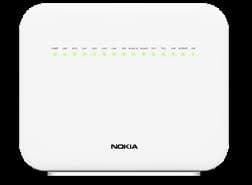
Nokia G-2426G-A

High-Performance Optical Terminal Integration: An Engineering Review of the Nokia G-2426G-A

The Nokia G-2426G-A stands as a cornerstone of modern fiber-to-the-home deployments, bridging the gap between high-frequency optical signals and robust local area networking. This dual-band Wi-Fi 5 ONT is designed to manage high-density traffic loads with precise packet processing, ensuring that the 2.5 Gbps downstream throughput is distributed across its Gigabit Ethernet ports and wireless interfaces without significant overhead or jitter. Its specialized silicon architecture facilitates a seamless transition for data moving from a wide-area optical network to a localized high-performance environment.

Quick Answer

The Nokia G-2426G-A utilizes advanced GPON encapsulation and dual-band 802.11ac technology to deliver a stable, low-latency fiber termination point. Its sophisticated signal processing and integrated hardware-level firewall make it a reliable choice for high-bandwidth residential and small-office environments requiring consistent uptime and high-speed data integrity.

Optimized GPON frame processing ensures maximum bandwidth efficiency for asymmetric 2.5 Gbps downstream and 1.25 Gbps upstream fiber links.
Integrated stateful packet inspection and carrier-grade firewall protocols provide a resilient defensive layer against electromagnetic interference and unauthorized network intrusions.
Implementation of multi-user MIMO and advanced beamforming techniques enhances spatial multiplexing and maintains high signal-to-noise ratios across the 5 GHz spectrum.

The Nokia G-2426G-A is engineered for households and small-scale enterprises requiring a high-bandwidth gateway that can sustain multiple concurrent high-definition streams and intensive data transfers. Its robust architectural design ensures it can serve as the primary nexus for complex local area networks where reliability and optical signal integrity are paramount.

✓ Who Should Buy

  • Power users requiring low-latency fiber termination for real-time competitive gaming and cloud-based computational tasks.
  • Remote professionals who demand high-capacity asymmetric throughput for large-scale data synchronization and 4K video conferencing.
  • Network administrators looking for a carrier-grade ONT that supports granular VLAN tagging and sophisticated Quality of Service protocols.

✕ Who Should Avoid

  • Users residing in geographic locations limited to legacy ADSL or VDSL infrastructure where fiber-to-the-home connectivity is unavailable.
  • Technologists requiring Wi-Fi 6 or 6E capabilities to support a fleet of the most recent generation mobile and laptop devices.
Product Overview
The Nokia G-2426G-A is a sophisticated Optical Network Terminal engineered to handle the complexities of contemporary digital infrastructures. By utilizing four Gigabit Ethernet interfaces alongside its dual-band wireless capabilities, the device facilitates a seamless transition from optical fiber medium to high-speed copper and wireless local networks. It operates on the ITU-T G.984 GPON standard, providing the necessary overhead for complex VLAN tagging and quality of service management. This allows for the prioritization of critical data streams, such as VoIP or high-definition IPTV, while maintaining standard internet traffic flow. The hardware is encased in a thermally optimized chassis designed to mitigate heat buildup during peak processing cycles, ensuring the internal silicon maintains optimal clock speeds for consistent packet throughput. The inclusion of high-gain antennas ensures that the 802.11ac radio frequency distribution remains uniform, minimizing dead zones within multi-room environments.

BrandNokia
ModelG-2426G-A
TypeGPON ONT Dual-Band Wi-Fi Modem
Standards SupportedGPON ITU-T G.984, IEEE 802.11b/g/n/ac

Related Products

Engineering Analysis
At the core of the Nokia G-2426G-A is a specialized chipset capable of handling the GPON physical layer with exceptional precision, maintaining a strict signal-to-noise ratio even in environments prone to optical signal attenuation. The device manages a theoretical downstream ceiling of 2.488 Gbps and an upstream of 1.244 Gbps, utilizing GEM (GPON Encapsulation Method) to package ethernet frames efficiently into GPON payloads. This reduction in overhead is critical for achieving low-latency performance in real-time applications. From a wireless perspective, the 802.11ac implementation utilizes multi-antenna configurations across the 2.4 GHz and 5 GHz bands. By employing sophisticated beamforming algorithms, the ONT focuses radio frequency energy directly toward client devices, effectively combating the destructive effects of multipath fading and electromagnetic interference from neighboring networks. Furthermore, the internal packet processing engine utilizes hardware acceleration to manage Network Address Translation (NAT) and Layer 3 routing functions. This ensures that the CPU is not bottlenecked by high-volume data transfers, maintaining wire-speed performance across all four physical GE ports. The inclusion of advanced buffer management techniques prevents packet loss during bursty traffic conditions, which is essential for maintaining the integrity of high-definition media streams and secure VPN tunnels in a professional or home-office setting. Through efficient packet scheduling and hierarchical quality of service, the Nokia G-2426G-A ensures that mission-critical data maintains low latency regardless of the overall network load.

Technical Support & FAQs