
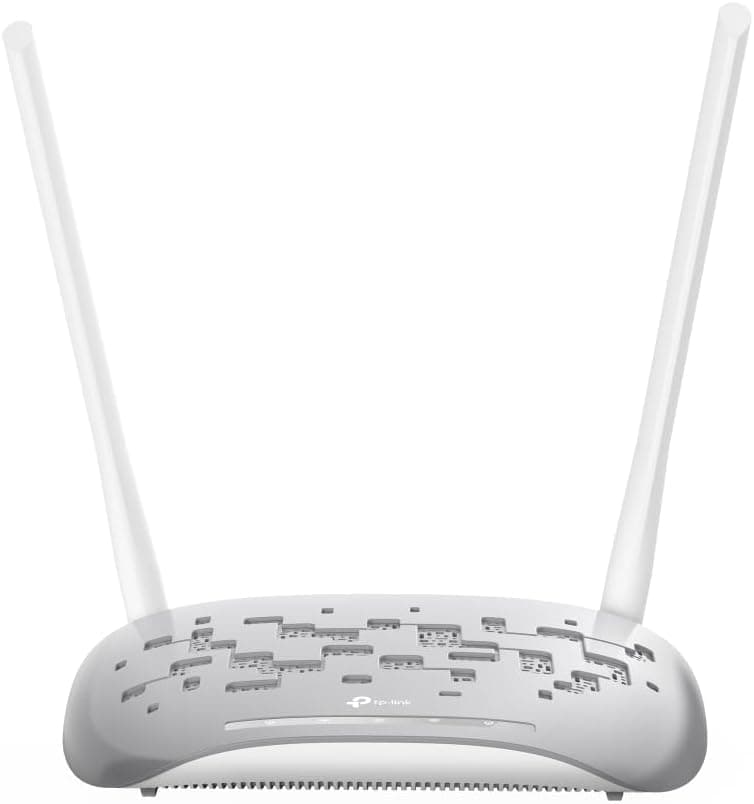
TP-Link TD-W9950

Technical Architecture Review: TP-Link TD-W9950 High-Performance VDSL2 and ADSL2+ Gateway

The TP-Link TD-W9950 represents a sophisticated convergence of VDSL2 technology and 802.11n wireless distribution, designed to bridge the gap between traditional copper-based infrastructure and modern high-speed digital subscriber line services. By leveraging advanced signal processing algorithms, this unit ensures maximum throughput for asymmetric digital subscriber lines while maintaining a consistent signal-to-noise ratio even in environments prone to significant electromagnetic interference. This gateway is engineered for precision, offering a unified solution that eliminates the need for separate modem and router hardware while providing a stable foundation for residential or small-office networking.

Quick Answer

The TP-Link TD-W9950 is a high-performance VDSL2 modem router that delivers 100 Mbps broadband speeds through optimized signal attenuation management and advanced G.993.2 standards. It provides a reliable, all-in-one networking solution for high-speed internet via copper-pair infrastructure, utilizing integrated wireless N capabilities to ensure robust local area network connectivity for diverse digital environments.

VDSL2 technology allows for downstream speeds of up to 100 Mbps through optimized packet encapsulation and efficient crosstalk cancellation mechanisms across copper lines.
Integrated firewall protocols and WPA/WPA2 encryption standards ensure secure data transmission and provide a defensive layer against unauthorized network intrusion and external threats.
Versatile connectivity options including four Fast Ethernet ports enable stable wired backhaul for high-priority devices requiring low-latency communication and jitter-free performance.

The TP-Link TD-W9950 is engineered for households and small-to-medium enterprises requiring high-bandwidth stability over VDSL2 or ADSL2+ connections where fiber-to-the-premises is not yet deployed or is unnecessary for current throughput requirements. Its focus on reliability through robust signal processing and its integration of essential routing features make it an ideal choice for users who demand consistent uptime and low-latency performance for daily professional tasks, high-definition media consumption, and synchronized cloud workflows.

✓ Who Should Buy

  • Telecommuters operating in VDSL2 deployment zones who require a stable gateway with advanced signal-to-noise ratio management for uninterrupted video conferencing.
  • Small office environments that utilize legacy copper infrastructure but require 100 Mbps downstream speeds for efficient multi-user cloud-based applications.
  • Residential users seeking an integrated modem-router solution to reduce physical hardware clutter while maintaining high-speed connectivity for a variety of smart home devices.

✕ Who Should Avoid

  • Power users in pure fiber-optic environments who require Gigabit-capable WAN ports and 802.11ax wireless standards for multi-gigabit throughput across local wireless networks.
  • High-density urban apartment dwellers where the 2.4 GHz band is heavily saturated and 5 GHz or 6 GHz frequency bands are necessary to avoid severe channel interference.
Product Overview
The TP-Link TD-W9950 stands as a pinnacle of VDSL/ADSL engineering, specifically crafted to extract the maximum possible bandwidth from existing telephone line infrastructure. This device integrates a high-speed VDSL2 modem with a 300 Mbps Wireless N router, creating a unified gateway that simplifies network topology and reduces hardware overhead. The hardware utilizes advanced G.993.2 VDSL2 standards, supporting profiles up to 17a, which are essential for maintaining 100 Mbps throughput over significant copper loop lengths. Beyond raw speed, the TD-W9950 emphasizes signal integrity, employing sophisticated error correction mechanisms to mitigate the impact of line noise and impulse interference. Its internal architecture is optimized for the simultaneous handling of voice, data, and video traffic, ensuring that packet loss is minimized during peak utilization periods. The four Fast Ethernet ports facilitate high-speed local data exchange for gaming consoles, desktop workstations, or smart televisions, while the external high-gain antennas utilize diversity to extend the wireless footprint. This ensures that the 802.11n signal penetrates architectural obstacles effectively to provide comprehensive indoor coverage without sacrificing connection stability.

BrandTP-Link
ModelTD-W9950
TypeWireless N VDSL/ADSL Modem Router
Standards SupportedVDSL2, ADSL2+, ADSL2, ADSL, IEEE 802.11b/g/n

Related Products

Engineering Analysis
At the core of the TP-Link TD-W9950 is a specialized chipset capable of handling complex VDSL2 vectoring and G.INP physical layer retransmission, which are critical for stabilizing connections against impulse noise and signal degradation. The device achieves its 100 Mbps downstream capability by managing the frequency spectrum up to 17.6 MHz, effectively balancing asymmetric throughput for residential and small-office environments. Signal attenuation management is handled through dynamic rate adaptation, which continuously monitors the signal-to-noise ratio to adjust the bit-loading per sub-carrier in real-time. This ensures that even when electromagnetic interference from nearby electronics fluctuates, the TD-W9950 maintains a persistent synchronization with the Digital Subscriber Line Access Multiplexer. Packet processing efficiency is further enhanced by a dedicated internal bus that manages Network Address Translation and Stateful Packet Inspection firewall filtering without introducing significant jitter. By utilizing both ATM and PTM encapsulation methods, the router ensures seamless compatibility with various Internet Service Provider backends while reducing the header overhead associated with data framing. The wireless radio utilizes 2x2 MIMO technology to maximize spectral efficiency within the 2.4 GHz band, ensuring that the local wireless environment can support multiple concurrent streams of data without causing bufferbloat or significant packet queuing delays. This engineering focus on Layer 1 and Layer 2 stability makes the TD-W9950 a resilient choice for copper-based broadband delivery.

Technical Support & FAQs