
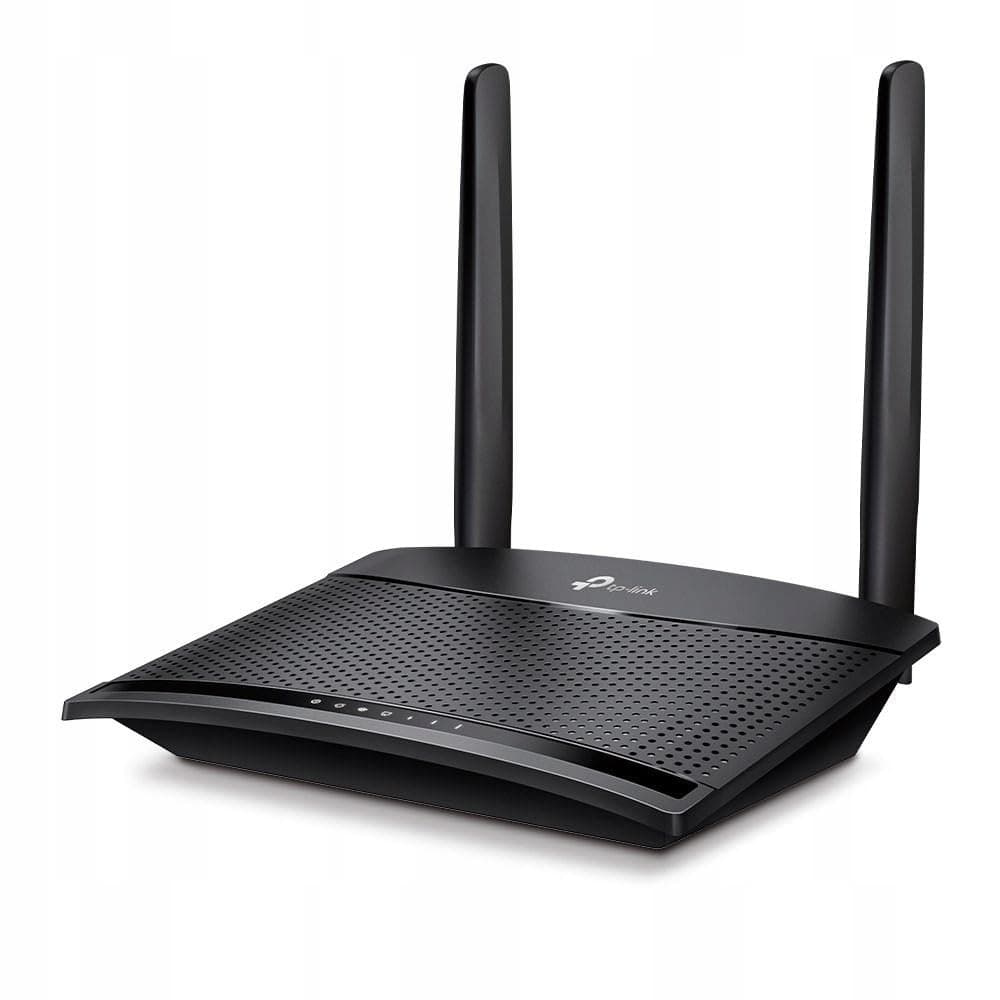
TP-Link TL-MR100

Technical Deep Dive: TP-Link TL-MR100 300 Mbps Wireless N 4G LTE Networking Infrastructure

The TP-Link TL-MR100 represents a specialized convergence of cellular wide-area networking and localized 802.11n wireless distribution. By leveraging a high-gain internal antenna array and a sophisticated LTE baseband processor, this unit facilitates seamless data packet encapsulation across 4G frequencies, ensuring consistent asymmetric throughput for environments where traditional copper or fiber-optic landlines remain technically unfeasible or economically prohibitive.

Quick Answer

The TP-Link TL-MR100 ensures reliable connectivity by utilizing LTE Category 4 technology to achieve download rates up to 150 Mbps, coupled with an integrated NAT firewall and SPI for robust packet inspection. Its plug-and-play architecture eliminates complex configuration, making it a superior failover solution for mission-critical network uptime.

Optimized LTE Category 4 modem integration capable of managing high signal-to-noise ratios to sustain 150 Mbps downlink and 50 Mbps uplink speeds across diverse cellular frequency bands.
Advanced security implementation featuring WPA/WPA2-PSK encryption standards and stateful packet inspection to mitigate unauthorized network intrusion and electromagnetic interference.
Versatile physical interface layer comprising two 10/100 Mbps Fast Ethernet ports designed for localized LAN bridging and flexible WAN failover configurations.

The TP-Link TL-MR100 is engineered for households and remote enterprises requiring high-bandwidth cellular redundancy or primary internet access in locations lacking traditional infrastructure. This device provides a stable, hardware-accelerated routing environment that excels in maintaining persistent connections for critical data transmission and basic multimedia consumption.

✓ Who Should Buy

  • Remote operations managers requiring a dedicated 4G LTE gateway for persistent telemetry and remote monitoring systems.
  • Small business owners seeking a reliable hardware-based failover solution to ensure point-of-sale continuity during primary ISP outages.
  • Rural residents needing a high-gain cellular router to convert mobile signals into stable local 802.11n wireless networks.

✕ Who Should Avoid

  • Competitive gamers requiring the ultra-low latency and multi-gigabit throughput associated with localized fiber-optic termination.
  • Large-scale enterprise environments demanding multi-user MIMO support and extensive VLAN tagging across dozens of simultaneous wireless clients.
Product Overview
The TP-Link TL-MR100 functions as a sophisticated gateway for modern telecommunications, bridging the gap between mobile broadband and local area network requirements. This device operates on the 802.11n standard, delivering a theoretical wireless capacity of 300 Mbps, which harmonizes with the 150 Mbps LTE backhaul to prevent bandwidth bottlenecks during multi-client packet processing. Its structural design incorporates two detachable advanced LTE antennas, which are engineered to maximize gain and sensitivity, thereby reducing packet loss in areas with suboptimal signal propagation. The inclusion of a micro SIM card slot facilitates immediate cellular integration, bypassing the need for manual APN adjustments in most geographical regions. Furthermore, the firmware supports essential networking protocols including IPv4 and IPv6 dual-stacking, Quality of Service prioritization for traffic shaping, and comprehensive parental controls to manage data flow at the MAC address level.

BrandTP-Link
ModelTL-MR100
Type4G LTE Modem Router
Standards SupportedIEEE 802.11b/g/n, LTE FDD, LTE TDD

Related Products

Engineering Analysis
At the core of the TP-Link TL-MR100 engineering lies a highly efficient LTE Category 4 chipset designed to handle the complexities of Orthogonal Frequency Division Multiple Access. This hardware architecture allows the device to manage signal attenuation through advanced signal-to-noise ratio optimization, ensuring that the 150 Mbps downlink remains stable even in high-interference environments. The packet processing engine is tuned for low-latency delivery, utilizing efficient data encapsulation techniques to minimize overhead during the transition from the cellular radio interface to the localized Ethernet switching fabric. By implementing a sophisticated internal bus, the router maintains throughput consistency across its dual 10/100 Mbps ports, effectively managing the duplex communication required for simultaneous data streams. Furthermore, the integrated 802.11n radio utilizes MIMO technology to mitigate the effects of multipath propagation, ensuring that wireless clients maintain high signal integrity without the need for complex beamforming arrays found in higher-tier WiFi 6 variants. This focus on essential spectral efficiency makes the TL-MR100 an exceptionally stable node for remote telemetry, point-of-sale systems, and small-scale residential backhaul where reliable packet delivery takes precedence over ultra-high-speed multi-gigabit routing.

Technical Support & FAQs