
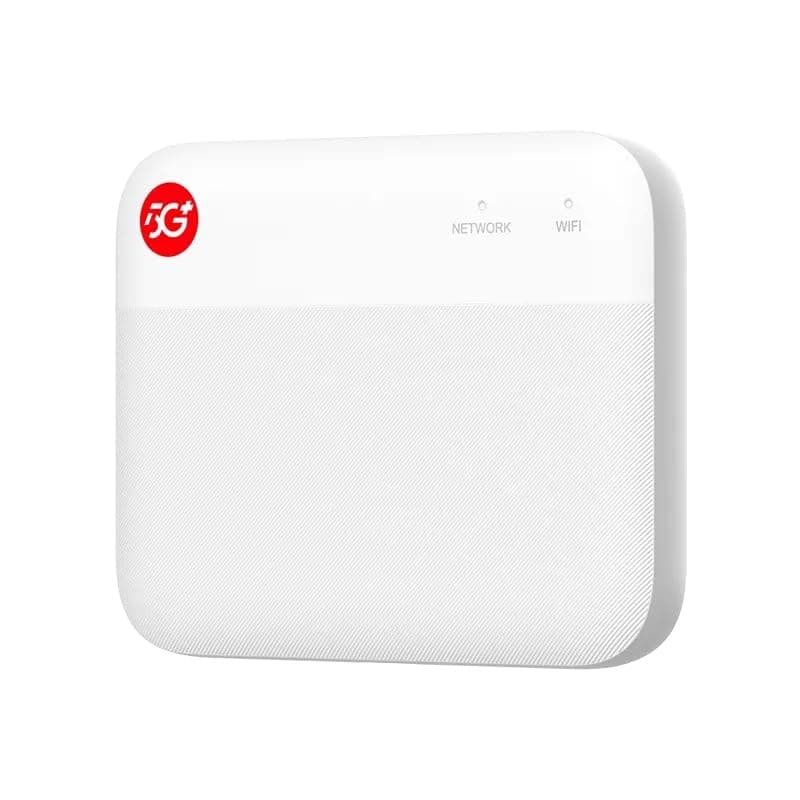
ZTE F50

Engineering Excellence: ZTE F50 5G High-Throughput Mobile Broadband Architecture Review

The ZTE F50 represents a paradigm shift in ultra-portable telecommunications, leveraging Sub-6GHz 5G infrastructure to deliver fiber-grade throughput in a pocket-sized form factor. Engineered for high-speed packet encapsulation and consistent signal integrity, this device utilizes advanced radio frequency front-ends to maintain peak performance across diverse network topographies. Its architecture is specifically tuned to maximize the utility of 5G NR technology while maintaining a footprint that redefines mobile connectivity standards.

Quick Answer

The ZTE F50 is a high-performance 5G mobile terminal designed for users requiring multi-gigabit downlink speeds through advanced carrier aggregation and 4x4 MIMO technology. Its reliability stems from a specialized chipset that mitigates thermal throttling while maximizing signal-to-noise ratios in dense urban environments without the need for traditional fiber termination.

Sub-6GHz 5G architecture supporting peak theoretical downlinks up to 5.7 Gbps through sophisticated carrier aggregation and spatial multiplexing.
Integrated WPA3 security protocols ensuring enterprise-grade encryption and robust protection against brute-force authentication attacks across the wireless spectrum.
Advanced thermal management system designed to minimize signal attenuation and maintain stable throughput during high-bandwidth packet processing in a battery-free design.

The ZTE F50 is engineered for digital nomads and technical professionals who require a high-bandwidth, low-latency 5G gateway that prioritizes mobility and rapid deployment. It is particularly effective for users operating in regions with robust 5G infrastructure where fiber-optic availability is limited or where a redundant high-speed wireless link is required for mission-critical tasks requiring massive downlink capacity.

✓ Who Should Buy

  • Remote engineers and technical consultants requiring high-speed downlink capacity for large-scale data retrieval and cloud synchronization via 5G NR.
  • Mobile content creators who benefit from the device compact footprint and its ability to utilize 5G as a primary WAN source through high-speed USB-C tethering.
  • Urban professionals seeking a secondary high-performance network link to bypass congested local ISP infrastructures during peak hours using dedicated cellular bands.

✕ Who Should Avoid

  • Users in rural geographic locations lacking Sub-6GHz 5G coverage who would be limited to significantly lower legacy 4G LTE throughput.
  • Home theater enthusiasts requiring multiple physical RJ45 Ethernet ports for wired backbone connectivity to smart TVs or local area network storage.
Product Overview
The ZTE F50 functions as a sophisticated 5G-to-WiFi bridge, translating high-frequency cellular signals into a stable 802.11ac wireless environment. While traditional modems rely on bulky enclosures and physical Ethernet ports, the F50 optimizes its internal circuitry to handle massive asymmetric throughput, specifically addressing the disparity between its multi-gigabit downlink and 22 Mbps uplink. This unit operates without an internal battery, relying instead on a high-speed USB-C interface for both power and data transmission, which significantly reduces electromagnetic interference often generated by internal power cells. The integration of WiFi 5 standards ensures compatibility with a broad spectrum of legacy and modern client devices, while the internal antenna array is precision-tuned to minimize packet loss during handovers between cellular towers. The device supports various networking modes, allowing for flexible deployment in scenarios where traditional broadband is unavailable, effectively acting as a portable optical network terminal equivalent over cellular waves.

BrandZTE
ModelF50
Type5G Portable Wi-Fi Modem
Standards SupportedGSM, UMTS, LTE, 5G NSA, 5G SA

Related Products

Engineering Analysis
At the core of the ZTE F50 is a highly efficient baseband processor capable of managing complex modulation schemes such as 256-QAM. This allows the device to achieve theoretical downlink bursts of up to 5.7 Gbps, provided the local cell site supports the necessary bandwidth and backhaul capacity. The engineering focus on signal-to-noise ratio optimization ensures that even in edge-of-cell scenarios, the device maintains a resilient connection by dynamically adjusting its carrier aggregation profiles. One critical aspect of its design is the management of packet processing efficiency; the firmware is optimized to reduce bufferbloat, which is essential given the restricted 22 Mbps uplink. By prioritizing control packets and implementing intelligent queue management, the F50 ensures that high-speed downloads do not saturate the return path, preventing TCP window scaling issues. Furthermore, the absence of an Ethernet port necessitates that all local traffic be handled via the dual-band WiFi 5 radio or the high-speed USB-C bus. The USB-C interface supports the USB 3.0 protocol, ensuring it does not become a hardware bottleneck during peak 5G reception. From a thermal perspective, the chassis is designed to dissipate heat generated during the intense computational demands of high-frequency signal demodulation, ensuring that the device does not experience frequency scaling or throughput degradation during sustained heavy utilization. The implementation of advanced VLAN tagging capabilities within the firmware allows for more sophisticated traffic management in professional environments, ensuring that diverse data streams are processed with optimal priority.

Technical Support & FAQs