
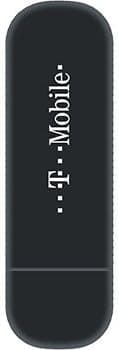
ZTE MF667

Engineering Assessment: ZTE MF667 HSPA+ Wireless Data Terminal and Signal Processing Review

The ZTE MF667 represents a pinnacle of HSPA+ engineering, designed to provide consistent cellular backhaul through a highly compact USB form factor. By leveraging advanced radio frequency modulation techniques, this modem ensures that mobile professionals can maintain data integrity and packet processing efficiency even in environments with variable signal-to-noise ratios. Its plug-and-play architecture minimizes deployment latency, making it a reliable edge device for mobile wide area network access where fixed-line infrastructure is unavailable.

Quick Answer

The ZTE MF667 is a robust HSPA+ solution offering 21.6 Mbps asymmetric throughput, optimized for reliable mobile broadband via intelligent frequency management. It ensures stable packet delivery and minimal jitter through sophisticated internal antenna diversity and signal-to-noise ratio optimization for mission-critical mobile tasks.

Optimized HSPA+ throughput reaching 21.6 Mbps downlink and 5.76 Mbps uplink to ensure efficient asymmetric data flow for mobile applications.
Integrated signal-to-noise ratio management and RFI shielding to protect data packets from electromagnetic interference in dense urban environments.
Low-latency packet encapsulation protocols compatible with Windows and macOS environments for seamless driver-less integration and immediate network acquisition.

The ZTE MF667 is engineered for mobile professionals and remote field units requiring a dedicated 3G backhaul solution that offers superior signal-to-noise ratio performance and consistent HSPA+ throughput for reliable data transmission in diverse geographic locations.

✓ Who Should Buy

  • Field engineers requiring a reliable cellular interface for remote diagnostic packet analysis and telemetry.
  • Mobile professionals needing a dedicated HSPA+ modem to bypass unsecured public WiFi networks while maintaining throughput stability.
  • IoT deployment teams seeking a low-power USB terminal for consistent wide area network data transmission in fixed remote locations.

✕ Who Should Avoid

  • Enterprise users requiring high-density WiFi 6 coverage and MU-MIMO capabilities for supporting multiple local wireless clients.
  • High-bandwidth power users requiring the throughput of 5G NR infrastructure or fiber-optic termination for 4K video rendering and ultra-low latency gaming.
Product Overview
The ZTE MF667 is a high-performance HSPA+ USB data terminal engineered to bridge the gap between mobility and reliable network connectivity. Within its streamlined chassis lies a sophisticated radio frequency subsystem capable of managing complex modulation schemes to achieve a peak downlink rate of 21.6 Mbps. This device prioritizes signal integrity by utilizing advanced internal antenna arrays that mitigate the effects of multipath fading and electromagnetic interference. As an HSPA+ category 14 device, it facilitates rapid packet encapsulation, ensuring that data-intensive tasks are handled with minimal overhead. The MF667 operates across multiple frequency bands, allowing for versatile deployment across global carrier infrastructures. Its design eliminates the need for external power supplies, drawing current directly from the USB bus while maintaining a thermal profile that prevents performance throttling during sustained high-bandwidth operations. This modem is particularly effective in scenarios where signal attenuation management is critical, providing a stable link layer for remote operations.

BrandZTE
ModelMF667
Type3G USB Modem
Standards SupportedGSM, GPRS, EDGE, UMTS, HSDPA, HSUPA, HSPA+

Related Products

Engineering Analysis
The technical architecture of the ZTE MF667 is centered on maximizing spectral efficiency within the 3G HSPA+ ecosystem. By implementing advanced signal processing algorithms, the modem effectively manages the signal-to-noise ratio to maintain a stable link even at the cell edge. The device supports HSDPA category 14 and HSUPA category 6, which enables an asymmetric throughput of 21.6 Mbps for downloads and 5.76 Mbps for uploads. This balance is crucial for applications that require consistent upstream signaling for TCP acknowledgement packets. From a hardware perspective, the MF667 utilizes a high-density integrated circuit that handles complex packet encapsulation and de-encapsulation with minimal latency. Signal attenuation management is achieved through a precisely tuned internal PCB antenna that minimizes the impact of surrounding electromagnetic interference. Furthermore, the modem features an optimized power management system that regulates voltage spikes from the host USB port, ensuring that the RF power amplifier operates within peak linearity. This engineering focus on signal-to-noise ratio stability ensures that users experience fewer dropped packets and more consistent latency metrics compared to entry-level HSPA hardware. The lack of VLAN tagging or MU-MIMO support is a direct result of its specialized role as a point-to-point cellular interface rather than a multi-user routing hub. By focusing exclusively on the physical and data link layers of the cellular stack, the MF667 provides a lean, efficient pipe for raw data transmission, making it a preferred choice for systems requiring dedicated wide area network access without the overhead of complex routing protocols or wireless local area network management.

Technical Support & FAQs