
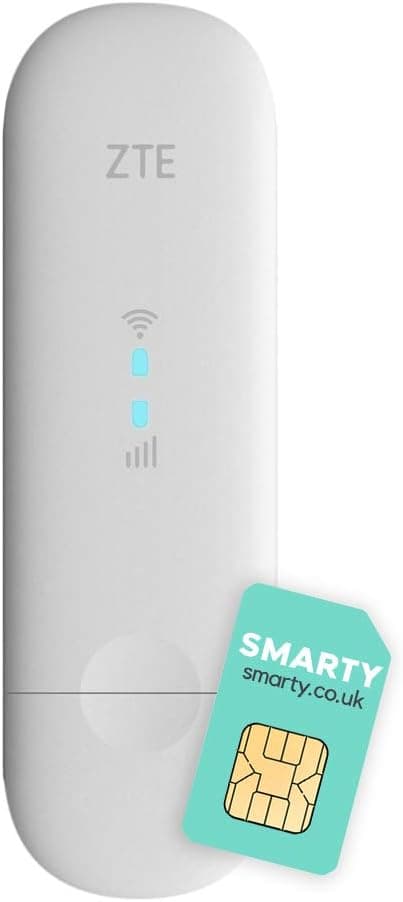
ZTE MF79U

Integrated Cellular Gateway Engineering: ZTE MF79U High-Performance Wireless Data Terminal

The ZTE MF79U represents a pinnacle in compact telecommunications engineering, merging high-speed Category 4 LTE capabilities with a localized 802.11 b/g/n wireless access point. Designed for seamless mobile broadband integration, this device utilizes advanced signal modulation to maintain carrier-grade stability across diverse spectrum environments, ensuring that remote telemetry and high-bandwidth applications remain operational without the need for fixed-line infrastructure.

Quick Answer

The ZTE MF79U delivers reliable high-speed mobile connectivity by leveraging Category 4 LTE technology for 150 Mbps downlink speeds and integrated 802.11 b/g/n WiFi. Its hardware-optimized packet routing and support for external antenna diversity ensure stable signal acquisition even in challenging RF environments with significant electromagnetic interference.

High-efficiency Category 4 LTE modem providing 150 Mbps asymmetric throughput with advanced carrier aggregation support.
Integrated 2.4 GHz WLAN module supporting up to 10 concurrent stations with robust WPA/WPA2 encryption standards.
Dual TS-9 external antenna interfaces for enhanced signal-to-noise ratio management in fringe coverage areas.

The ZTE MF79U is engineered for professionals and remote deployments requiring a resilient, high-speed mobile data link that bypasses the limitations of fixed-line broadband infrastructure while maintaining strict security and throughput standards.

✓ Who Should Buy

  • Remote field technicians requiring a portable, low-latency gateway for real-time telemetry and cloud-based diagnostic reporting.
  • Mobile professionals needing a dedicated wireless access point with high signal-to-noise ratio stability in varied RF environments.
  • IoT implementers looking for a reliable 4G LTE backhaul solution that supports multiple concurrent wireless station connections.

✕ Who Should Avoid

  • Power users requiring 5 GHz 802.11ac/ax WiFi standards for high-density local area network data transfers.
  • Fixed-location enterprises demanding multi-gigabit fiber termination and extensive physical RJ45 Ethernet switching capabilities.
Product Overview
The ZTE MF79U functions as a sophisticated cellular-to-WLAN bridge, facilitating rapid deployment of internet resources via a plug-and-play USB interface. By utilizing specialized 4G LTE chipsets, the device manages complex packet encapsulation and decapsulation processes with minimal overhead, maintaining a consistent 50 Mbps uplink for critical data transmission. The architecture is specifically tuned for mobile environments where traditional fiber-optic or copper-based backhaul is unavailable. Its 802.11 b/g/n radio operates with high spectral efficiency, minimizing packet loss during high-density data bursts. Furthermore, the firmware supports advanced networking features including IPv4/IPv6 dual-stack addressing and integrated firewall protection to mitigate common cyber threats and unauthorized intrusion attempts. The absence of physical RJ45 ports is compensated by a powerful internal antenna array that maximizes wireless penetration and coverage radius.

BrandZTE
ModelMF79U
Type4G LTE USB Modem / WiFi Dongle
Standards SupportedGSM, UMTS, LTE

Related Products

Engineering Analysis
At the core of the ZTE MF79U lies a high-performance signal processor capable of managing Category 4 LTE throughput, which translates to a theoretical peak of 150 Mbps. This performance is sustained through intelligent signal attenuation management and hardware-level error correction that stabilizes the connection against fluctuating radio frequencies. The device excels in packet processing efficiency, reducing jitter and latency which are critical for real-time communication protocols. By implementing a sophisticated internal antenna array, the MF79U optimizes the signal-to-noise ratio, ensuring that data packets are delivered with high integrity even when the device is subjected to minor electromagnetic interference. The 802.11 b/g/n wireless controller is engineered to handle simultaneous data streams from multiple clients without compromising the aggregate bandwidth. The hardware utilizes a sophisticated L1/L2 processing layer to manage the complexities of LTE frame structures, optimizing the timing for Uplink and Downlink cycles to maximize spectral efficiency. This is particularly vital in urban environments where signal congestion can lead to significant packet collisions. The MF79U employs advanced noise-cancellation algorithms to isolate the primary carrier signal from background radio noise, which significantly improves the reliability of the 150 Mbps downlink. Advanced power management circuits further ensure that the thermal envelope remains within operational limits during sustained high-load scenarios, preventing thermal throttling of the chipset and maintaining consistent asymmetric throughput across long-duration sessions.

Technical Support & FAQs