
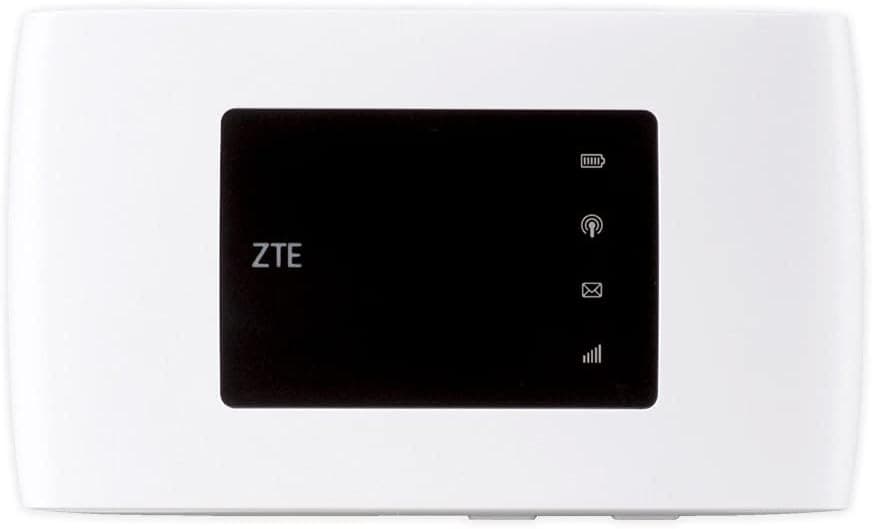
ZTE MF920U

Engineering Deep Dive: ZTE MF920U Ultra-Portable 4G LTE Connectivity Architecture

The ZTE MF920U represents a pinnacle of mobile wide-area network integration, distilling complex LTE Category 4 specifications into a compact form factor. Engineered for high-mobility environments, this device leverages advanced signal processing to maintain consistent asymmetric throughput, ensuring that data-intensive applications remain responsive regardless of geographical constraints or physical infrastructure limitations.

Quick Answer

The ZTE MF920U is a robust LTE Category 4 hotspot providing a reliable 150 Mbps downlink by utilizing optimized antenna diversity and efficient packet encapsulation. It excels in delivering low-latency mobile broadband through its streamlined 802.11 b/g/n wireless interface, making it a premier choice for on-the-go high-speed access.

Optimized bandwidth efficiency utilizing LTE Cat4 protocols to achieve 150 Mbps peak downlink with minimal signal attenuation during high-velocity movement.
Integrated stateful packet inspection firewall and WPA2 security protocols ensure robust encryption and prevention of unauthorized electromagnetic interference disruptions.
Sophisticated power management and signal-to-noise ratio optimization for sustained connectivity across diverse 4G spectrum bands without thermal throttling.

The ZTE MF920U is engineered for professionals and high-mobility users requiring a dedicated LTE gateway that balances throughput efficiency with ultra-portable design. It is particularly effective in scenarios where fixed-line fiber termination is unavailable, providing a high-performance wireless bridge to the global 4G infrastructure with professional-grade stability.

✓ Who Should Buy

  • Field engineers requiring a reliable LTE backhaul for remote diagnostic data transmission and real-time cloud synchronization in diverse environments.
  • Digital nomads who need a secure, private Wi-Fi network that utilizes advanced WPA2 encryption to protect sensitive data over cellular links.
  • Small workgroups needing a portable gateway capable of supporting multiple simultaneous devices with consistent asymmetric throughput for collaborative tasks.

✕ Who Should Avoid

  • Users requiring high-speed local area network transfers who would benefit more from 802.11ax or physical Gigabit Ethernet connectivity for NAS access.
  • Individuals in areas exclusively served by legacy 3G or ADSL technologies where 4G LTE signal-to-noise ratios are insufficient for reliable modulation.
Product Overview
The ZTE MF920U is a highly engineered 4G LTE mobile hotspot designed to facilitate high-speed data transmission through advanced cellular modulation. Operating on a 2.4 GHz frequency band using the 802.11 b/g/n standard, it manages wireless traffic by prioritizing packet integrity and minimizing jitter. The device supports multiple LTE frequency bands, allowing for seamless roaming and handover between cell towers. Its internal architecture is optimized for thermal dissipation, preventing hardware-level performance degradation during prolonged high-bandwidth sessions. By eliminating the need for physical Ethernet ports, the MF920U focuses entirely on maximizing radio frequency efficiency and ensuring that the 150 Mbps downlink and 50 Mbps uplink capabilities are fully realized in real-world propagation environments. This focus on wireless excellence makes it an indispensable tool for maintaining a high-performance network perimeter in any location.

BrandZTE
ModelMF920U
Type4G LTE Mobile Wi-Fi Hotspot
Standards SupportedGSM, UMTS, LTE

Related Products

Engineering Analysis
The technical foundation of the ZTE MF920U rests on its LTE Category 4 modem, which employs sophisticated Orthogonal Frequency Division Multiple Access for efficient spectrum utilization. With a peak downlink of 150 Mbps, the hardware handles complex packet encapsulation and de-encapsulation with minimal overhead, significantly reducing the total round-trip time for data packets. Signal attenuation management is achieved through a high-gain internal antenna array that monitors the signal-to-noise ratio in real-time, adjusting modulation schemes to maintain a stable connection even in edge-of-cell scenarios where signal strength is marginal. The 802.11 b/g/n wireless controller is specifically tuned to reduce interference within the crowded 2.4 GHz spectrum, employing advanced Clear Channel Assessment algorithms to avoid collisions. Furthermore, the device’s firmware is optimized for packet processing efficiency, ensuring that the transition from the LTE backhaul to the local Wi-Fi interface occurs with negligible latency. This architectural synergy allows for the management of up to 32 simultaneous client connections without compromising the stability or the throughput of the underlying data stream, providing an enterprise-grade experience in a pocket-sized footprint.

Technical Support & FAQs