
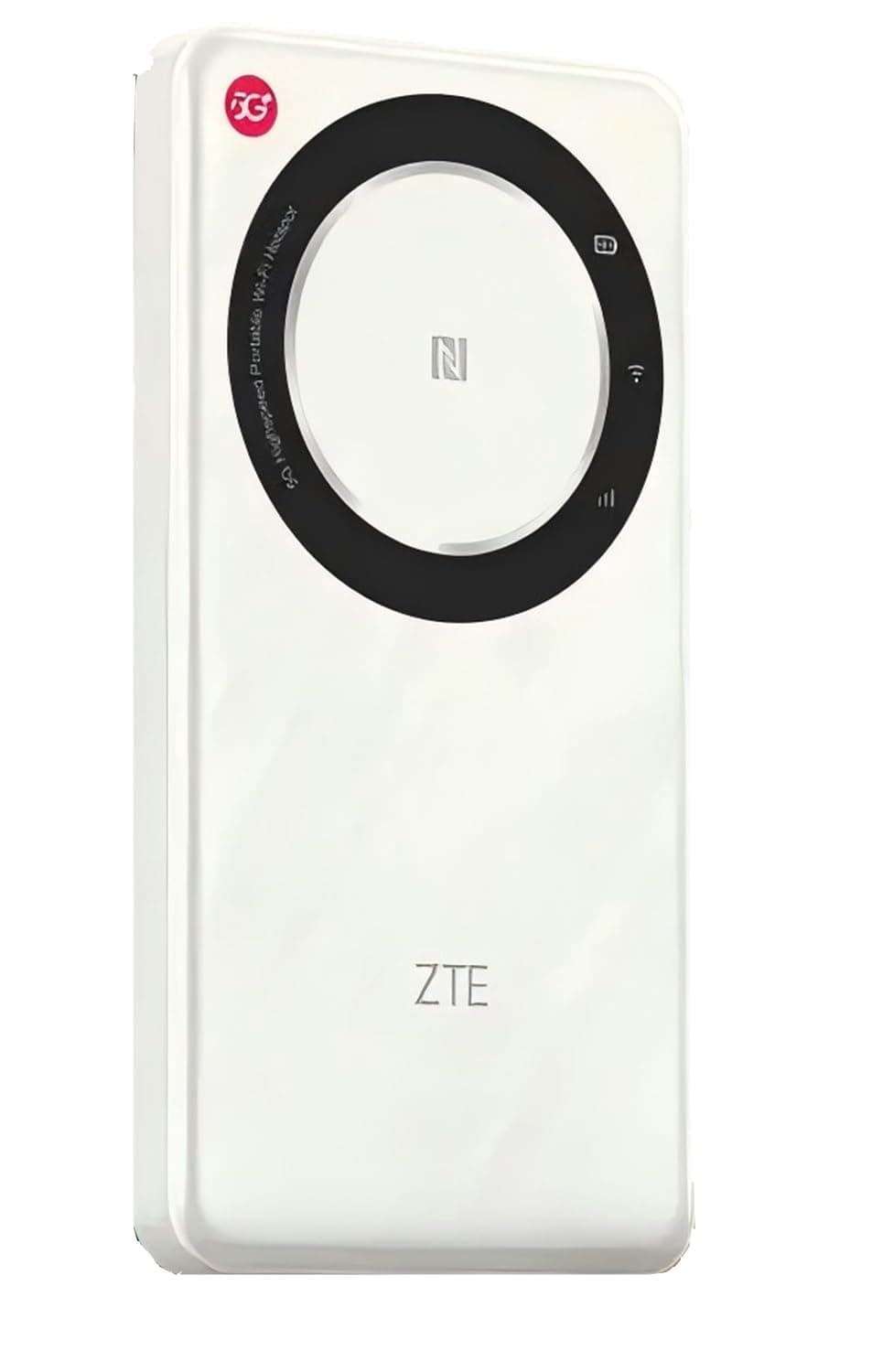
ZTE U30 Air

ZTE U30 Air 5G Architecture Review: Ultra-Portable Sub-6GHz Spectrum Optimization

The ZTE U30 Air represents a paradigm shift in portable wide-area networking, leveraging Sub-6GHz 5G technology to deliver substantial downstream capacity. Engineered for high-mobility environments, it facilitates low-latency data transmission by optimizing radio frequency allocation and minimizing signal-to-noise ratio degradation during high-velocity movement. This device serves as a critical bridge for professionals requiring enterprise-grade connectivity without the constraints of fixed-line infrastructure.

Quick Answer

The ZTE U30 Air utilizes advanced New Radio carrier aggregation to achieve a peak download rate of 1.83 Gbps, ensuring stable multi-device connectivity through efficient packet encapsulation and spatial multiplexing within the 802.11ac framework. Its reliability stems from sophisticated antenna diversity that maintains high-speed data flow even in areas with significant electromagnetic interference.

Advanced frequency division duplexing maximizes bandwidth efficiency across the 5G spectrum for sustained high-speed data flow and reduced latency.
Integrated security protocols including robust firewall configurations and WPA2/WPA3 support mitigate unauthorized access and potential data exfiltration.
Sophisticated antenna diversity and beamforming technology reduce electromagnetic interference while maintaining signal integrity in dense urban environments.

The ZTE U30 Air is engineered for high-demand professionals and enterprises requiring a reliable mobile backup or a primary high-bandwidth link in locations where physical fiber termination is unavailable or impractical. Its focus on 5G optimization and wireless efficiency makes it a premier choice for those who cannot compromise on throughput while on the move.

✓ Who Should Buy

  • Field engineers and remote consultants requiring high-speed data access for massive dataset transfers and cloud-based CAD synchronization.
  • Executive travelers needing a secure, private network segment to bypass insecure public Wi-Fi while maintaining low-latency VPN tunnels.
  • Live streaming professionals utilizing high-bitrate HEVC encoding who require consistent 5G downlink stability for real-time monitoring and feedback.

✕ Who Should Avoid

  • Fixed-location power users who require the 10Gbps plus potential of XGS-PON or localized physical LAN interconnects via SFP or RJ45 ports.
  • Industrial environments relying strictly on legacy 802.11b devices that may struggle with modern WPA3 handshake requirements or high-frequency 5G carrier requirements.
Product Overview
The ZTE U30 Air is a sophisticated mobile gateway designed to bridge the gap between fixed-line fiber speeds and nomadic connectivity. By utilizing a high-performance 5G chipset, it manages packet processing with remarkable efficiency, ensuring that data-intensive applications such as 4K video streaming and real-time telemetry remain fluid. Its implementation of the 802.11ac standard allows for broad compatibility across legacy and modern hardware, distributing the 1.83 Gbps bandwidth across multiple concurrent sessions without significant jitter. The device's internal architecture emphasizes thermal dissipation, which is critical for maintaining peak computational performance during extended high-throughput periods. Without the need for physical fiber or Ethernet ports, the U30 Air relies on its superior wireless stack to handle complex routing tasks and maintain a stable signal-to-noise ratio across various frequency bands.

BrandZTE
ModelU30 Air
Type5G Mobile Wi-Fi Hotspot
Standards SupportedGSM, UMTS, LTE, 5G NSA, 5G SA

Related Products

Engineering Analysis
At the core of the ZTE U30 Air lies a specialized baseband processor capable of managing complex modulation schemes such as 256-QAM. This allows the device to achieve a peak theoretical throughput of 1.83 Gbps by maximizing bit-per-symbol efficiency. To combat signal attenuation, the U30 Air employs high-gain internal antennas that optimize the signal-to-noise ratio even in fringe coverage areas. The firmware-level packet encapsulation logic is tuned to reduce overhead, ensuring that the transition from 5G NR frames to IEEE 802.11 frames occurs with minimal latency. Furthermore, the device manages electromagnetic interference through shielded internal components, preserving the integrity of the data payload. Asymmetric throughput management ensures that the downlink priority is maintained for high-bandwidth consumption tasks while reserving sufficient uplink headroom for control signaling and ACK packets. The absence of physical Ethernet ports necessitates an ultra-reliable wireless stack, which ZTE has achieved by implementing intelligent radio resource management that dynamically adjusts channel width based on local congestion metrics. Through the use of orthogonal frequency-division multiplexing, the U30 Air maintains robust connectivity even in dense urban multipath environments where signal reflections typically degrade performance. The internal scheduling algorithms prioritize time-sensitive packets, effectively reducing jitter for voice-over-IP and remote desktop protocols. This architectural focus on low-level signal processing ensures that the 1.83 Gbps ceiling is not merely a theoretical maximum but a target reachable in optimized 5G deployments.

Technical Support & FAQs