
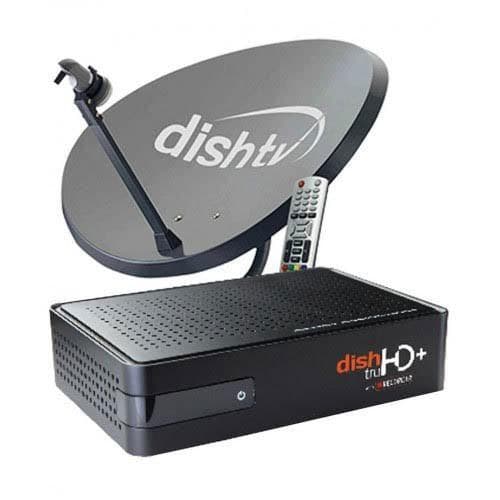
Dish TV SD Set Top Box

Technical Evaluation of the Dish TV SD Set Top Box Standard Definition Signal Processing Architecture

The Dish TV SD Set Top Box represents a cornerstone in accessible broadcasting technology, engineered specifically to deliver consistent 576i signal throughput across the Indian subcontinent. By focusing on fundamental digital-to-analog conversion efficiency, this receiver ensures that users with standard-definition displays receive optimized color accuracy and synchronized audio-visual streams without the overhead of high-bandwidth modern protocols. It is a robust solution designed for high-availability environments where broadcast stability is the primary operational requirement.

Quick Answer

This model stands out in the Indian DTH market for its high-gain tuner sensitivity and resilient power management architecture, which ensures stable signal locking even in challenging weather conditions. It utilizes a specialized chipset for rapid HEVC decoding at standard resolutions, providing a lag-free user interface and superior mean time between failures compared to more complex hybrid units.

High-precision digital-to-analog signal processing to maximize the dynamic range fidelity of 576i video streams.
Passive thermal dissipation architecture within a compact chassis to ensure long-term hardware stability without mechanical cooling noise.
Integrated asymmetric encryption protocols for secure conditional access and rapid handshake speeds with satellite transponders.

Choosing the Dish TV SD Set Top Box is a strategic acquisition for users prioritizing operational reliability and cost-effective access to broad-spectrum digital content. It serves as an essential bridge for environments where high-definition infrastructure is unavailable or unnecessary, focusing instead on hardware durability and the consistency of the broadcast delivery mechanism.

✓ Who Should Buy

  • Operators of hospitality or healthcare facilities requiring cost-efficient, bulk-deployed satellite reception for standard CRT displays.
  • Users in remote geographical sectors where satellite signal strength is volatile and high-gain SD tuners offer superior lock-on stability.
  • Value-conscious viewers seeking a secondary television connection with minimal power draw and simple analog connectivity requirements.

✕ Who Should Avoid

  • Enthusiasts seeking 4K UHD resolution or HDR10+ passthrough for large-format OLED or QLED panels.
  • Modern cord-cutters requiring integrated OTT application support, WiFi connectivity, or smart home ecosystem integration.
Product Overview
The Dish TV SD Set Top Box is a masterclass in legacy integration, providing a streamlined pathway for satellite television consumption. Utilizing a specialized chipset optimized for standard definition rendering, the unit manages data packets with extreme precision to prevent frame drops or artifacts. The hardware interface relies on composite connectivity to ensure universal compatibility with non-digital television monitors, maintaining high signal integrity throughout the transmission chain. Its internal software stack is tuned for latency optimization, ensuring that the electronic programming guide and channel navigation remain responsive despite the absence of the large RAM buffers found in UHD receivers. This box focuses on the core mission of DTH: delivering uninterrupted broadcast signals through a high-frequency tuner capable of locking onto low-power satellite transponders with high error correction efficiency.

BrandDish TV
ModelSD Set Top Box
TypeDTH Set Top Box
ColorBlack
Body MaterialPlastic
Form FactorCompact

Related Products

Engineering Analysis
The engineering architecture of the Dish TV SD Set Top Box is defined by its pursuit of signal-to-noise ratio maximization within a compact, non-ventilated chassis. Unlike modern 4K units that generate significant heat, this SD receiver maintains an optimal thermal profile through efficient passive convection, eliminating the need for active cooling and thereby increasing the overall longevity of the internal capacitors. The signal throughput is governed by a dedicated demodulator that handles QPSK and 8PSK modulation schemes with advanced bit error rate correction. In terms of latency optimization, the firmware bypasses heavy graphics rendering layers to prioritize the direct decoding of MPEG-4 streams, resulting in a highly stable 576i output that minimizes motion blur. Furthermore, the absence of high-frequency wireless modules like WiFi or Bluetooth reduces internal electromagnetic interference, ensuring that the analog video signal remains free of ghosting or chromatic aberrations common in poorly shielded devices. The integration of asymmetric encryption at the hardware level protects the conditional access system without taxing the primary processor, maintaining a smooth user experience during high-security authentication cycles between the smart card and the satellite uplink. This streamlined approach to hardware design ensures that every milliwatt of power is dedicated to signal processing and audio-visual synchronization.

Technical Support & FAQs