
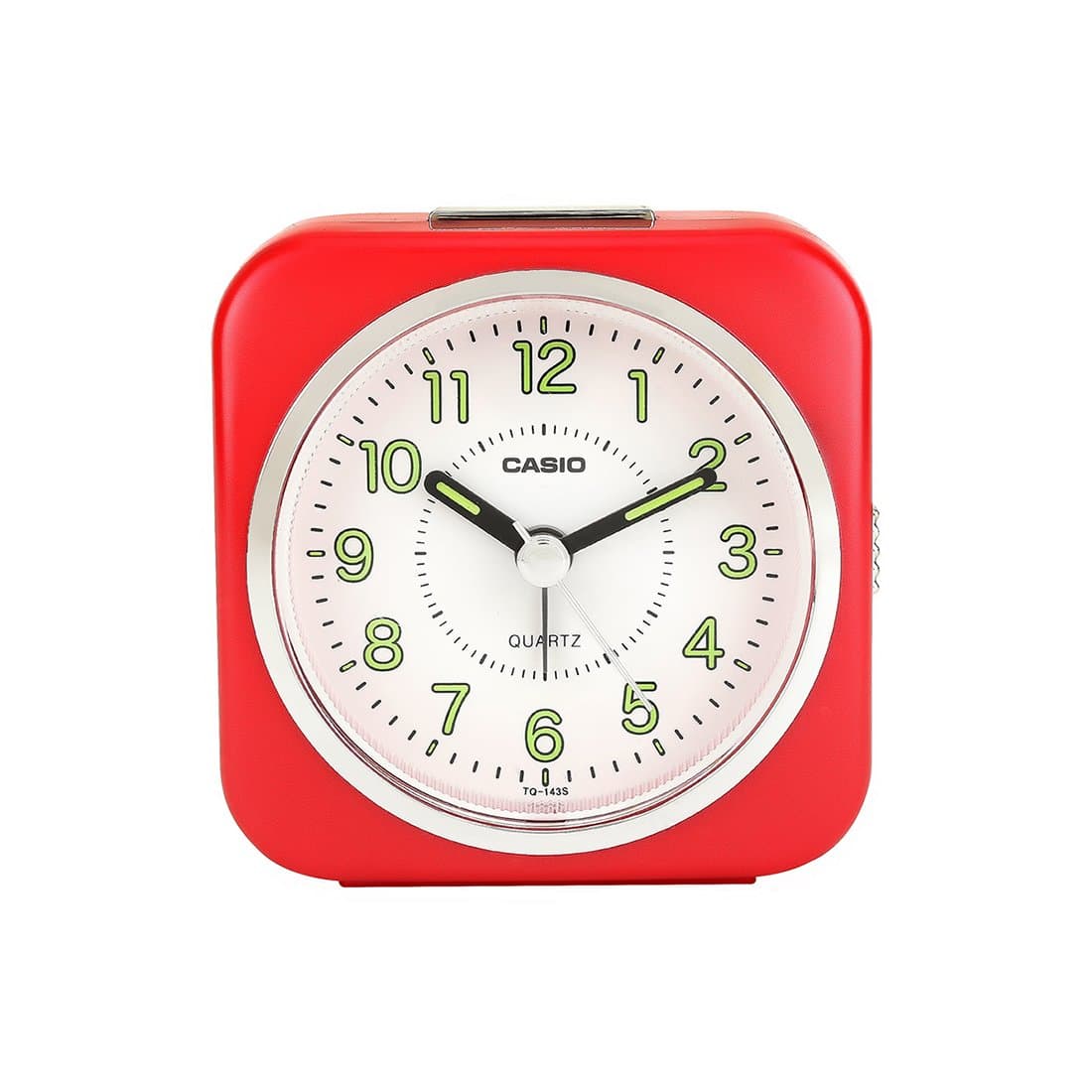
Casio TQ-143

Engineering Analysis: Casio TQ-143 Quartz Oscillating Frequency and Bedside Circadian Synchronization

The Casio TQ-143 represents a masterclass in minimalist timekeeping, providing a refined analog alternative to the digital fatigue often found in modern IoT ecosystems. By prioritizing a high-frequency quartz movement, this device ensures precision circadian alignment without the need for cloud-dependent connectivity, making it a robust cornerstone for a distraction-free bedside environment. Its architectural simplicity serves as a functional counterpoint to complex smart home setups, offering guaranteed reliability where networked devices may experience latency or downtime.

Quick Answer

The Casio TQ-143 offers unparalleled reliability through its standalone quartz movement, ensuring alarm triggers occur with zero network latency. Its high-contrast analog interface provides immediate visual recognition, which is critical for maintaining rapid cognitive processing upon waking without the interference of blue light emission.

Standalone architectural independence allows for 100 percent uptime regardless of smart home hub connectivity or local network outages.
High-contrast indices utilize ambient light optimization to ensure maximum legibility in low-lumen environments without disruptive electronic flicker.
Tactile snooze integration provides a physical interface for alarm modulation, bypassing the need for voice command processing or touch-screen interaction.

The Casio TQ-143 is a strategic choice for users deep in the Casio ecosystem or those requiring a fail-safe backup to more complex smart home infrastructures. It excels in environments where digital distraction must be minimized to preserve sleep hygiene while maintaining absolute punctuality through mechanical consistency.

✓ Who Should Buy

  • Minimalist enthusiasts requiring zero-latency alarm triggers and total network independence.
  • Users seeking to optimize their sleep environment by reducing blue light and radio frequency interference.
  • Smart home architects who utilize high-reliability analog backups for critical morning routines.

✕ Who Should Avoid

  • Users who require multi-room audio synchronization or deep voice-assistant integration for alarm settings.
  • Individuals seeking dynamic biometric tracking or integrated weather telemetry within their bedside display.
Product Overview
This precision-engineered timepiece utilizes a high-grade quartz resonator to maintain chronological accuracy within a compact, resonance-dampened chassis. The Casio TQ-143 features a classic analog dial that eliminates flicker and pulse-width modulation related eye strain associated with digital displays. Its acoustic signaling mechanism is tuned to specific frequency ranges that penetrate the sleep-wake transition without inducing startle-response hypertension. By operating on a self-contained power supply, it bypasses the vulnerabilities of firmware updates and power grid fluctuations that can compromise networked bedside devices. The tactile feedback of the top-mounted alarm switch ensures a zero-error user interface, allowing for instinctive control during the first stages of arousal from REM sleep. The physical dimensions are optimized for minimal footprint, allowing for seamless integration into diverse bedside aesthetic configurations.

BrandCasio
ModelTQ-143
TypeAnalog Alarm Clock
ColorBlack, White (varies by region)
Body MaterialPlastic
Form FactorCompact bedside clock

Related Products

Engineering Analysis
The engineering of the Casio TQ-143 focuses on the elimination of parasitic power drain and the maximization of mechanical durability. The quartz crystal oscillator within the circuit board vibrates at 32,768 Hz, providing a baseline of temporal precision that rivals many networked NTP-synchronized devices. Unlike liquid crystal displays that suffer from viewing angle degradation and backlight bleed, the analog dial offers superior contrast ratios by leveraging physical depth and matte-finish materials to reduce specular reflections. From an acoustic perspective, the internal buzzer is housed in a chamber designed to amplify mid-range frequencies, ensuring the alarm signal carries sufficient energy to terminate sleep cycles without requiring high-fidelity speakers or complex digital-to-analog conversion. This mechanical simplicity results in a near-zero failure rate and removes the latency issues inherent in cloud-based wake-up routines. Furthermore, the absence of radio frequency emissions makes it an ideal candidate for users seeking to minimize electromagnetic interference within their primary rest zones. The integration of a glow-in-the-dark coating on the hands utilizes phosphorescent energy storage, providing passive illumination that does not interfere with melatonin production, thus preserving the integrity of the user's circadian rhythm throughout the nocturnal phase.

Technical Support & FAQs