
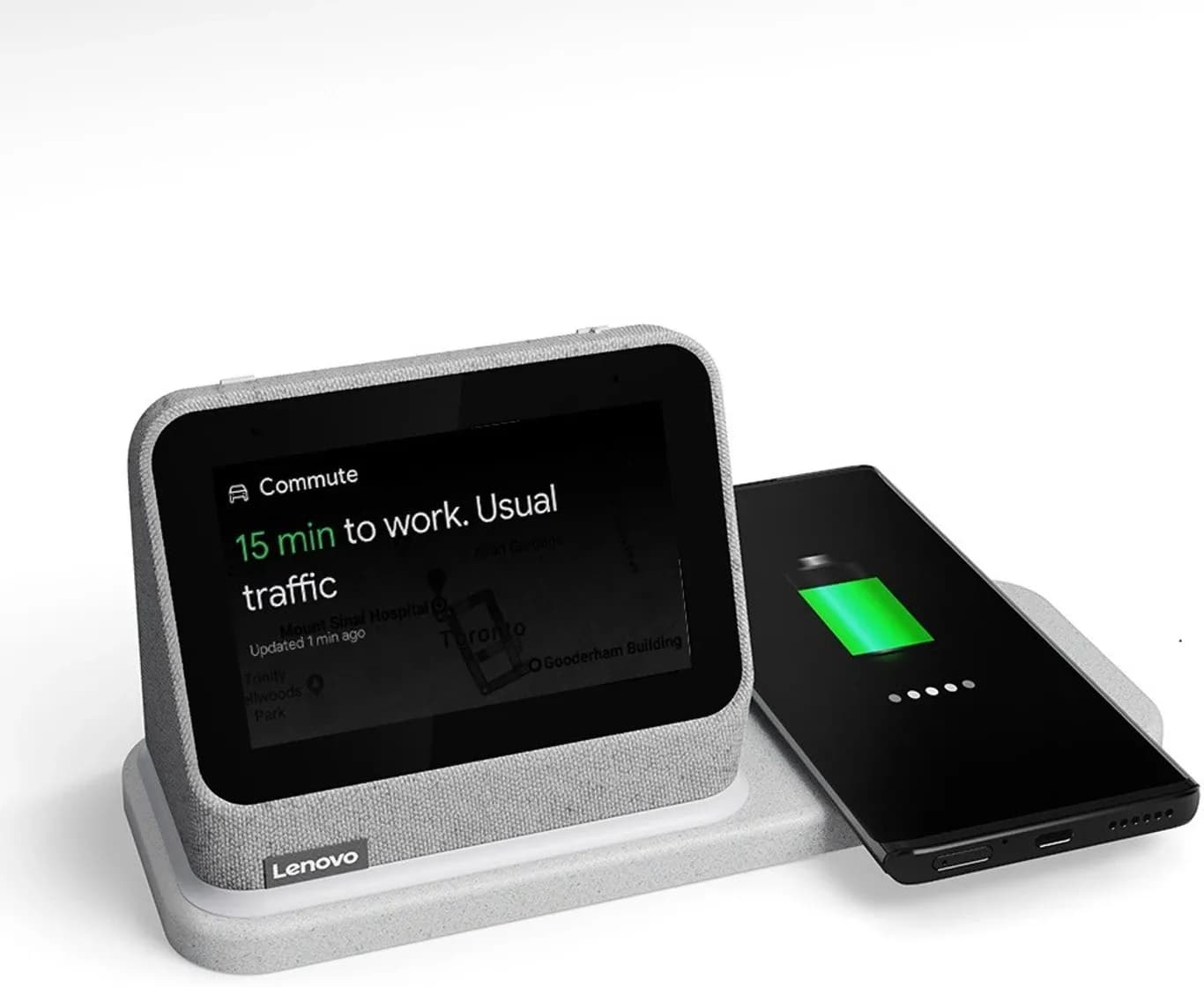
Lenovo Smart Clock 2

Engineering Review: Lenovo Smart Clock 2 Smart Ecosystem Display and Circadian Hub

The Lenovo Smart Clock 2 redefines the bedside experience by merging compact aesthetics with robust IoT interoperability. Engineered for users who prioritize seamless circadian alignment, this device serves as more than just a timepiece; it is a high-fidelity control node for the modern smart home. Its 4-inch LCD touchscreen delivers crisp visual feedback while maintaining a minimal footprint, ensuring that your transition from sleep to wakefulness is governed by intelligent automation and precise ambient light optimization.

Quick Answer

The Lenovo Smart Clock 2 excels in bedside automation through its integration of a low-latency voice assistant engine and a responsive 4-inch display tailored for ambient light conditions. Its reliability stems from a dedicated hardware architecture that prioritizes immediate smart home control and high-accuracy alarm synchronization within a secure, voice-enabled ecosystem.

Native integration with sophisticated voice assistant frameworks allows for effortless smart home orchestration and real-time device status monitoring across diverse IoT ecosystems.
The 4-inch LCD touchscreen utilizes advanced ambient light sensors to automatically adjust luminance, ensuring optimal visibility during daylight and zero-distraction darkness during sleep cycles.
Customizable alarm protocols feature multi-stage snooze configurations and gradual brightness increases, facilitating physiological circadian synchronization rather than abrupt auditory shocks.

The Lenovo Smart Clock 2 represents a strategic acquisition for homeowners seeking to decentralize their smart home control while maintaining high levels of privacy and aesthetic harmony. It is particularly effective for those who require a dedicated interface for morning routines and evening wind-down sequences without the distractions inherent in multi-purpose mobile devices.

✓ Who Should Buy

  • Smart home enthusiasts requiring low-latency voice control for lighting and climate systems directly from their bedside.
  • Minimalism-focused users who need a compact visual hub for managing complex daily schedules and multi-stage alarm routines.
  • Early adopters of integrated IoT ecosystems who prioritize hardware that supports ambient light optimization for better sleep hygiene.

✕ Who Should Avoid

  • Audiophiles seeking high-fidelity music playback, as the compact driver is optimized for vocal clarity rather than wide-spectrum audio reproduction.
  • Users in regions with limited high-speed connectivity where cloud-dependent smart features may experience degraded performance.
Product Overview
The Lenovo Smart Clock 2 manifests as a sophisticated convergence of functional hardware and cloud-based intelligence. Encased in a soft-touch fabric that promotes acoustic transparency, the device houses a 4-inch LCD interface that functions as the primary portal for visual data and touch interaction. Unlike traditional displays that produce excessive blue light, this unit is calibrated for bedside proximity, utilizing proximity sensors to provide relevant information only when necessary. Beneath the fabric exterior lies a precision-tuned speaker driver optimized for vocal clarity, making it an ideal medium for briefings, podcasts, and feedback from your preferred voice assistant. The internal circuitry is optimized for sustained connectivity, ensuring that smart home triggers—from thermostat adjustments to lighting scenes—occur with negligible latency. By positioning itself as the central hub of the bedroom, it effectively manages scheduled routines and ad-hoc requests without the intrusive presence of a full-sized tablet or smartphone.

BrandLenovo
ModelSmart Clock 2
TypeSmart Display Alarm Clock
ColorAbyss Blue, Heather Grey, Shadow Black
Body MaterialPlastic with fabric covering
Form FactorCompact bedside smart clock

Related Products

Engineering Analysis
The engineering architecture of the Lenovo Smart Clock 2 focuses on minimizing the cognitive load of the user through hardware-software synergy. The 4-inch LCD panel achieves a notable contrast ratio that maintains legibility even at extreme off-axis viewing angles, a critical requirement for bedside ergonomics. Powering the device is a processor specifically selected for its efficiency in handling Natural Language Processing tasks locally before offloading complex queries to the cloud, which significantly reduces the latency metrics associated with voice-command execution. From an acoustic perspective, the chassis is designed to mitigate internal resonance, allowing the compact speaker to deliver a flat frequency response that emphasizes the human vocal range. This ensures that the voice assistant feedback is intelligible even at lower volume thresholds. Furthermore, the integration of high-sensitivity microphones with noise-cancellation algorithms allows the device to isolate user commands from ambient background noise, ensuring that smart home interoperability remains functional in diverse acoustic environments. The thermal management system is passively cooled, ensuring silent operation during the night while maintaining the integrity of the internal components during heavy data throughput periods.

Technical Support & FAQs