

Related Products
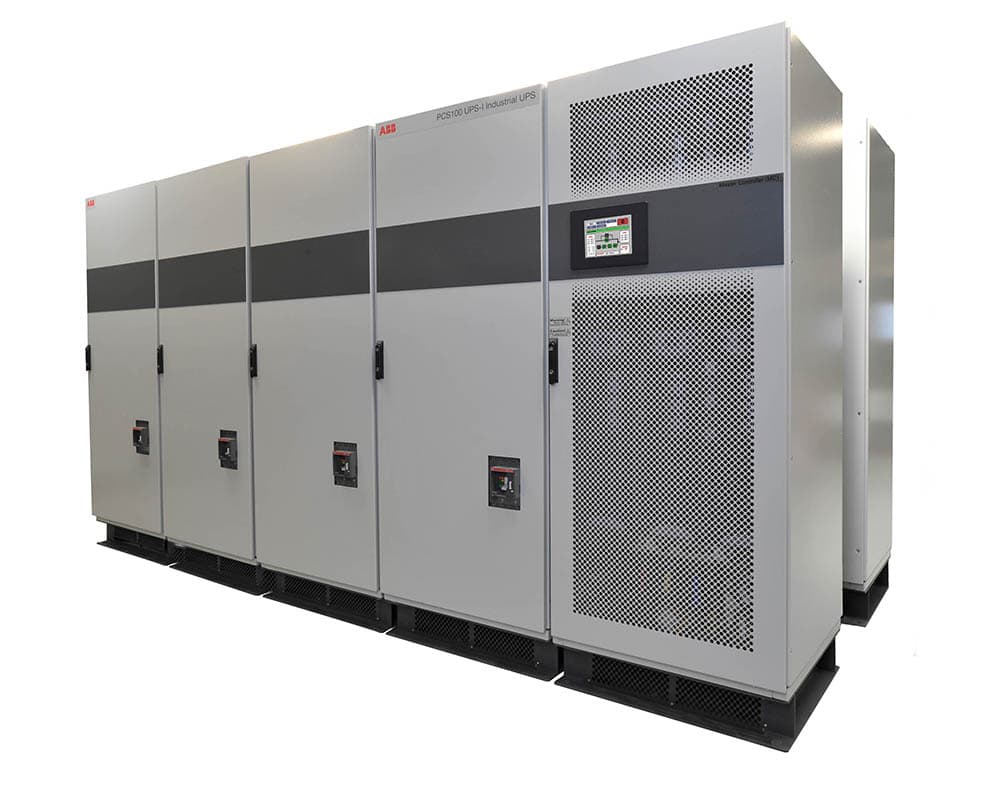
ABB PCS100 UPS-I: High-Efficiency Industrial Power Protection (150-3000 kVA)
✓ Who Should Buy
- •Indian textile and semiconductor manufacturing plants requiring protection against frequent voltage sags.
- •Large-scale Tier-3 and Tier-4 data centers in India aiming for 99% energy efficiency and lower PUE.
- •Healthcare facilities utilizing high-kVA diagnostic equipment like CT scanners and MRIs.
- •Telecom infrastructure providers requiring high-density, rack-mounted power protection for switching centers.
✕ Who Should Avoid
- •Small-scale residential or home office users where a 150kVA minimum capacity is physically and electrically oversized.
- •Facilities requiring long-duration battery backup (multiple hours) without an auxiliary generator, as this unit is optimized for short-term bridging (30 seconds).
Product Overview
The ABB PCS100 UPS-I is a high-performance industrial-grade solution specifically engineered to mitigate deep voltage sags and short-term outages prevalent in the Indian grid. With an industry-leading efficiency of up to 99%, it significantly reduces operational expenditure while providing seamless protection for critical manufacturing, telecom, and healthcare infrastructure. Its modular design and ultra-fast transfer time ensure that sensitive industrial processes and high-density data centers remain uninterrupted during transient power events or sudden load shedding.
| Brand | ABB |
| Model Name | PCS100 UPS-I |
| Model Number | PCS100 UPS-I |
| Type | Online |
| Form Factor | Rack-mounted |
| Color | RAL 7035 (Light Grey) |
| Usage Application | Industrial Facility, Telecom Systems, Healthcare Infrastructure, manufacturing Plant, Data Center |
Related Products
Engineering Analysis
In the Indian industrial landscape, particularly in Tier-2 and Tier-3 manufacturing hubs, voltage sags and 'brownouts' are more frequent than total blackouts. The ABB PCS100 UPS-I addresses this with an offline-with-bypass topology that remains idle during normal grid conditions, only engaging its inverter when the grid deviates beyond the +/-10% nominal range. This approach minimizes energy waste and heat generation, which is critical for maintaining system longevity in high-ambient temperature environments. The unit's integrated fault clearing and bypass mechanisms are designed to handle the high fault currents typical of Indian industrial feeders without compromising the connected load.
The system delivers a Pure Sine Wave with exceptionally low Total Harmonic Distortion (THD), ensuring compatibility with sensitive Variable Frequency Drives (VFDs), PLCs, and medical imaging equipment like MRI scanners. Unlike lower-tier UPS systems that utilize simulated sine waves, the PCS100 UPS-I maintains a Crest Factor capability that prevents overheating in downstream transformers and motor loads. This waveform purity is essential for maintaining the calibration of high-precision instrumentation used in Indian pharmaceutical and semiconductor plants.
Thermal management is a primary concern in tropical climates. The PCS100 UPS-I utilizes a 750 V DC nominal bus with modular VRLA battery packs, managed by sophisticated charging algorithms that prevent thermal runaway. The system is rated for operation up to 40°C without derating, making it suitable for non-air-conditioned industrial mezzanines. Furthermore, the transfer time of less than 1/4 cycle (approximately 4ms) is significantly faster than the 10-20ms standard of line-interactive units. This ensures that modern Switch Mode Power Supplies (SMPS) with low hold-up times do not reboot during the transition from grid to battery power, a common failure point in Indian data centers during rapid grid switching.
Technical Support & FAQs
Engineering Analysis
In the Indian industrial landscape, particularly in Tier-2 and Tier-3 manufacturing hubs, voltage sags and 'brownouts' are more frequent than total blackouts. The ABB PCS100 UPS-I addresses this with an offline-with-bypass topology that remains idle during normal grid conditions, only engaging its inverter when the grid deviates beyond the +/-10% nominal range. This approach minimizes energy waste and heat generation, which is critical for maintaining system longevity in high-ambient temperature environments. The unit's integrated fault clearing and bypass mechanisms are designed to handle the high fault currents typical of Indian industrial feeders without compromising the connected load.
The system delivers a Pure Sine Wave with exceptionally low Total Harmonic Distortion (THD), ensuring compatibility with sensitive Variable Frequency Drives (VFDs), PLCs, and medical imaging equipment like MRI scanners. Unlike lower-tier UPS systems that utilize simulated sine waves, the PCS100 UPS-I maintains a Crest Factor capability that prevents overheating in downstream transformers and motor loads. This waveform purity is essential for maintaining the calibration of high-precision instrumentation used in Indian pharmaceutical and semiconductor plants.
Thermal management is a primary concern in tropical climates. The PCS100 UPS-I utilizes a 750 V DC nominal bus with modular VRLA battery packs, managed by sophisticated charging algorithms that prevent thermal runaway. The system is rated for operation up to 40°C without derating, making it suitable for non-air-conditioned industrial mezzanines. Furthermore, the transfer time of less than 1/4 cycle (approximately 4ms) is significantly faster than the 10-20ms standard of line-interactive units. This ensures that modern Switch Mode Power Supplies (SMPS) with low hold-up times do not reboot during the transition from grid to battery power, a common failure point in Indian data centers during rapid grid switching.