

Related Products
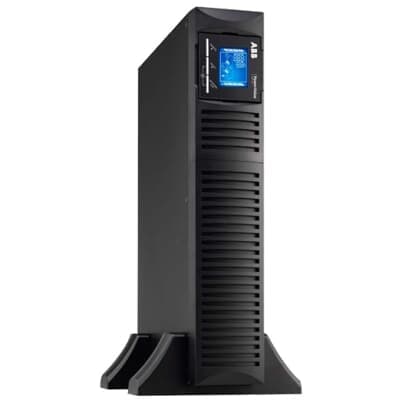
ABB PowerValue 11RT G2 3 kVA IN: High-Density Double Conversion UPS
✓ Who Should Buy
- •IT Managers overseeing high-density server racks requiring 2880W of continuous, clean power.
- •Diagnostic labs in India using sensitive imaging equipment that cannot tolerate voltage fluctuations.
- •Small-to-medium enterprises (SMEs) in industrial zones with frequent grid instability and high-voltage transients.
- •Edge computing installations requiring remote monitoring via SNMP or Modbus for unmanned sites.
✕ Who Should Avoid
- •Residential users looking only to power basic ceiling fans and lights where the high-speed cooling fan noise (< 55 dBA) might be intrusive.
- •Heavy industrial motor loads like large air conditioners or pumps that have high inrush currents exceeding the 3kVA surge capacity.
Product Overview
The ABB PowerValue 11RT G2 3 kVA IN is a high-performance online double conversion UPS engineered to mitigate chronic power quality issues prevalent in Indian industrial and urban grids. Featuring a robust input voltage window of 120-300V AC, it effectively handles severe voltage sags and surges without depleting battery reserves. Its 0.96 output power factor ensures maximum active power of 2880W is available for high-density server racks, networking gear, and sensitive medical equipment.
| Brand | ABB |
| Model Name | PowerValue 11RT G2 |
| Model Number | PowerValue 11RT G2 3 kVA IN |
| Type | Online |
| Form Factor | Rack-mounted |
| Color | Black |
| Usage Application | Data Center, Networking Equipment, Healthcare Infrastructure, Industrial Facility, Telecom Systems, manufacturing Plant |
Related Products
Engineering Analysis
Unlike line-interactive systems, this Online Double Conversion topology provides a 'clean room' for electricity. In Indian Tier-2 and Tier-3 cities, where grid frequency fluctuates and voltage sags are common, the PowerValue 11RT G2 acts as a buffer. The integrated Over Voltage Cutoff Device (OVCD) protects the internal circuitry from high-voltage transients often seen during neutral failures or phase imbalances. The wide input range (120-300V) is specifically calibrated for the Indian context, reducing the frequency of battery discharges and significantly extending the VRLA service life.
The unit delivers a Pure Sine Wave with extremely low Total Harmonic Distortion (THD < 2% linear load). This is critical for modern Active Power Factor Correction (APFC) power supplies found in high-end workstations and networking gear. While cheaper 'simulated sine wave' UPS units can cause resonance and overheating in sensitive components, the ABB 11RT G2 ensures a crest factor of 3:1, maintaining signal integrity for telecom and healthcare infrastructure where even minor electrical noise can lead to data corruption or equipment malfunction.
Operating in tropical climates requires superior thermal management. This UPS utilizes a fan-cooled architecture with intelligent speed control to maintain optimal internal temperatures. The 72V DC battery string, consisting of 12 units of 9.4Ah VRLA batteries, is managed by a sophisticated charging algorithm that compensates for ambient temperature, preventing thermal runaway—a common failure point in Indian installations. The 3-hour recharge time to 90% is optimized for areas with frequent, back-to-back load shedding cycles.
With a true 0ms transfer time, there is no interruption in the power path. Modern server PSUs have a hold-up time of roughly 16-20ms; however, in high-load scenarios, this window shrinks. The ABB 11RT G2 eliminates the risk of 'reboot on switchover' that plagues line-interactive units. Furthermore, its generator compatibility ensures that the UPS can synchronize with the varying frequency of local diesel generators (45-66 Hz range), providing a seamless transition during extended outages without hunting for frequency stability.
Technical Support & FAQs
Engineering Analysis
Unlike line-interactive systems, this Online Double Conversion topology provides a 'clean room' for electricity. In Indian Tier-2 and Tier-3 cities, where grid frequency fluctuates and voltage sags are common, the PowerValue 11RT G2 acts as a buffer. The integrated Over Voltage Cutoff Device (OVCD) protects the internal circuitry from high-voltage transients often seen during neutral failures or phase imbalances. The wide input range (120-300V) is specifically calibrated for the Indian context, reducing the frequency of battery discharges and significantly extending the VRLA service life.
The unit delivers a Pure Sine Wave with extremely low Total Harmonic Distortion (THD < 2% linear load). This is critical for modern Active Power Factor Correction (APFC) power supplies found in high-end workstations and networking gear. While cheaper 'simulated sine wave' UPS units can cause resonance and overheating in sensitive components, the ABB 11RT G2 ensures a crest factor of 3:1, maintaining signal integrity for telecom and healthcare infrastructure where even minor electrical noise can lead to data corruption or equipment malfunction.
Operating in tropical climates requires superior thermal management. This UPS utilizes a fan-cooled architecture with intelligent speed control to maintain optimal internal temperatures. The 72V DC battery string, consisting of 12 units of 9.4Ah VRLA batteries, is managed by a sophisticated charging algorithm that compensates for ambient temperature, preventing thermal runaway—a common failure point in Indian installations. The 3-hour recharge time to 90% is optimized for areas with frequent, back-to-back load shedding cycles.
With a true 0ms transfer time, there is no interruption in the power path. Modern server PSUs have a hold-up time of roughly 16-20ms; however, in high-load scenarios, this window shrinks. The ABB 11RT G2 eliminates the risk of 'reboot on switchover' that plagues line-interactive units. Furthermore, its generator compatibility ensures that the UPS can synchronize with the varying frequency of local diesel generators (45-66 Hz range), providing a seamless transition during extended outages without hunting for frequency stability.