


9 Simple Geyser Tips to Follow Before Winter
Get your geyser ready for winter: test run, ideal 50–60°C temperature, descaling, anode rod, leaks, MCB tripping and safety checks, plus when to repair or replace.
After months of sitting unused, many geysers start showing problems as soon as winter begins. Most give warning signs early, and many are cheap to fix if you catch them in time.
Here are 9 simple geyser maintenance tips to get your geyser ready before the cold sets in.
1. Do a test run before winter
The easiest way to check your geyser is to switch it on for 15 to 20 minutes and open the hot water tap. If the water is properly hot, your geyser is working fine.
If it’s lukewarm or cold, you’ve caught the problem early, before you need hot water every day.
2. Check the indicator light if your geyser is not heating
A geyser usually stops heating because of a failed heating element, a faulty thermostat, or a tripped MCB. The indicator light helps you tell which one.
- Light on, but water stays cold: usually a failed heating element, sometimes the thermostat.
- No light at all: check the MCB in your distribution board. If it’s fine, the thermostat or wiring may be faulty.
Both need a technician. Don’t open the geyser yourself, because it combines high power and water.
3. Set the geyser temperature to 50–60°C
The best temperature for a geyser is 50 to 60°C. It’s hot enough for bathing and saves electricity.
Higher settings waste power and wear out the heating element faster. Check the knob, because it often gets turned to the maximum during cleaning.
4. Switch on the geyser only 15–20 minutes before use
You only need to keep a geyser on for about 15 to 20 minutes before using hot water. Switch it off once you’re done.
A storage geyser keeps water warm for hours after it’s switched off. Leaving it on all day only adds to your electricity bill.
5. Get your geyser descaled once a year
Descaling once a year keeps your geyser heating properly, especially in Hyderabad homes that use borewell or tanker water.
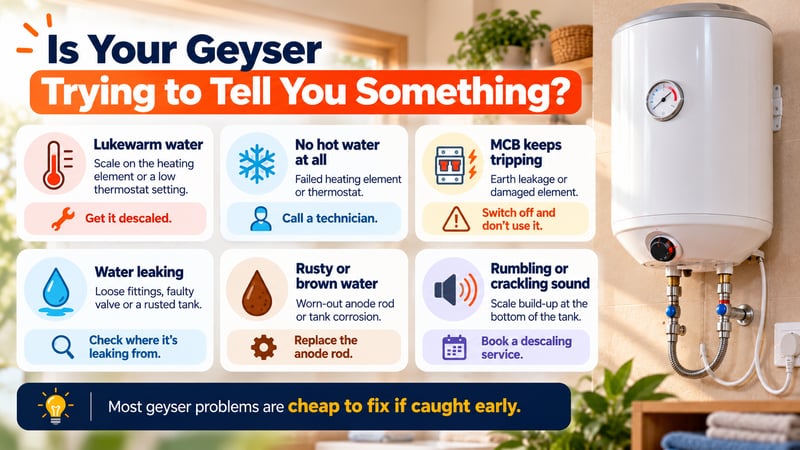
Hard water leaves a white layer of scale on the heating element. The element then heats the scale instead of the water, so you get lukewarm water and higher bills.
Signs of scale build-up:
- Water takes longer to heat
- Rumbling or crackling sounds from the geyser
- White residue in the hot water
6. Replace the anode rod every 2–3 years
The geyser anode rod should be replaced every 2 to 3 years, or sooner if you see rusty water.
The anode rod is a metal rod inside the tank that protects it from rusting. Once it wears away, the tank starts rusting instead. It’s a cheap part that can add years to your geyser’s life.
7. Check for leaks around the geyser
Geyser leaks usually come from loose pipe fittings, a faulty pressure relief valve, or a rusted tank. Look at the pipes, joints and the area below the geyser.
- Drips from pipe connections: usually fixed by tightening or replacing the fittings.
- Constant dripping from the pressure relief valve: the valve needs checking. A few drops while heating is normal.
- Water from the geyser’s body: usually means the tank is rusting inside. Replacement is often safer than repair.
8. Never ignore a geyser tripping the MCB
If your geyser trips the MCB or RCCB, it usually means an earth leakage, a damaged heating element, or water reaching the wiring.
Switch it off and don’t use it until a technician checks it. Using a geyser that keeps tripping can cause an electric shock.
9. Follow basic geyser safety rules
- Check the earthing. Proper earthing is the most important protection against electric shocks. If you’re unsure, ask an electrician to test it during your geyser service.
- Never use a gas geyser in a closed bathroom. Gas geysers can release carbon monoxide, which has no smell and can be deadly. Keep a window or exhaust fan open.
- Buy ISI-marked geysers only.
Know when to replace your geyser
Replace your geyser if the tank is leaking from the body, it’s more than 8 to 10 years old, or it keeps tripping even after repairs.
Repair usually makes sense for the thermostat, heating element, anode rod, valves and fittings.
Not sure whether to repair or replace? Find a geyser technician near you to get it checked first. If it’s time for a new one, compare water geysers side by side to find the right model for your home and budget.
Geyser maintenance checklist before winter
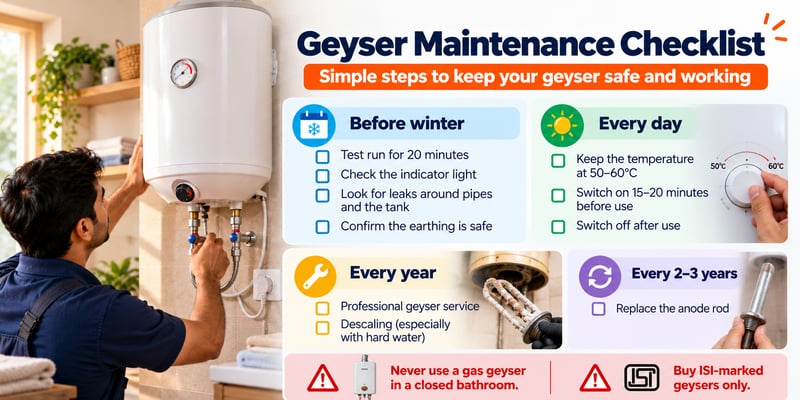
- Test run the geyser for 20 minutes
- Check the indicator light
- Set the thermostat to 50–60°C
- Look for leaks around pipes and the tank
- Book a geyser service for descaling and an anode rod check
- Confirm the earthing is safe
If your bathroom has other issues like low water pressure or leaking taps, read our guide to common bathroom problems you shouldn’t ignore.
Find a geyser technician near you
Whether your geyser isn’t heating, is tripping the power, or just needs a service before winter, FatafatService helps you find verified technicians across Hyderabad. Search by your locality, share the problem, and get help on the website or app.
Find a Geyser Technician Near You →
Frequently asked questions
1. How often should a geyser be serviced?
A geyser should be serviced once a year, ideally just before winter. Homes with hard water may need it more often.
2. How long does a geyser last?
A well-maintained geyser usually lasts 8 to 10 years. Regular descaling and anode rod replacement help it last longer.
3. Is it safe to leave the geyser on all day?
It’s not recommended. It wastes electricity and puts extra strain on the heating element and thermostat. Switch it on 15 to 20 minutes before use and off afterwards.
4. How can I find a geyser technician on FatafatService?
Search by service and your locality on the FatafatService website or app to see technicians available near you. You can then send a request with details of the problem, so the technician knows what to expect.
5. Does FatafatService offer fixed prices for geyser repair?
Prices aren’t fixed, because the final cost depends on the problem and the technician you choose. You can share the details upfront and confirm the price with the technician before work begins.