


Common Water Purifier Problems and Fixes You Should Know
Understand common water purifier problems and fixes. Learn how to maintain performance and ensure safe and consistent drinking water.
Is your water purifier suddenly not working the way it used to?
In the middle of the summer heat, when you rely on it the most, even a slight change in taste or slow water flow can feel frustrating.
At first, it doesn’t seem like a big issue. But in most cases, these problems don’t happen overnight. They build up slowly due to changing water conditions and missed maintenance.
Here are some of the most common reasons behind these issues and how you can fix them.
1. Filter Performance Decreases over Time
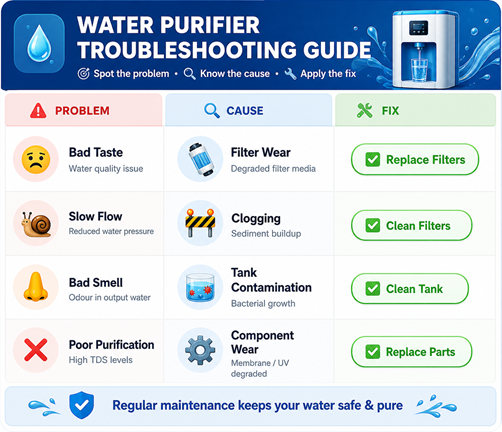
One of the most common reasons for reduced water quality is the natural wear and tear of filters. Water purifiers depend on multiple filtration stages to remove impurities. Over time, these filters accumulate sediments, minerals, and contaminants. As they become saturated, their ability to purify water reduces significantly.
This decline is not always immediately noticeable. The purifier continues to operate, but the effectiveness gradually drops.
💡 How to fix and prevent it: Filters should be replaced at regular intervals based on usage and water quality. Following a maintenance schedule is more reliable than waiting for visible changes in water taste or flow.
2. Variations in Water Quality
Water quality is not always consistent. It changes based on source, supply, and seasonal factors. Different sources may include:
- Bore well water
- Municipal supply
- Tanker supply
Each source has different levels of Total Dissolved Solids (TDS), hardness, and contaminants. A filter designed for one type of water may struggle when the source changes or during peak summer when water levels drop and sediment levels rise.
💡 How to fix and prevent it: Use a TDS meter to check water quality periodically. If your source changes frequently, ensure your purifier is capable of handling varying TDS levels or consider adding a pre-filter.
3. Clogged Pre-Filters and Sediments
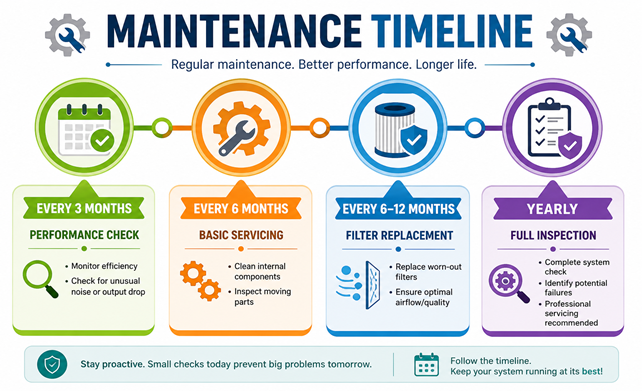
The pre-filter is the first line of defense, catching larger particles like sand, mud, and rust. During summer, water often carries more sediments. If the pre-filter is not cleaned or replaced, it clogs up, reducing the water pressure entering the main purifier.
This leads to slow water flow and puts unnecessary strain on the internal pump and membranes.
💡 How to fix and prevent it: Clean the pre-filter every 1–2 months, especially if you notice a drop in flow speed. Replacing it every 3–6 months keeps the main unit protected.
4. Membrane Issues and RO Performance
The RO membrane is the most critical part of the purification process. It removes fine contaminants and reduces TDS. However, the membrane can get “choked” over time due to mineral scaling or heavy contaminant load.
When the membrane is compromised, you may notice a significant change in taste or a complete stop in water production.
💡 How to fix and prevent it: Professional servicing is required to check membrane health. Regular use of an anti-scalant or timely filter changes can significantly extend membrane life.
5. Internal Leaks and Component Wear
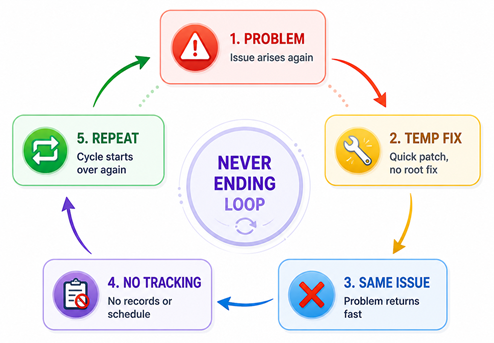
Water purifiers contain multiple internal joints, tubes, and valves. Constant pressure and usage can lead to minor leaks or wear in these components. Sometimes, these leaks are internal and go unnoticed until they affect the electrical parts or the flow stops.
💡 How to fix and prevent it: Keep the area around the purifier dry and watch for any dripping. An occasional internal inspection by a technician can identify and fix minor leaks before they cause major damage.
Why You Shouldn’t Ignore These Small Issues
A water purifier is essential for safe drinking water. Ignoring small changes in performance can lead to:
- Compromised water safety
- Higher repair costs later
- Reduced lifespan of the entire unit
How FatafatService Helps You Maintain Your Purifier
Managing water purifier maintenance doesn't have to be complicated. FatafatService connects you with trained professionals who understand different purifier models and water conditions.
Through a structured approach, you can ensure:
- Accurate diagnosis of flow and taste issues
- Timely replacement of filters and membranes
- Safe and reliable drinking water for your home
👉 Don't wait for your purifier to stop completely. Move to a smarter way of managing your home services with FatafatService.
FAQs
1. Why is the water flow from my purifier so slow?
Slow flow is usually caused by a clogged pre-filter or a choked RO membrane, which restricts water passage.
2. How often should I replace my purifier filters?
Typically, filters should be replaced every 6 to 12 months, depending on the quality of your input water and usage.
3. How can I find a reliable technician for water purifier servicing?
FatafatService connects you with verified professionals, helping ensure consistent and dependable service.
4. Does FatafatService support regular maintenance?
Yes, you can schedule servicing as needed to maintain purifier performance over time.
5. What makes FatafatService a better option for appliance servicing?
It simplifies the process of finding reliable technicians and helps reduce uncertainty in service quality.